OnTheWight recently sat down with Dr Bruce Denness at his home in Niton to talk through the geology beneath the Undercliff, why the land keeps moving, and what he thinks should be done about it. (Jump to recording)
Dr Bruce Denness has spent a lifetime working out why the ground between Bonchurch and Chale keeps moving seawards, and he thinks the answer is water that nobody is using.
The Niton-based geologist and civil engineer, who trained at Imperial College under the late Professor John Hutchinson, argues that two water-bearing layers beneath the Downs are pushing the Undercliff towards the sea, and that drilling them would relieve the pressure whilst supplying the Island with drinking water.
Hutchinson, whose work on the Undercliff many Islanders will remember, was Bruce’s tutor. He explained,
“Professor Hutchinson is the first person to have acknowledged that it could be something else making the Isle of Wight undercliff slip, because it can’t just be slipping naturally at mere two degrees towards the sea, so he knew there must be some other mechanism that was causing that.”
Bruce picked up the thread from there.
“We chatted about it over the years, and I basically pursued it and worked out the details.”
How the layers work
The south Downs strata (layers) alternate between permeable sandy layers and impermeable clay. Bruce explained,
“The sandy stuff is permeable, allows water to seep through it. Clay is impermeable, in other words, water won’t go through it very easily. But when it becomes wet, it is very slippery stuff.”
Ancient landslipping dropped some of the clay layers, sealing off the sandy ones tilting south towards the sea.
“As soon as they blocked them off, water is no longer draining, so the water pressure inside them builds up.”
Two points matter, he said, as you go down from the top of the Downs to below sea level.
Near the top sits the carstone, renamed the Monks Bay Sandstone Formation by the geological survey in its 2013 mapping of the Isle of Wight. That water is clean.
Bruce said,
“It’s full of pure water, you see, it’s all been filtered, it hasn’t gone through any sandy iron stone stuff, or anything like that. It’s almost pure, and it’s just being wasted at the moment. It’s pushing against the galt, which has already moved a bit.”
It is the carstone pressure that drives the spring line running from Niton through to Ventnor.
“Places like Spring Hill, for instance, in Ventnor, that’s not called Spring Hill by accident.”
The rusty water under Ventnor
The deeper layer is Sand Rock 2a, and its water is “ferruginous” – iron rich, in other words. Rusty.
Bruce said there is visible evidence of it in Ventnor now, near the top of the ramp down to Flowers Brook. As you can see from the photos below the red, rusty water is seeping out onto the road.
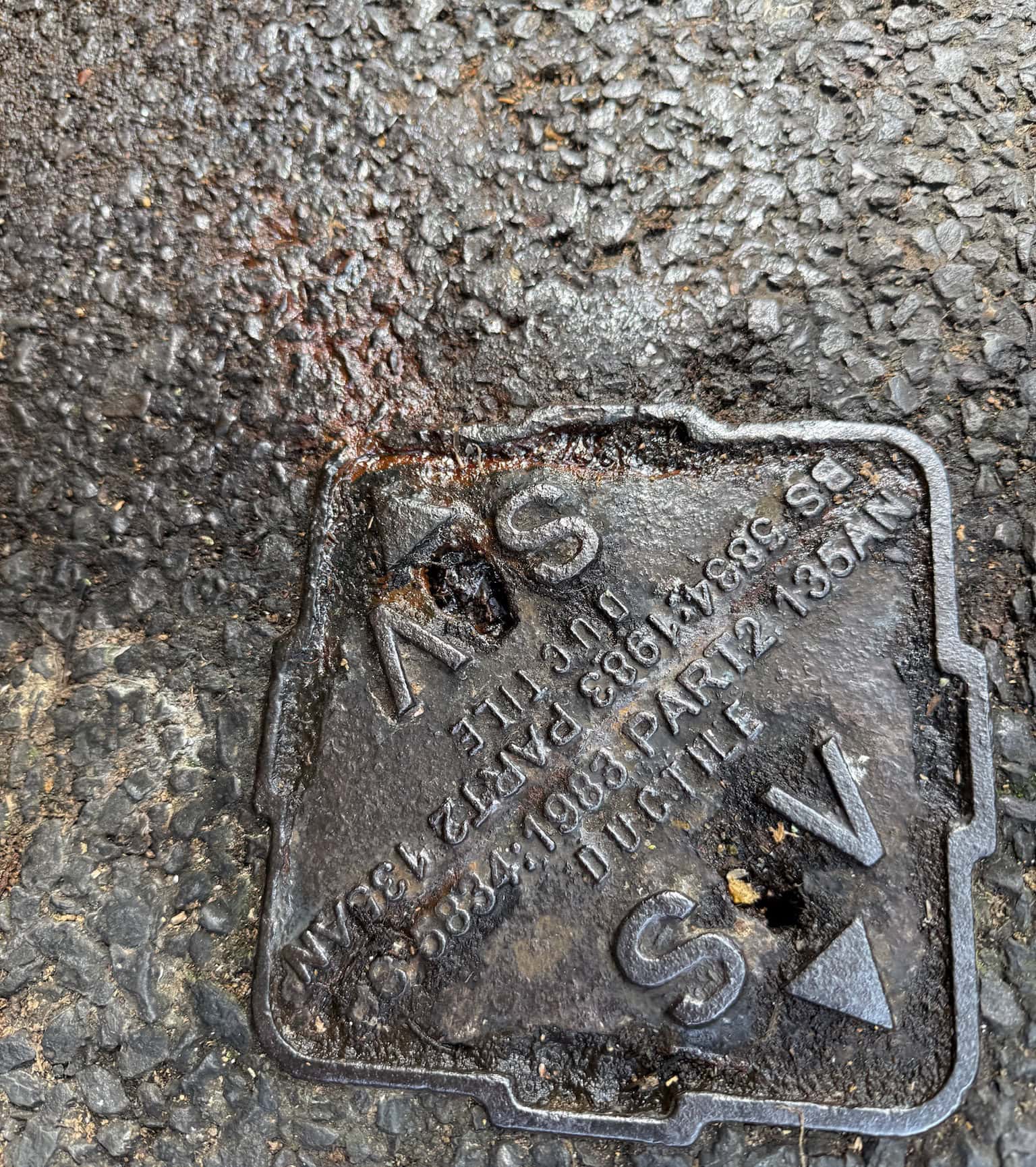
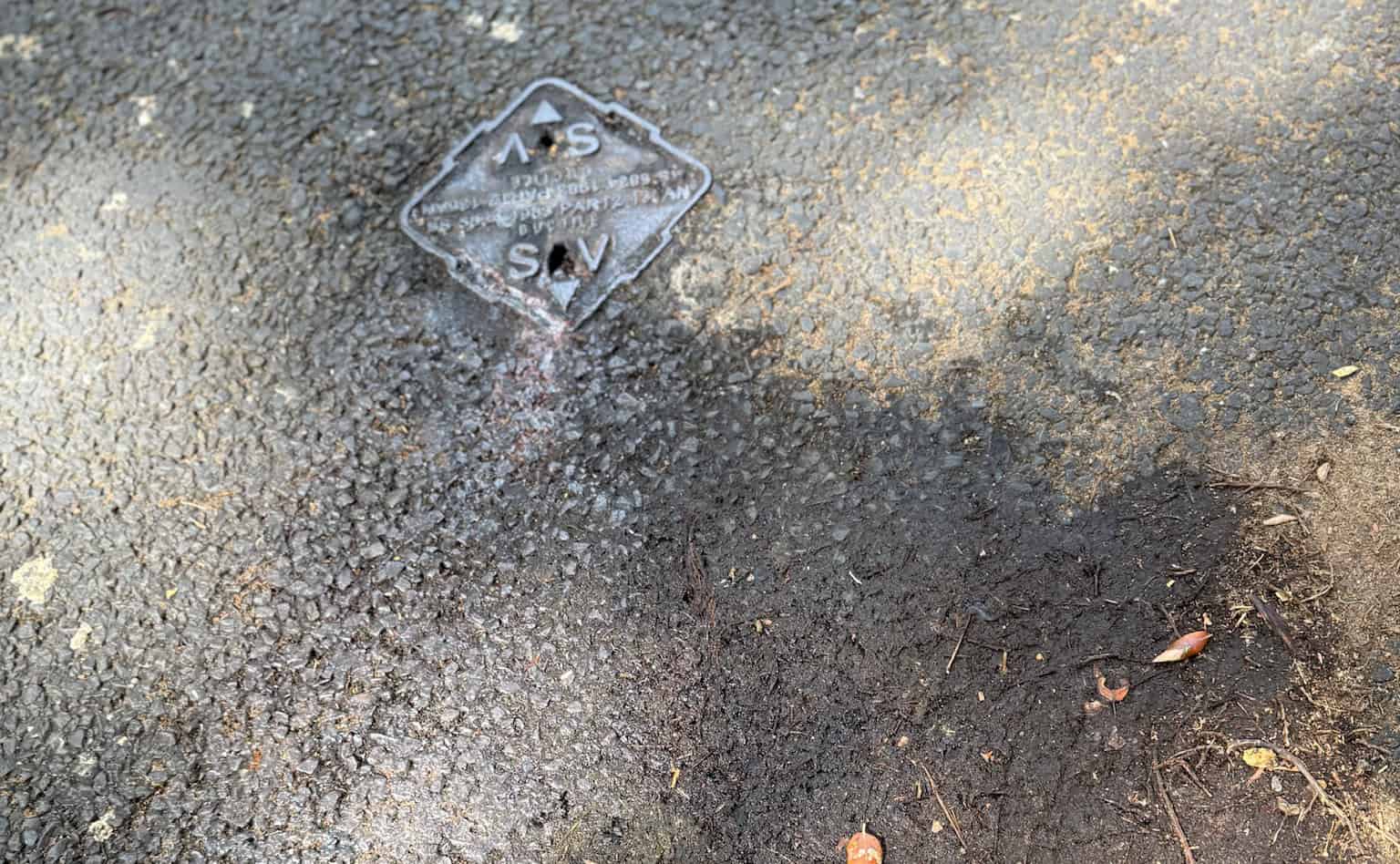
He said,
“Within a couple of metres of the top in the road itself, you will see water seeping up through the road that is coming from a borehole that was sealed off because it was installed by a contractor when they were exploring Western Ventnor, and whether or not to site a sewage works there.”
The drillers hit water under pressure.
“They suddenly panicked a bit because water was pouring up the borehole under great pressure,” he said, and they capped it, though not completely.
“Despite the fact that it’s been so-called capped off by putting concrete down the borehole, it’s nevertheless still managing just force its way up through the ground.”
Both layers need drilling to release the pressure, he said, but only the carstone water is worth collecting easily.
Southern Water already runs a de-ferruginising plant at Knighton, near Newchurch, so the company would know whether the rusty water could be processed economically.
Whether anyone is listening
Bruce has a background of providing expert advice on the Island. Isle of Wight Council followed his advice on filtration pipes at Brook when closure of the Military Road was being discussed in 2010.
The pipes were installed under the road, leading water to pass and the road and its usage to stay in place.
On the Undercliff, he has approached one of the council’s external geotechnical consultants.
He said,
“He is aware of it. However much gets plugged in? Not a matter for me anymore.”
The carstone water needs no pump – it comes up under its own pressure – and could be gathered on the south side of the down, then pumped to the reservoirs already sitting above Niton and Chale.
Bruce thinks Southern Water should take a look.
“It’s their bore holes in the first place, many of them have given me the clues to interpret what the geological problem is.”
Listen to our conversation
You can listen to the 33 minute conversation between Simon Perry and Dr Denness by clicking on the play button below.
You can also pause, rewind and jump forward by using the controls.


Forty years of forecasting
Unsurprisingly, Bruce has also spent four decades on climate research. He said,
“In 1984 I published a paper, which describes everything that has subsequently happened to the climate, and what is going to happen next.
“Now is there is going to be a sudden dramatic increase in global temperature within the next three years, and if we don’t actually contain this greenhouse effect, it will become a runaway effect. There’ll be nothing we can do about it.”
He also set out the forecast at the Eco-Island conference in Cowes in 2008 and in a letter to the Telegraph in early December 2009. He said,
“I think I ended it with, ‘I’ve already turned my central heating down, but it’s no longer a joke.'”
Wetter winters and drier summers mean more water into the down, and more pressure on the galt.
More landslips, then? Bruce replied,
“Quite likely.”
Asked what 42 years of being ignored feels like, he answered in one word.
“Frustrating.”
Adding,
“Because it’s not as though I haven’t tried to tell people I have.”
He blames the scale of the thing.
“Because it seems too unbelievable, it’s just too big an event that is being forecast, and people think no, impossible until it happens.”
When he started, in the 1970s, the prevailing theory was that an ice age was coming.
Still waiting for an answer
Whether Southern Water or the council act on Bruce’s findings remains to be seen, but the borehole seeping onto the road near Flowers Brook is hard evidence that the pressure he describes is real and ongoing.
For a man who has spent over 40 years trying to get his warnings heard, the wait for a response – on the Undercliff as much as on the climate – continues.