Angela from Naturezones shares one of the latest stories from her monthly newsletter. Ed
The heat has certainly brought out the butterflies at Naturezones in Blackwater this year. One in particular has shown a noticeable increase.
A late arrival for the Clouded Yellow
The Clouded Yellow, is a butterfly I consciously look out for every year. Usually one or two appear late July early August having flown all the way from Africa. They swoop around like flying egg yolks. Its late arrival makes me concerned.
Timing the hay cut around the butterflies
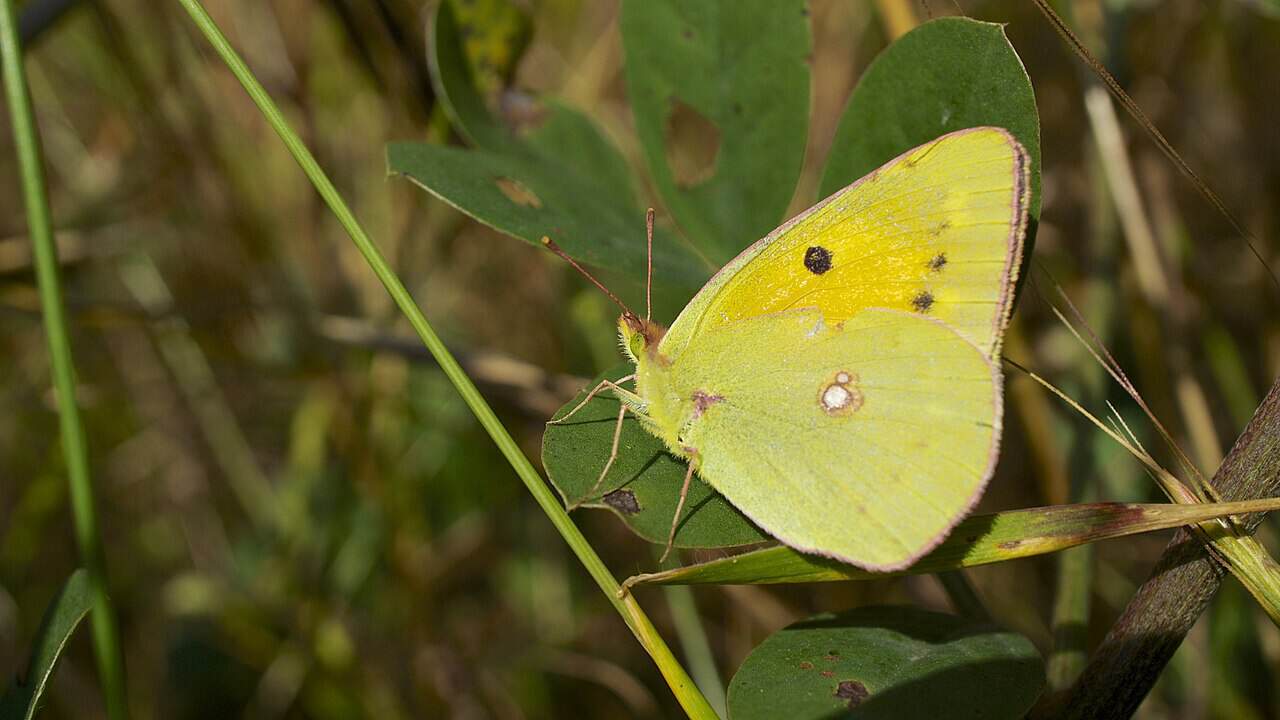
It is time to start thinking about hay making but I wanted to delay it until the end of August. Mostly because we need the wild flower seeds to drop before we cut. But also, this year, because the Clouded Yellow is about in numbers and they are busy.
When you get a long spell of hot dry weather there is at the back of your mind the threat of recompense – rain. So the hay was cut. Turns out it was a good decision. The main aim of our hay making is to get the grass and plants cut and removed from the meadows, making space for next years flowers to emerge.
Best-ever wild flower displays
This year we had our best ever displays of wild flowers which is testament to our meadow management skills. Hay making is definitely not a fund-raising exercise, it is about getting it removed from the meadows. So long as we cover the contractors costs, we are happy.
Then joy, the Clouded Yellows remain, having found the few corners we had left uncut.
About the Clouded Yellow
The Clouded Yellow is a medium-sized, golden-yellow butterfly. It is a migrant species that flies here from North Africa and Southern Europe.
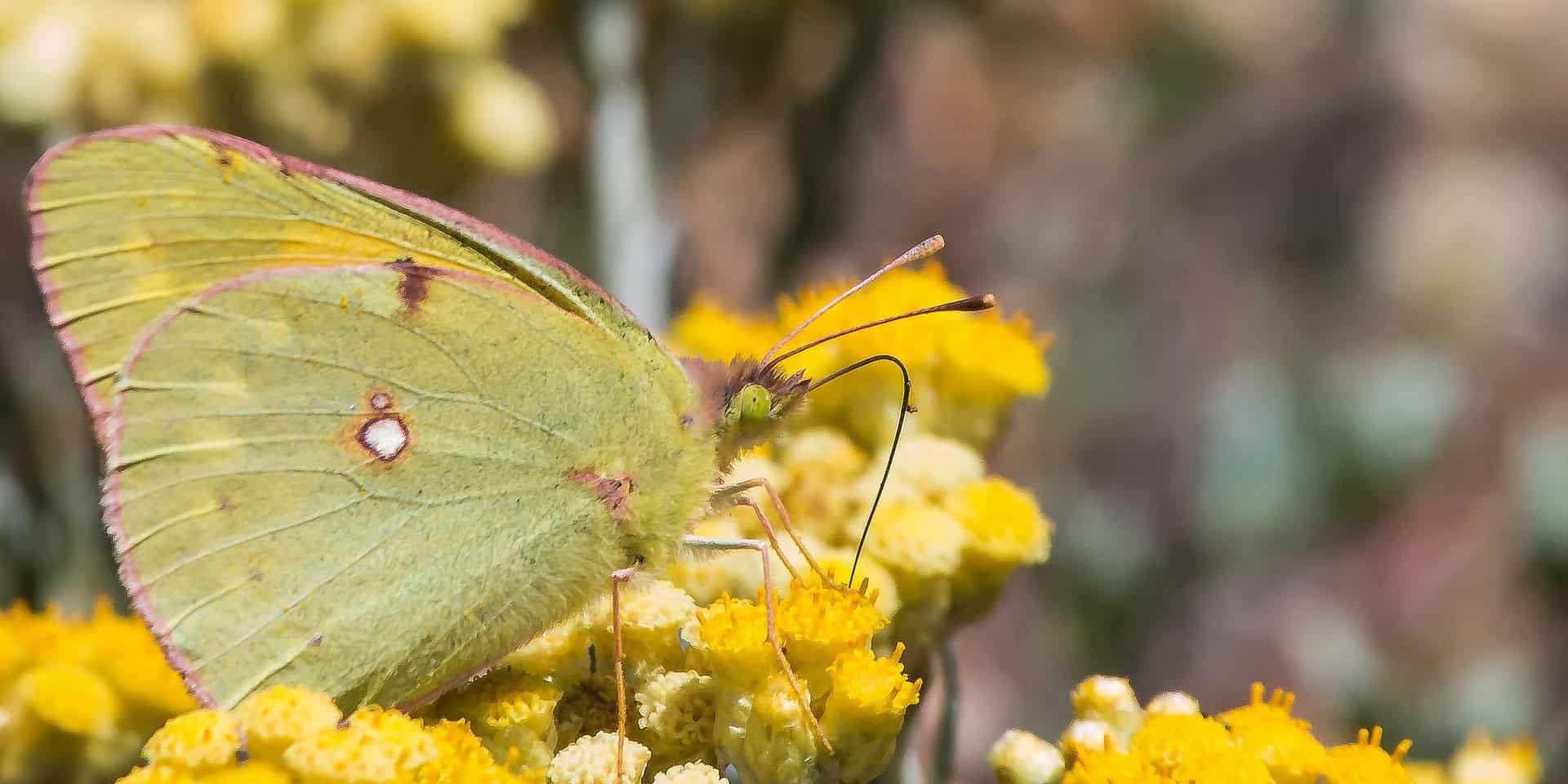
Clouded yellows arrive in small numbers most years, but occasionally turn up en masse – long remembered as ‘Clouded yellow years’. Adults may arrive at any time during the spring and summer, and can be found in a variety of open habitats, although, in southern England, they are particularly fond of chalk grassland.
Foodplants of the caterpillars include wild and cultivated clovers and common bird’s-foot trefoil. Naturezones has plenty of Bird’s-foot trefoil.
Sadly, Clouded Yellows are unable to survive winter in the UK, but with the changing climate they may become more common, or even residents. Much like the Glanville Fritillary.