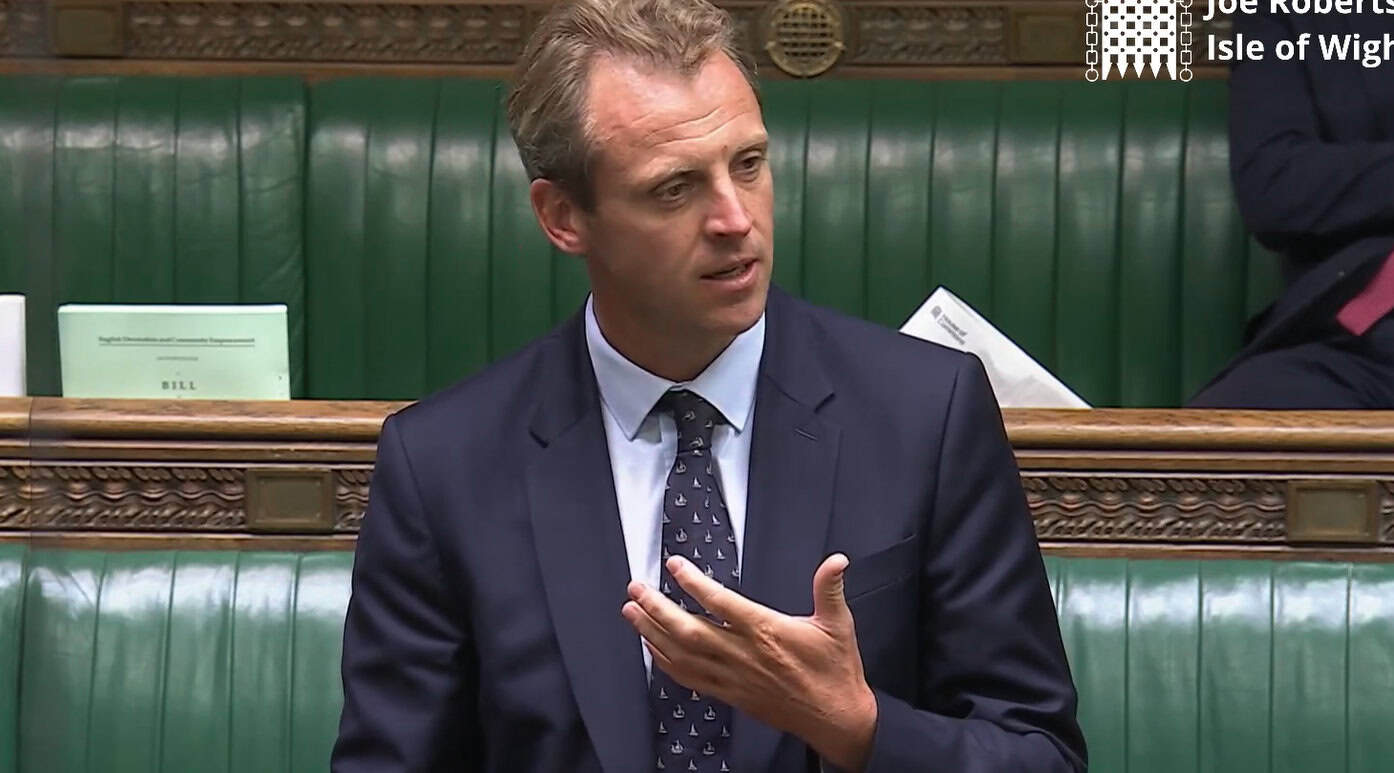
Isle of Wight East MP, Joe Robertson, shares this reply to Harry Eccles’ Open Letter about comments relating to ADHD. Ed
Dear Harry,
Thank you for contacting me about ADHD via the media.
I have spoken out about improving therapeutic care and support for people living with ADHD, including in health care, education, the workplace and within wider society. That includes formal treatment and medication and for other conditions made worse by living with ADHD.
Too often, people are stuck waiting to get a diagnosis, and even when they do, they face further blocks to getting the treatment and support they need. That’s why I recently met with parents of children who are struggling to get educational support here on the Island and continue my work in this area as a member of the Health and Social Care Select Committee in Parliament.
The case for welfare reform
I have also spoken about how our welfare system is becoming both a poor and expensive compensation system for other services which are failing. Health and disability benefits have, in my opinion, stretched far beyond their intended scope post-Covid and are trapping too many people (particularly young people) on welfare instead of work. That is one of the conclusions of the Labour Government’s own review led by Alan Milburn which is why they are proposing reform to health and disability benefits for young people. I want systemic reform to extend to the entire working age population.
Professor Fonagy’s recent report commissioned by the Government found that diagnosis rates of ADHD and autism have grown exponentially so that among some younger cohorts, the diagnosis rate is substantially above the estimated prevalence rate in the population. That is leading to huge backlogs in the system meaning those with genuine and more serious needs are sitting on waiting lists unable to get the support they so desperately need. Professor Fonagy wants to regulate private providers of mental health assessments many of which, ironically, also provide NHS assessments.
The rising cost of PIP
Personal Independence Payment is a welfare benefit which is supposed to meet the genuine additional cost of living with disability and long-term ill health, but with a recent growth in mental health claims, overall PIP claimants are increasing by 1,000 every day and the overall cost to the taxpayer is forecast to rise from £12 billion at the beginning of this decade to £41 billion by the end of it, I believe the system no longer works properly and is unfair.
PIP is not means tested and paid to someone regardless of wealth or whether they are in full-time work. I do not accept that the nation has become twice as disabled in the last six years. The health think tank the Nuffield Trust says that some of the areas in the country with the fastest growth in claims are not in poorer places but wealthier areas like Hart in Hampshire.
Support without a diagnosis
I want us to get back to a system, badly disrupted by Covid, where all those who need support to learn, work and get on in life, receive it, and where those with more mild conditions no longer receive a monthly cash payment from the state regardless of whether they are in full-time work.
People with ADHD should not be made to feel that they cannot achieve or that they are living with something that will always hold them back. Schools should be able to cater for neurodiversity in the classroom without always relying on a formal diagnosis or cash handouts. The same should be true in the workplace.
Speaking out about ADHD
I chose to speak out about my own ADHD diagnosis to help show that neurodivergent children and adults can achieve just like everyone else and should feel enabled and encouraged to do so.
I am pleased to have received support from health charities, people with ADHD and MPs including within Labour, even if we do not necessarily agree on the precise detail when it comes to the changes needed.
I am more than happy to meet with you to discuss. Please do not hesitate to contact my office: [email protected] to arrange a meeting.
Kind regards, Joe