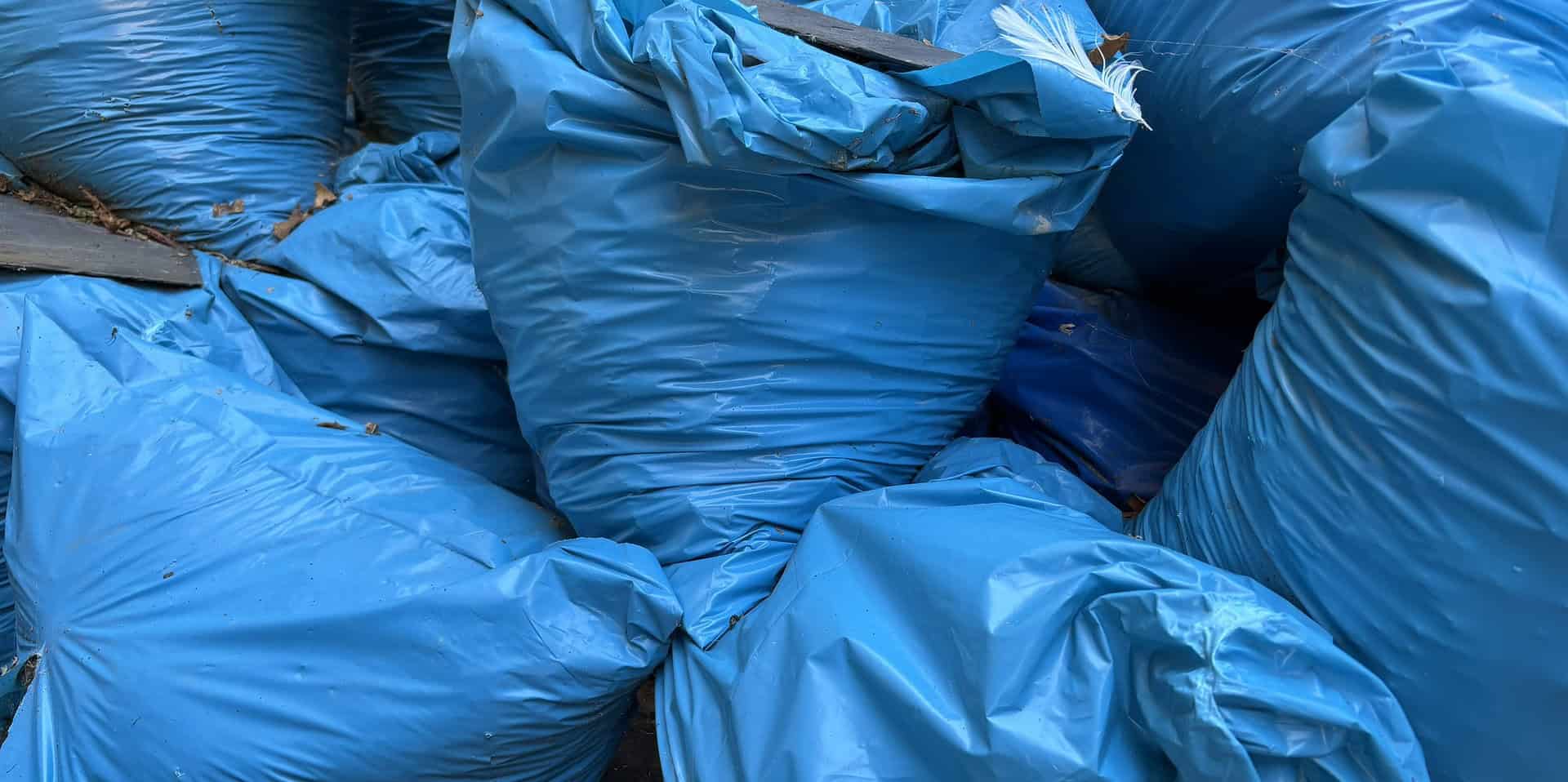
Charges will be introduced for excess amounts of DIY waste at the Isle of Wight’s Household Waste Recycling Centres (HWRCs) from 14th September 2026.
Residents carrying out DIY projects will still be able to dispose of limited amounts of DIY waste free of charge, as each household can still bring up to two 50-litre rubble sack of DIY waste free per visit, up to four times in any four-week period.
Charges will only apply when this allowance is exceeded. General household and recycling waste is unaffected.
A full list of Frequently Asked Questions can be found on the council’s website.
Charges also apply where waste is considered commercial, including waste from contractor-led work, major renovations or waste brought by a third party.
Why the charges are being introduced
The charges were approved as part of the council’s budget at Full Council in February 2026, in a time where the authority faces unprecedented financial pressures driven by rising demand, increasing contract costs, and a national funding settlement that leaves the Island at a significant disadvantage compared with similar councils.
Introducing DIY charges is not a money making exercise and is only to cover the costs of providing the service.
This is one of several necessary steps being taken to help bridge a substantial budget gap that cannot be resolved through local efficiencies alone.
Booking your visit
All DIY waste visits must be booked online in advance.
A 50-litre bag of DIY waste could weigh between 5kg and 50kg depending on the material.
Typical approximate weight of a 50-litre bag
- Light DIY waste (plastic, insulation, packaging, empty tins): 5kg to 10kg
- Wood, laminate and plasterboard: 15kg to 25kg
- Rubble, bricks, tiles and concrete: 35kg to 45kg
- Soil, sand and gravel: 40kg to 50kg
Council’s view
Natasha Dix, service director for waste, environment and planning, said,
“Most residents only generate small amounts of DIY waste and will still be able to dispose of this free of charge.
“The changes mean the cost of disposing of larger amounts of construction waste is paid by those using the service most, helping us maintain the service for all residents.”
Charges
Waste must be separated by type. The free allowance covers a total of 50 litres of DIY waste, not 50 litres of each material. Waste must be brought by the resident, not a contractor.
Rubble and hardcore (bricks, tiles and ceramics)
- Up to 100 litres: Free
- Additional 50-litre sack: £4
- Small load (up to four sacks): £15
- Large load (car boot or trailer equivalent): £30
Plasterboard
- Up to 100 litres: Free
- Standard sheet (up to 2.4m x 1.2m): £5
- Half sheet or bagged equivalent: £3
Soil and subsoil
- Up to 100 litres: Free
- Per 50-litre bag: £4
- Bulk load (car boot equivalent): £25
Mixed construction waste
- Up to 100 litres: Free
- Per 50-litre equivalent: £5
- Small mixed load: £20
- Large mixed load: £35
Wood
- Small household quantities within the free allowance: Free
- Large DIY volumes: £10 per load
Payment must be made before waste is accepted. Debit and credit card payments can be made on site.
Residents should check the latest guidance before visiting an HWRC, as charges, allowances and accepted waste types may change.
Article edit
1.40pm 3rd Sep 2026 – The council initially issued the press release and information on their website stating one 50 litre bag a week, then changed it the next day to two 50 litre bags a week. Article edited to reflect that.
News shared by Isle of Wight council press office, in their own words. Ed