The RSPCA is calling on the public to help save animals’ lives by putting away their back garden football nets after use – as the Champion’s League final on 31 May kicks off footie-fever.
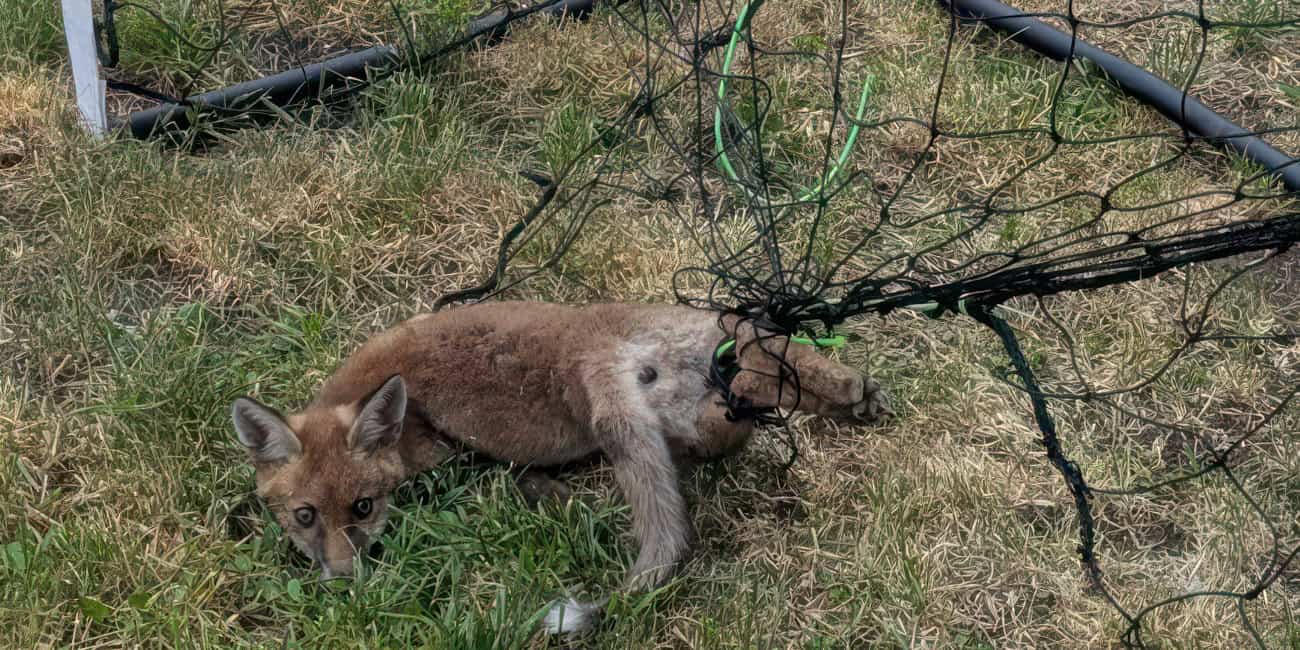
The reminder comes as new data reveals the charity received 1,355 reports in 2024 of animals getting entangled in all types of netting, with almost half of them (586) in the peak months of May, June and July.
The stats
According to the data, Greater London’s back gardens and community spaces seem to be the most hazardous for animals – including vulnerable fox cubs – with a shocking 230 netting incidents reported last year. Devon came second, with 60 incidents, followed by Kent (51), East Sussex (44), Essex (41), Lancashire (40), Cornwall (39), Greater Manchester and Somerset (36), Hampshire (34), Isle of Wight (4).
Trapped, injured or killed by innocent-looking goal nets
Now, as footie fever soars ahead of the showpiece Champions League final between Paris Saint-Germain and Inter Milan, the animal charity fears even more animals – especially young fox cubs – could be trapped, injured or even killed by innocent-looking goal nets.

But football fans have the power to prevent animals falling foul of goal nets- and the RSPCA is urging back garden football stars to put away their garden football nets when not in use to help minimise the numbers of incidents.
A flood of recent reports
The charity has been left concerned by a flood of recent reports involving animals entangled in netting, including 47 separate incidents of fox cubs caught already this month (data up to 27th May) – in what is traditionally the busiest period of the year for these types of reports.
RSPCA Scientific Officer Rebecca Machin said,
“We know so many people will be getting excited about the Champions League final, and we think it’s great that many will be inspired by the action, and want to get outside and have a kick around themselves.
“But our data shows that unattended football and other netting can trap, injure and even kill wildlife and pets, so it’s really important to put nets safely away when they’re not being used after the game is done.
“The problem is so serious that during last year’s peak months (May, June and July), we dealt with 100 incidents of netting-entangled foxes – mostly cubs.
“But it’s not just foxes that are affected; other wild mammals like hedgehogs and deer, and even domestic pet mammals – including cats, can become potentially fatally entangled. But amid a difficult period for many animals, when netting reports typically spike, people have the power to make a real difference.”
Public hold the key to fixing the problem
But the RSPCA believes the sports-loving public hold the key to fixing the problem – both in helping avoid instances happening in the first place, and knowing what they should do if they find a trapped animal.
From wild birds and mammals, to cats, dogs and even exotic pets, the RSPCA’s data reveals that nets present a real hazard for all kinds of animals.
Foxes most likely to become entangled
Of the 263 wild mammals that were reported to have been caught up in netting last year, foxes were most likely to become entangled (172), followed by deer (43), then hedgehogs (30). Wild birds fared even worse, with 1,584 individual birds (from robins and swallows to gulls and pigeons) becoming entangled.
The charity even received reports of cats, dogs, parrots and exotic pet snakes affected by netting.
What to do
The charity’s advice to the public is that if a small animal – like a bird or hedgehog – is found caught up in netting but is uninjured, the fastest way to help it is to gently and carefully disentangle the animal themselves – where it’s safe and possible for them to do so.
There’s more information about how to help animals on the RSPCA website. Animals who have been entangled will need checking over by a vet, as they may have hidden injuries.
Whenever people are able to help animals in need, it frees up RSPCA specialist officers to focus on animal cruelty and neglect.
Machin: Keeping animals safe is really easy
Rebecca continued,
“Getting caught up in netting is very stressful for an animal, particularly one that’s wild. And if the animal gets seriously entangled, netting – whether it’s used for sports, fencing or the garden – can cause severe injuries or even death.
“As wild animals frequently get trapped during the night, they may have been struggling for many hours by the time they are found in the morning and often need veterinary attention and sedation to cut them free.
“We’re all looking forward to a summer of sport and many of us will be having our own kick abouts in the garden. But we urge people to be aware of the dangers of football and other netting.
“Keeping animals safe is really easy. We can all play our part in helping animals by making sure unused sports netting is tidied away safely after use. But if the worst does happen, and an animal does become trapped, then as long as it’s uninjured, small and manageable, and if it’s safe to do so, we’d really encourage people to try to untangle it themselves. The animal should then be taken to a vet for a check-up. The more the public can help, the more resources that will free up for our teams to focus on the terrible cruelty and neglect cases that sadly peak during the summer months.”
To help the RSPCA continue rescuing, rehabilitating and rehoming animals in desperate need of care please visit our website or call our donation line on 0300 123 8181.
News shared by Suzanne on behalf of RSPCA. Ed