Jonathan Dodd shares his review of the latest Isle of Wight Symphony Orchestra (IWSO) concert. Ed
When you’re a well-respected and skilful local Symphony Orchestra, and you’ve just completed an arduous programme of acclaimed concerts, what could you possibly do to crown your season and celebrate the joy and hard work before you go to relax for the summer, and before starting the whole roller-coaster again?
The answer is obvious. Find a local railway station with a large field and a bar and perform a celebration concert in a tent in the sunshine. Obvious!
On Saturday 26th July of this year, the whole Isle of Wight Symphony Orchestra did just that.
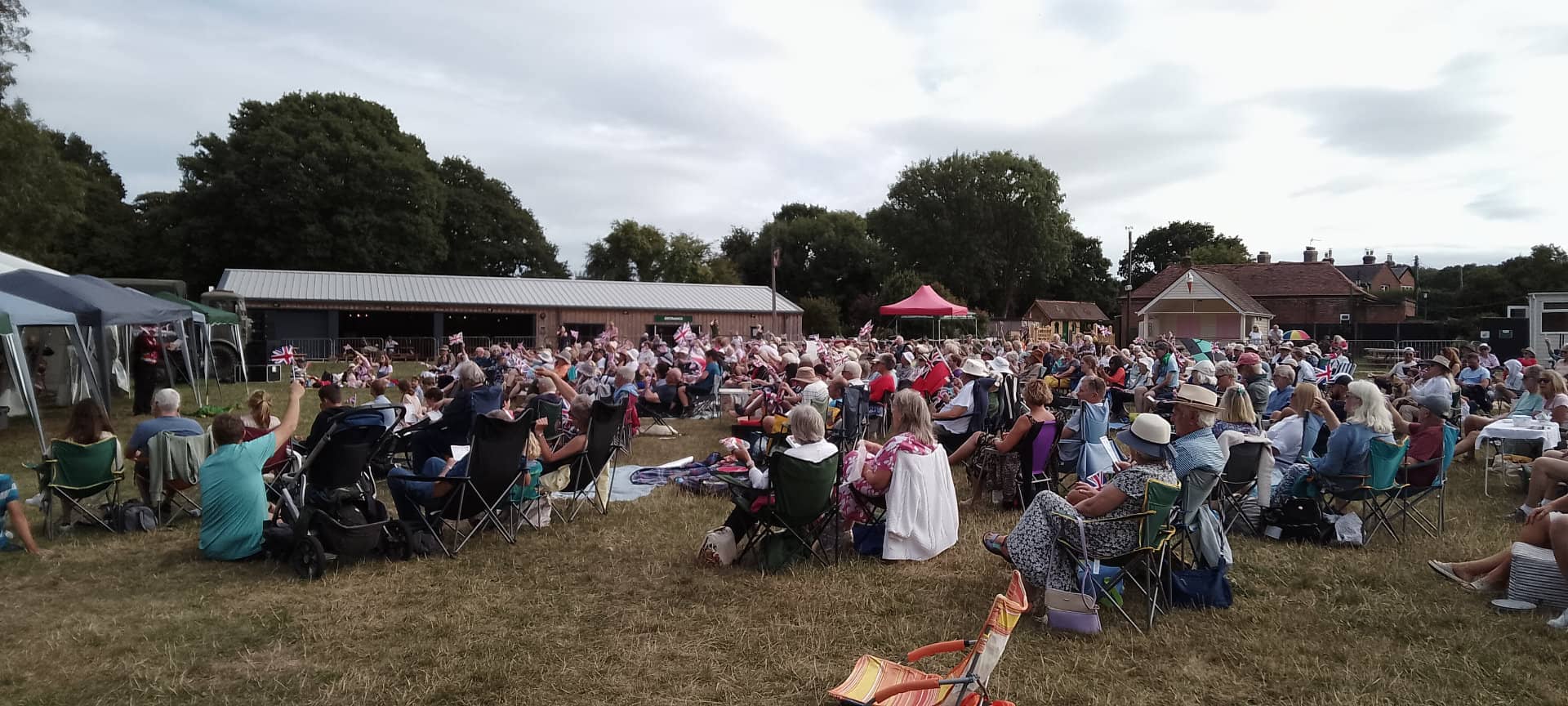
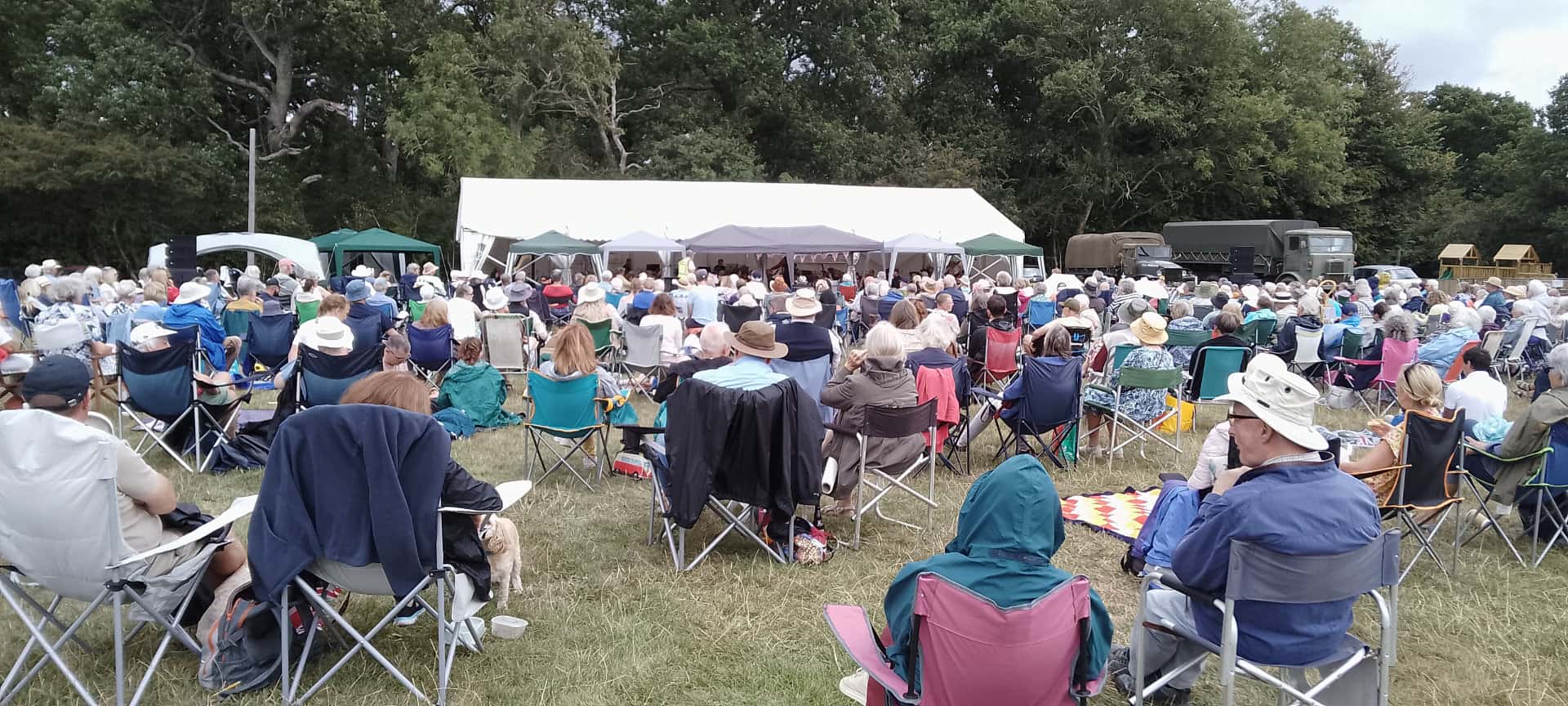
Inside a huge marquee at Havenstreet Railway Station, the orchestra crammed in, and the public arrived, spreading out their deckchairs and picnics with their children and dogs, applying food and drink and sun cream and donning hats, prepared for a fun-filled concert of classics and train-related and patriotic music, while the sun shone down and the trains arrived and left with billows of steam and whistles blew.
It was idyllic and idiosyncratic and very English.
Windsor Wives
The conductor, Mr Jonathan Butcher, welcomed everyone, and the orchestra struck up with the glorious Overture to the Merry Wives of Windsor, by Otto Nicolai. Premiered in 1849, this is a rumbustious version of the life of Falstaff, with an emphasis on comedy and romantic intrigue.
The overture gallops along at pace, lively and vigorous, providing a perfect opener for the concert and the afternoon to come.
Slavonic Dances
Next was a repeat of two of Antonin Dvorak’s Slavonic Dances numbers 3 and 8, played brilliantly by the orchestra in the last concert of the season. Dvorak wrote these as vigorous dance melodies, with lots of energy and character. No. 3 is described as a Polka, and runs along smoothly and enjoyably, and I was listening trying to imagine numerous dancers exhausting themselves to it. Perfect.
No. 8 is described as ‘Furiant’, and cracks on at a terrific pace. I’m sure I’d have retired early, thoroughly exhausted. The orchestra played it magnificently, at great speed, and furiously. It sounded even better in the fresh air.
Monks in a Garden
The mood shifted with the next piece, In a Monastery Garden by Albert Ketelbey, written in 1915. Ketelbey himself lived in Cowes from 1949 to the end of his life.
He composed this piece of light music including birdsong and monkish chanting by the members of the orchestra, and has always been popular with the public.
It conjures up feelings of tranquillity and lush summer days and rural beauty. It matched perfectly the mood and setting of the concert.
Puffin’ Billy
Another immensely popular piece followed. Puffin’ Billy is instantly familiar to anyone who ever listened to the BBC radio in the past, and maybe still today. Edward White composed it in 1952 after hearing the trains during a visit to the Isle of Wight, and it became the theme music for Children’s Favourites.
The orchestra struck up this jaunty tune with wit and liveliness. It’s impossible to listen to it without tapping your feet and jigging along. It was lovely, and, again, perfect for the afternoon.
Poirot’s Finest Moment
I remember the first time I went to see Murder on the Orient Express at the cinema, featuring Albert Finney. There was a magnificent build-up as the passengers made their way to the train in Istanbul Station, with darkness and steam, and brilliant atmospheric music.
Finally the doors slammed, the whistle blew, the headlight blazed, and the train started to move, with the music swelling and speeding up with the train’s acceleration. It is one of my favourite film moments ever. I sat spellbound, listening to Richard Rodney Bennett’s beautiful waltz, played to perfection by the orchestra. My heart soared.
A Spoonful of Musical Sugar
The last piece before the interval was a suite of music from Mary Poppins, iconic music written by Robert and Richard Sherman.
It was a joyous collection of memories and musical genius, evoking so many scenes from the story and the film, and bringing back not only the experience of watching the film, but its emotional impact and the sheer wonder at how all these fantastic artistic skills can create such an impact for so many people. It was blissful.
Tyrannosaur Music
After the interval, the orchestra settled down to play the brilliant and dramatic Theme from Jurassic Park, by the monumental composer John Williams.
He manages to create an utterly memorable theme melody, and at the same time brings in so many of the emotional impacts and effects of the film itself, leaving the listeners with a sense of wonder and created an awe, as well as the thrills and suspense of the story.
It stands in its own right as a piece of music, as much as the film that it accompanies. The orchestra played it with maximum drama and effect.
Pineapple Poll
After the dinosaurs, the orchestra played Pineapple Poll, also played at the last concert. It’s an extraordinary tribute to all the music of Arthur Sullivan, combined into a ballet suite for the Festival of Britain in 1951 by Sir Charles Mackerras.
There is a lot of music in this, and I’m no expert, but rumour has it that it’s all in there. I lost count of individual tunes, and had no idea where any of them should be placed, but it flies along breathlessly fast, as a fitting tribute to this most English of composers.
Prom Classics
After all this, the final part of the concert contained some major Prom-style items. First the Fantasia on British Sea Songs by Henry Wood, premiered in 1905, followed by the First March from Pomp and Circumstance by Edward Elgar, and culminating with Jerusalem, by C Hubert H Parry, written in 1916 to accompany William Blake’s poem, and then orchestrated by Edward Elgar in 1922. These contained several memorable moments.
Mr Butcher having to apologise for the failure to turn up of the internationally-famous Tenor due to helicopter malfunctions, and his memorable singing of Land of Hope and Glory, instructions for correct twirling and waving of Union Jack flags by the audience, and the ensemble singing by everyone present who was not playing an instrument. It was tumultuous and joyful and it was enthused with a real feeling of sentiment and community and exuberance. What a memorable concert!
Encore!
As if that wasn’t enough, there was a rousing version of the Dambusters March, written in 1955 by Eric Coates, and the theme tune for the memorable film. Amazingly it was not written for the film itself. Coates had just written it as an exercise and told the filmmakers they could use it if they wanted. And the rest, as they say, is history.
I had a wonderful afternoon, I believe that everyone else did, looking at their happy faces as they trekked back to the car park, or to wait for a train to take them back to their homes. And the sun shone down despite the lingering clouds at the beginning of the afternoon. It was a memorable concert, and a true and fitting end to a great season of concerts.
Thank you to all those who provided us with such a splendid afternoon. I‘m looking forward to the next season even more now.