Jonathan Dodd shares his review of the latest Isle of Wight Symphony Orchestra (IWSO) concert. Images with kind permission of Allan Marsh. Ed
The Isle of Wight Symphony Orchestra performed the third concert of the 2025-26 season on Saturday 14th March, at the Medina Theatre. As usual, there was a full house, and the entire audience was ready for an evening of inspiring music.
I was delighted to find that I had never heard any of the pieces, so I had no expectations or prejudices in my mind as I took my seat. I did know, without a doubt, that they would be brilliantly performed and a pleasure to listen to. And I expected, as always to be able to add more outstanding music to my store of musical memories.
Ice Maiden Suite
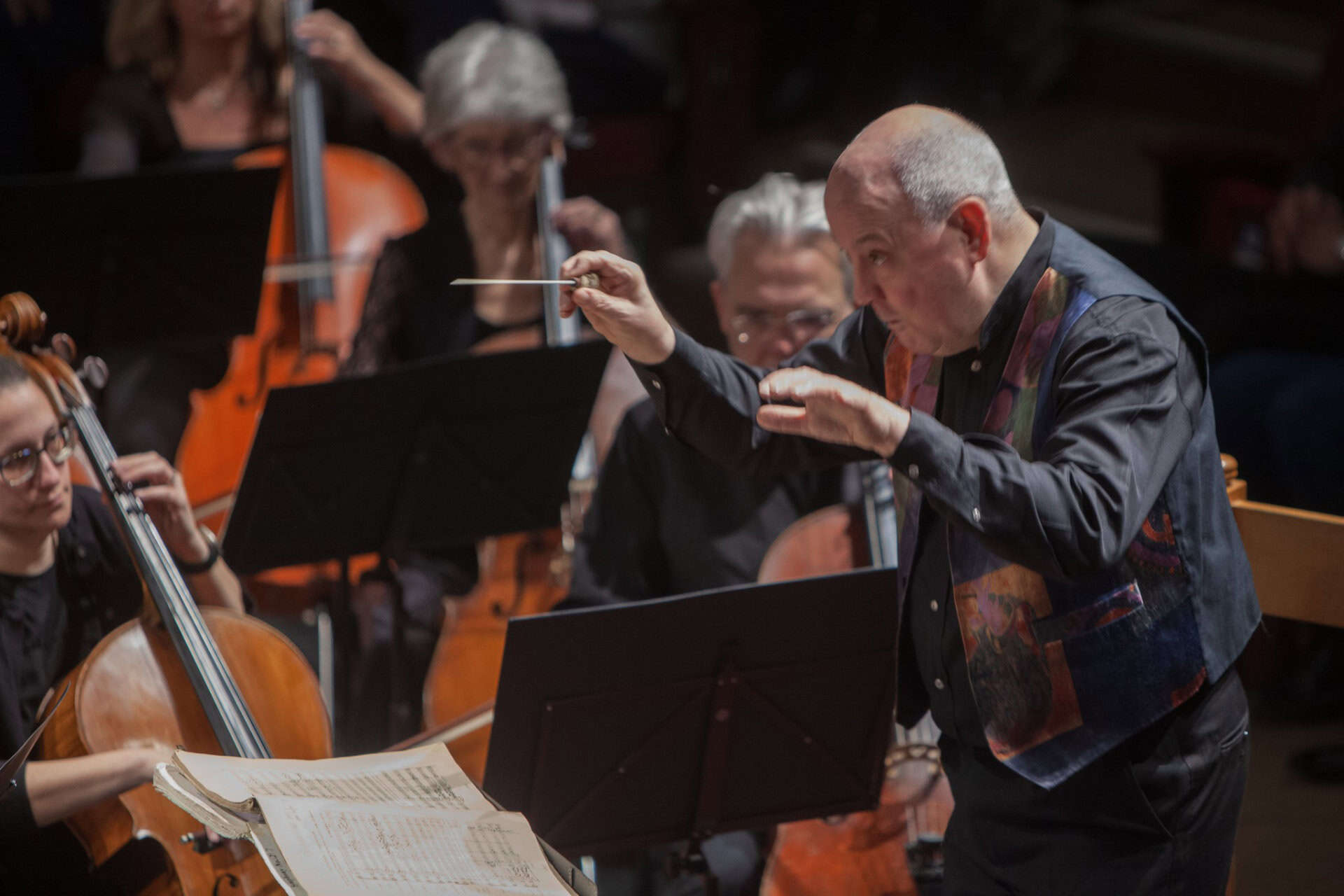
As the orchestra settled down, it was a delight to see Mr Jonathan Butcher take the stage to conduct, giving us a brief introduction to the music to come. Nikolai Rimsky-Korsakov was one of what was known as ‘The Group of Five’, who championed the folk tunes and culture of Russia in the second half of the 19th century.
He wrote The Snow Maiden opera in 1881, and the Suite consists of four movements arranged for orchestra. The Introduction is quiet and solemn and quite chilly, as befits the Russian winter, with a dash of excitement in the air. The orchestra played this beautifully, setting the scene for the other pieces.
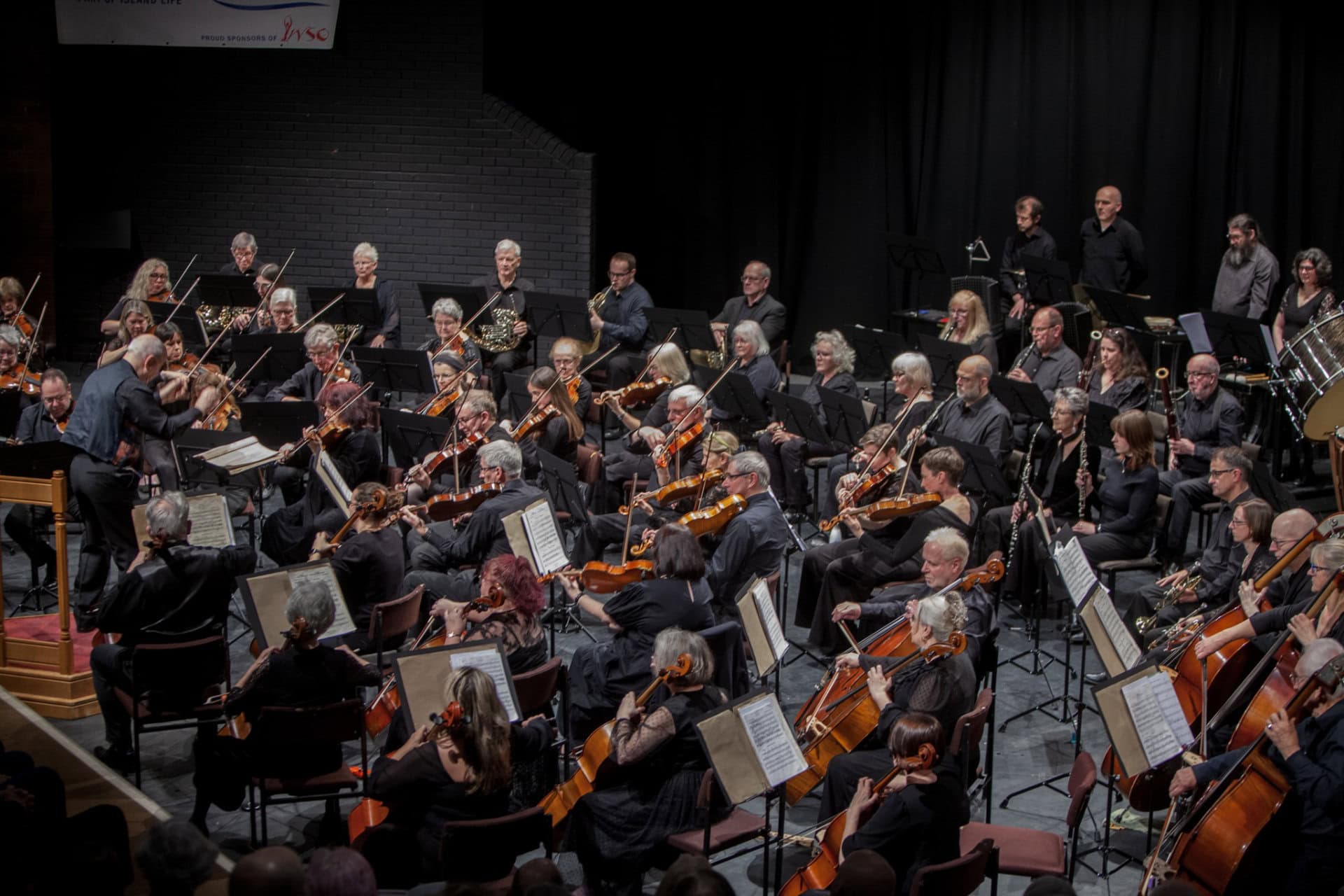
The second section is called The Dance of the Birds, and was filled with birdsong, played by most of the instruments of the orchestra. I have heard birdsong represented in many classical pieces, but never so many at the same time. It was delightful.
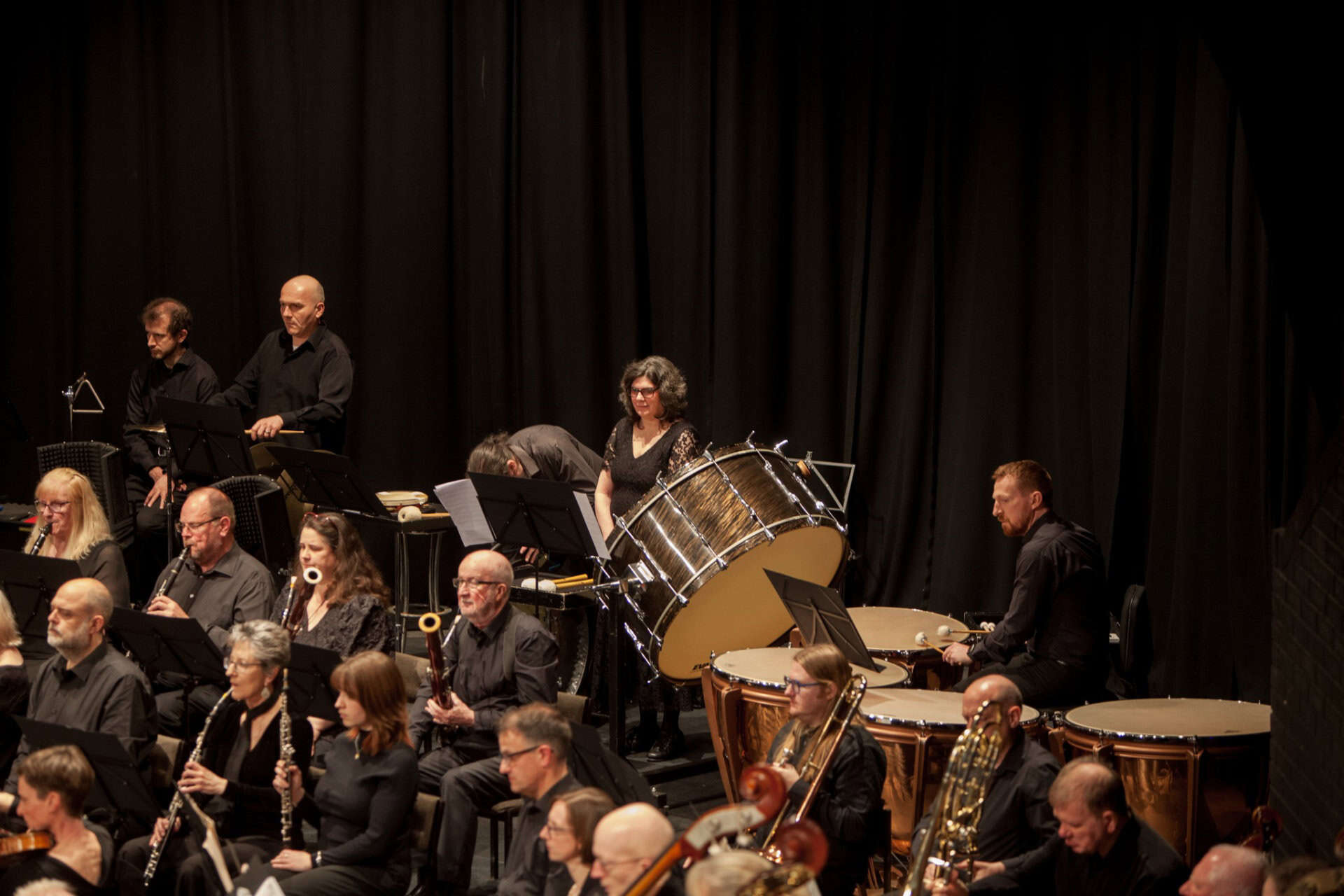
The third part was the Cortege, a stately procession, and the last part was something I recognised, although I didn’t know what it was before. The Dance of the Tumblers is somehow stately yet energetic, suggesting again a procession but with vivid dance and acrobatic movement, with at its heart a joyous and uplifting tune. It was played with spirit and energy, and was an excellent way to introduce the evening’s performance.
Trumpet Concerto
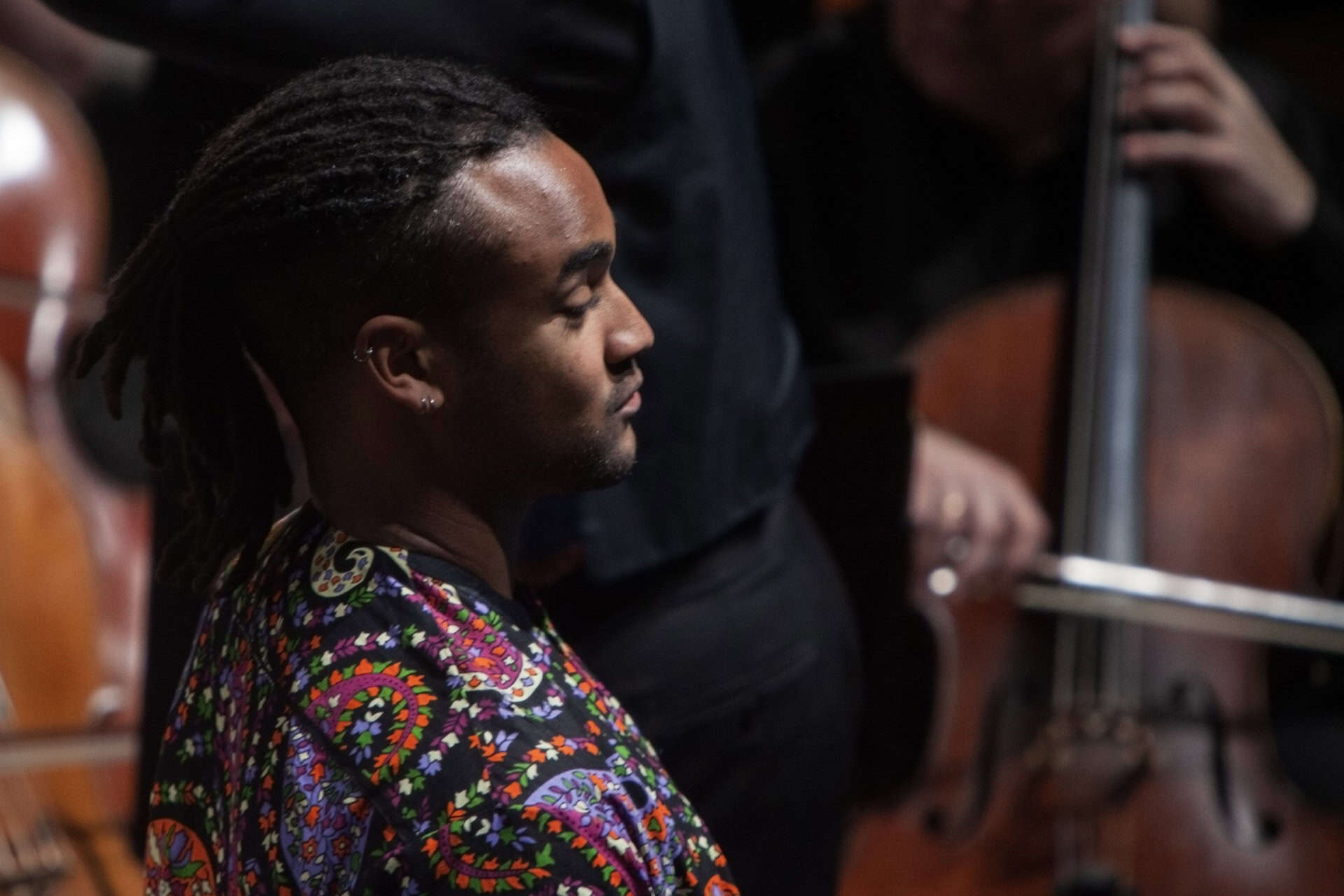
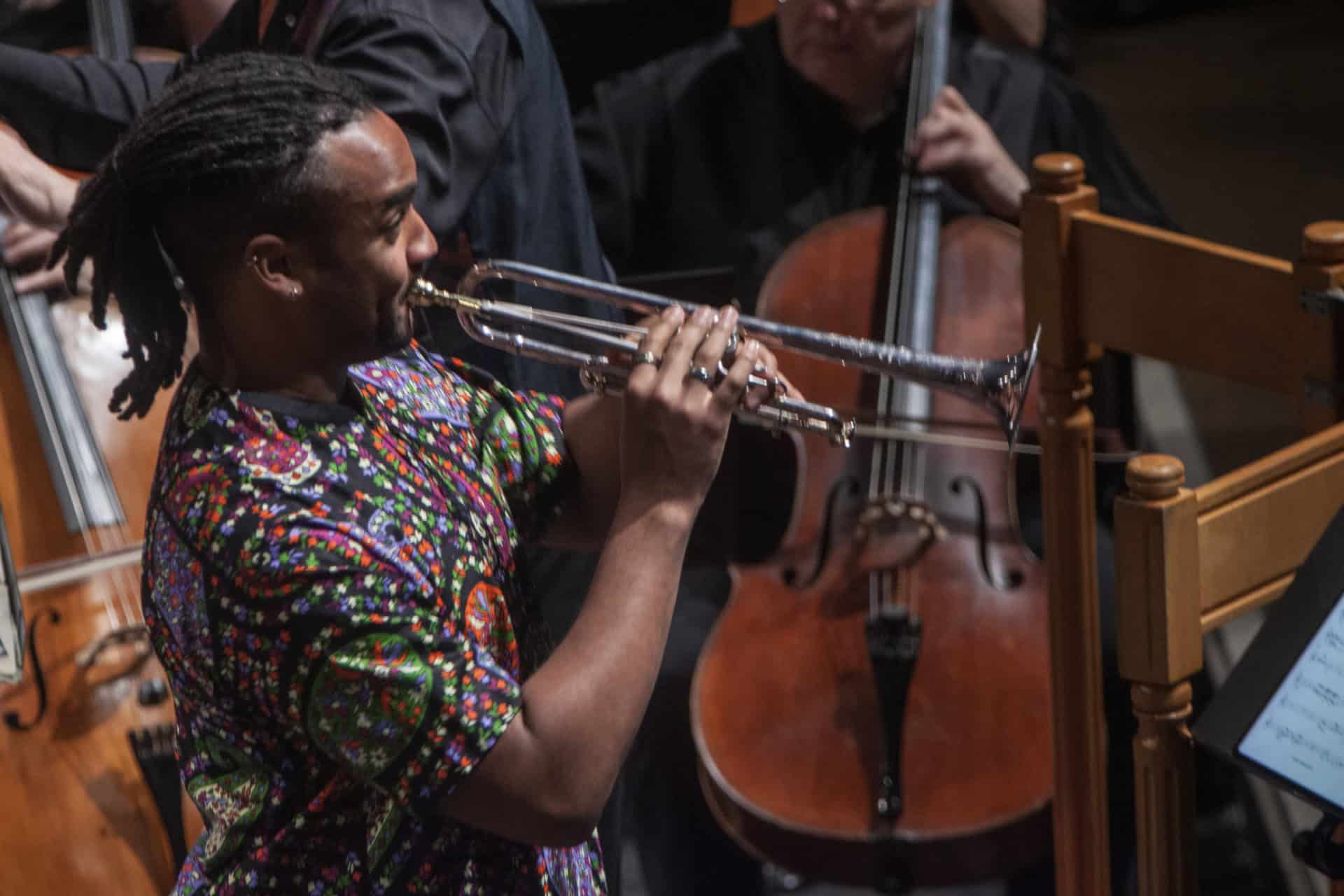
After some furniture shifting, Aaron Azunda Akugbo entered the stage with his trumpet. He cut a striking figure in a gloriously colourful and bejewelled top, and he made a great impression as he beamed on the whole audience. We were all excited to hear what he was going to play.
Not a name I have heard before, Johann Nepomuk Hummel who was recognised as a child prodigy, living and learning in Mozart’s house, and performing at nine years of age, and became an important figure in European music, pioneering pensions for musicians, and copyrights for their compositions. His Trumpet Concerto was first performed in 1803.
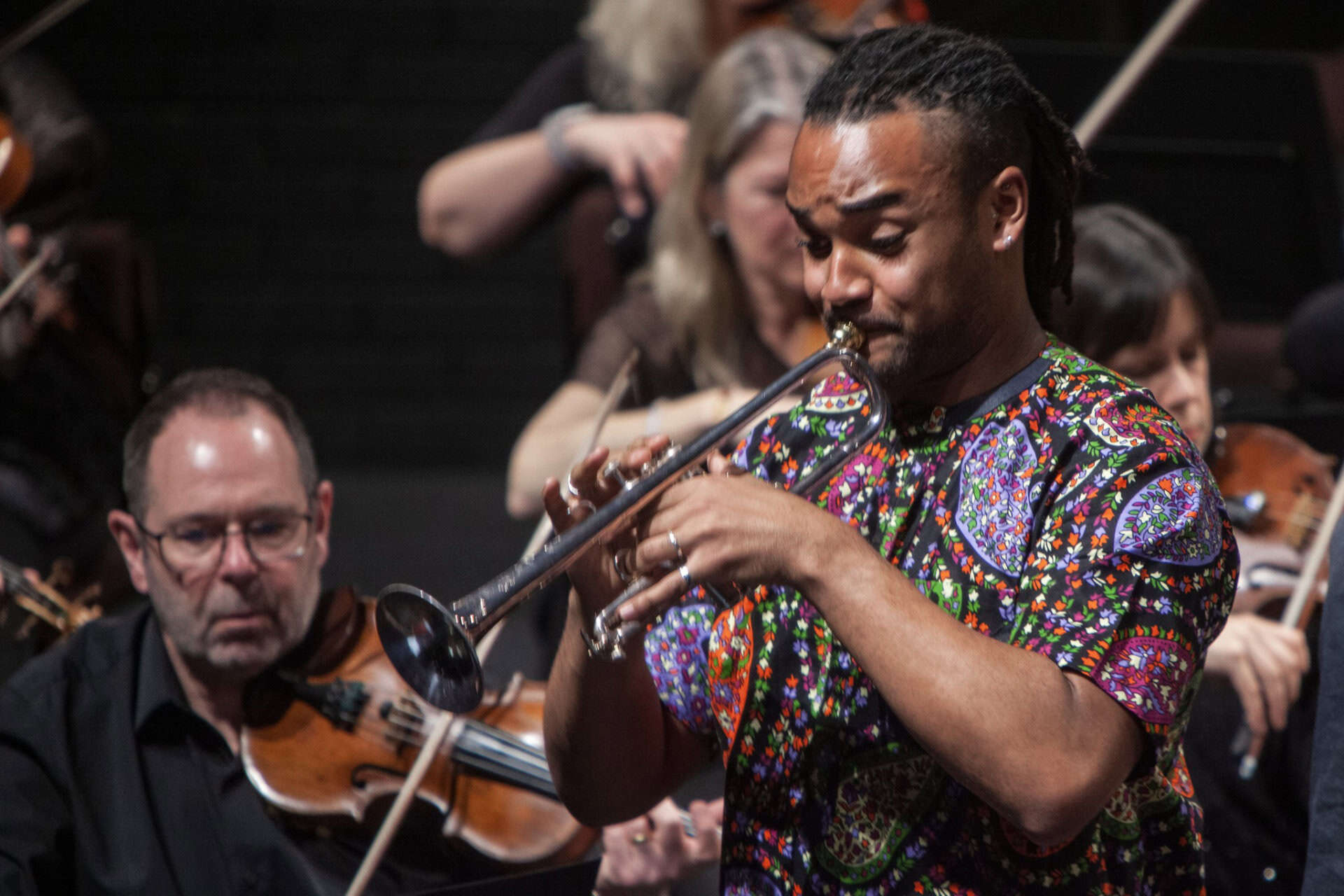
The first movement contains delightful tunes for the relatively new valved trumpet, allowing it to show off its range, with energetic backing from the orchestra, allowing both to shine. The second and third movements were slow, with a continuous triple beat from the orchestra underlining the dignity of the trumpet.
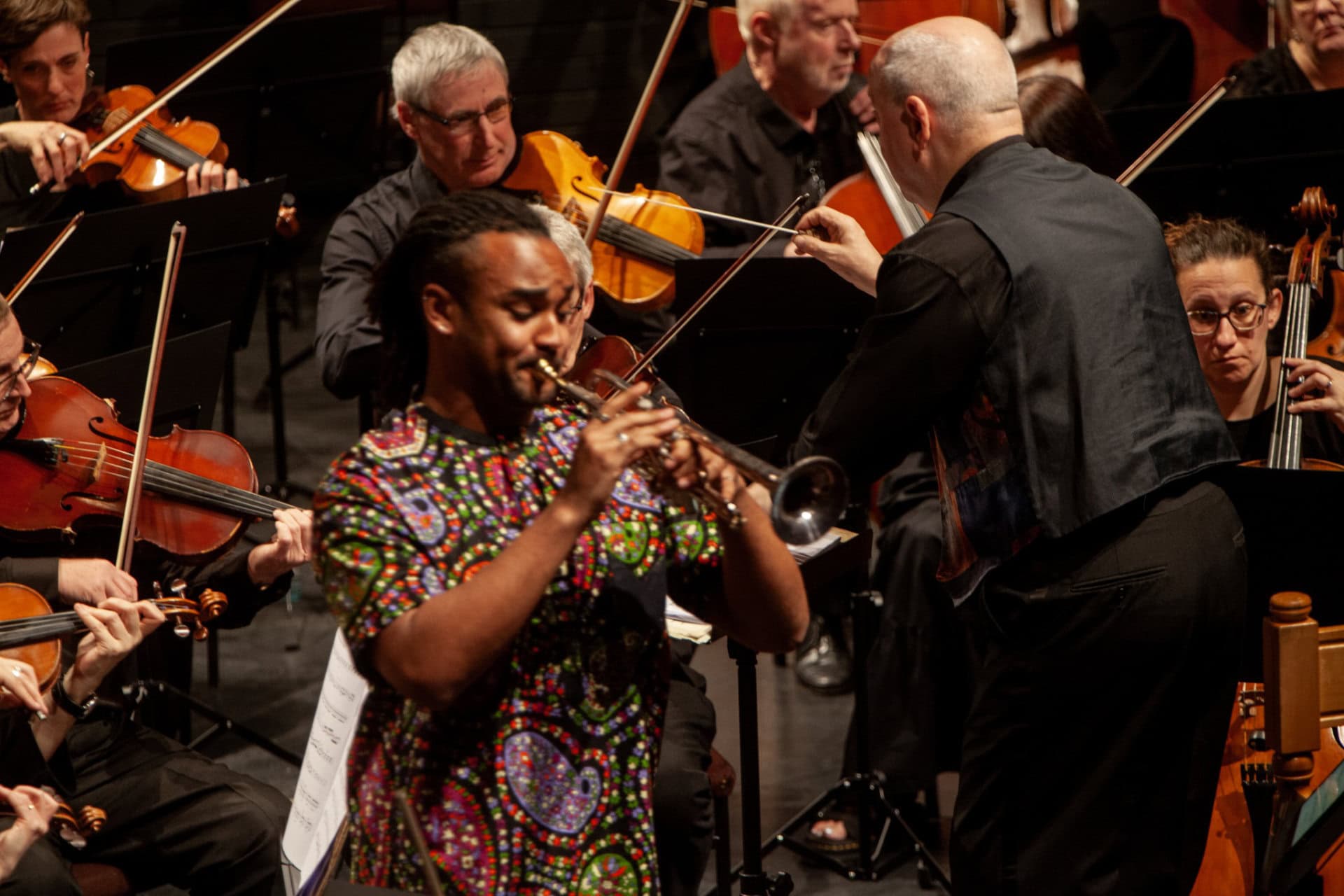
The whole concerto ended with a thrilling rally, led by the trumpet and followed by the orchestra, into a dramatic and triumphant ending. Mr Akugbo played throughout with a lovely clear tone and control, and enjoying every moment. There was thunderous applause afterwards. I hope he comes to play for us again soon.
Dvorak’s Symphony No. 7
After the interval, the orchestra and conductor assembled with a sense of anticipation, and Mr Butcher launched them into a huge and spirited performance of Antonin Dvorak’s Symphony No. 7 in D Minor. I admit I was only familiar with his 9th Symphony and Cello Concerto before, and because I had not paid attention I wasn’t aware that this was a Dvorak Symphony.
Because of this, I found myself listening to the music with intent concentration, initially because I was trying to guess the composer, but then because I became thoroughly caught up in the music itself. The first movement was terrific, with drama and strong melodies and a sense of struggle and release at the end.
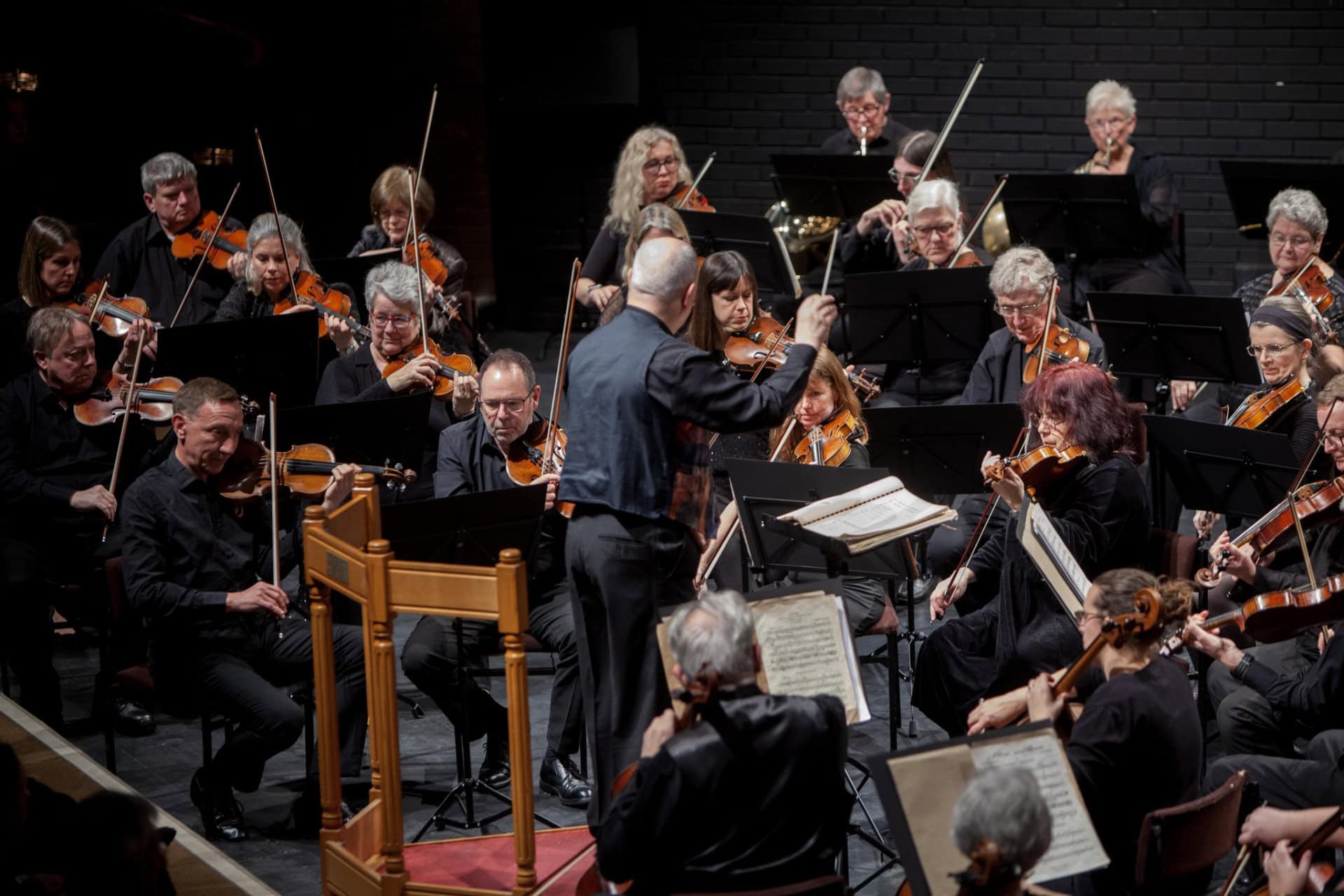
The second movement is slow and thoughtful, with clarinet and horn articulating the beginnings of a sense of thoughtful optimism and hope. Throughout, the strings provide a lyrical background of changing moods, and the whole movement ends in a delicious gradual fade to silence.
I was entranced by the music and the playing and by the obvious total concentration on the faces of all the players. The third movement is a furious dance played at pace in triple time, with a lovely tune at its heart and a lively sense of movement, leading to a thrilling finale.
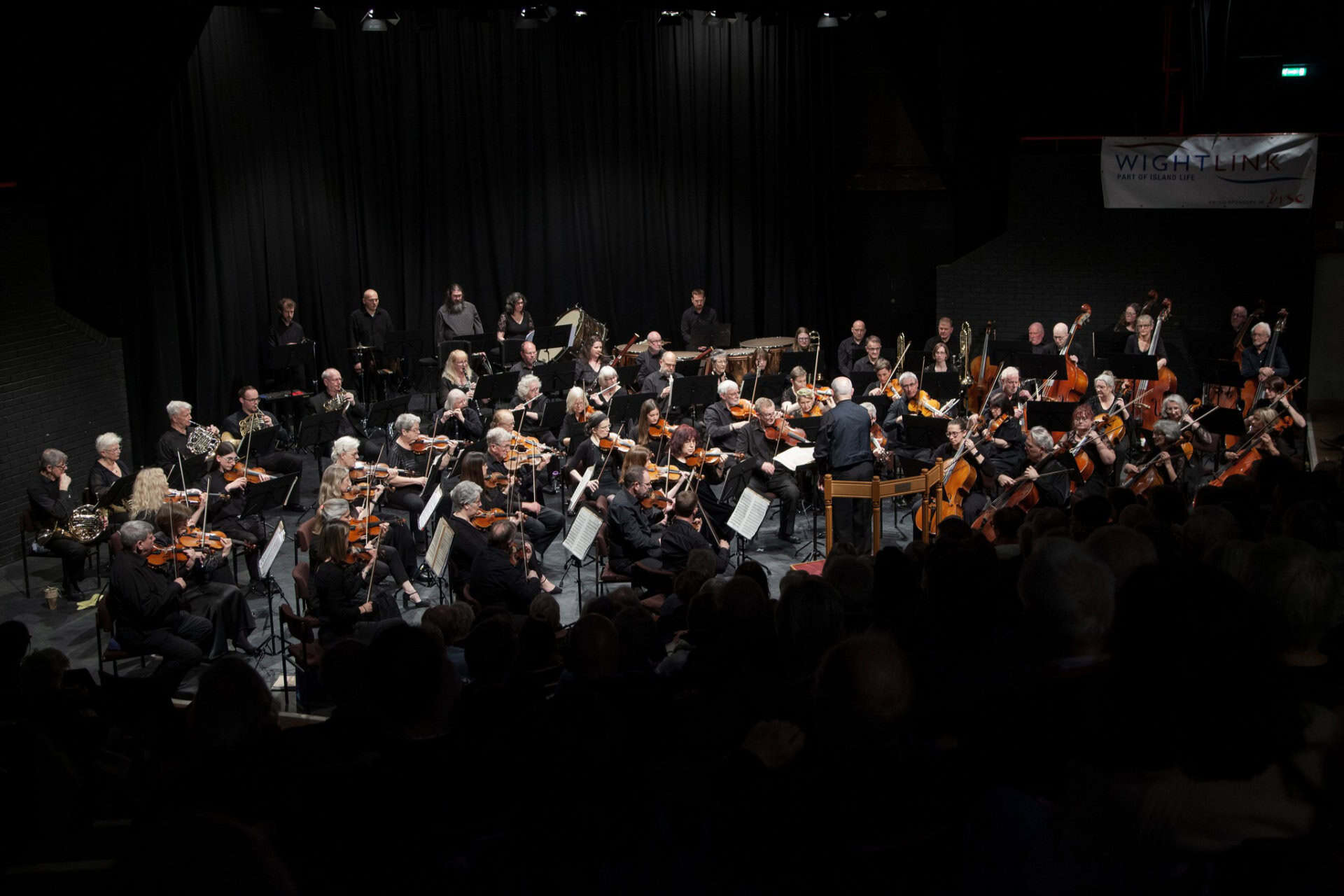
The final movement conveys much struggle and emotional turmoil, softened by lovely hopeful interventions by clarinet and horns. It proceeds at a thrilling pace, building in volume and tempo into a series of crescendos that resolve at the end to a sense of triumphant but exhausted resolution. I was rapt throughout.
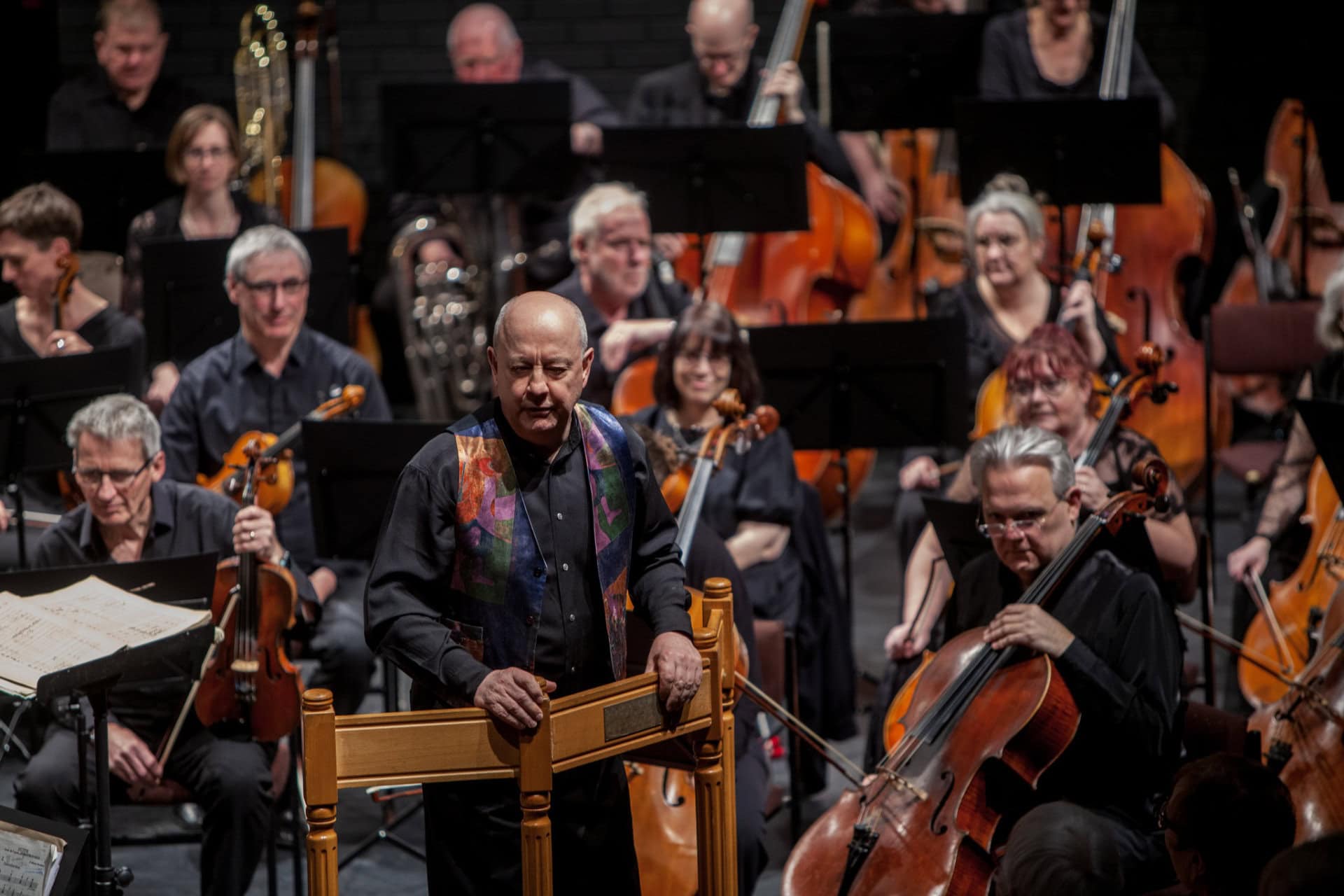
At the end I could plainly see that the members of the orchestra had lived every moment, and were both triumphant and exhausted themselves. I shall never myself experience being a part of such a huge undertaking, but I’m profoundly grateful to all involved for letting me witness and participate in a performance of such brilliance and power. Well done, and thank you all. Keep up the good work!
Next concert
The next concert in the IWSO 2025-2026 season starts on Saturday 16th May 2026 at 7.15pm, at the Medina Theatre, titled ‘Romantic Masterpieces’. I’m already salivating.
The IWSO will be playing Hector Berlioz’s Overture: Le Carnaval Romain, followed by Gerald Finzi’s Nocturne, Max Bruch’s Violin Concerto No. 1 in G Minor, played by Charlie Lovell-Jones, followed by Jean Sibelius’ Symphony No. 1 in E Minor.
This time I shall be prepared, because some of these are very familiar, and I will enjoy hearing them played live for me by the orchestra.
This fantastic season seems to be getting better and better, so you had better get your tickets as soon as possible. You won’t regret it. I wouldn’t miss it for anything!
See you then!