The union Unite has launched a public petition urging the RNLI to reconsider plans that could cost jobs at its Inshore Lifeboat Centre on the Isle of Wight.
Around 70 people currently work at the East Cowes base.
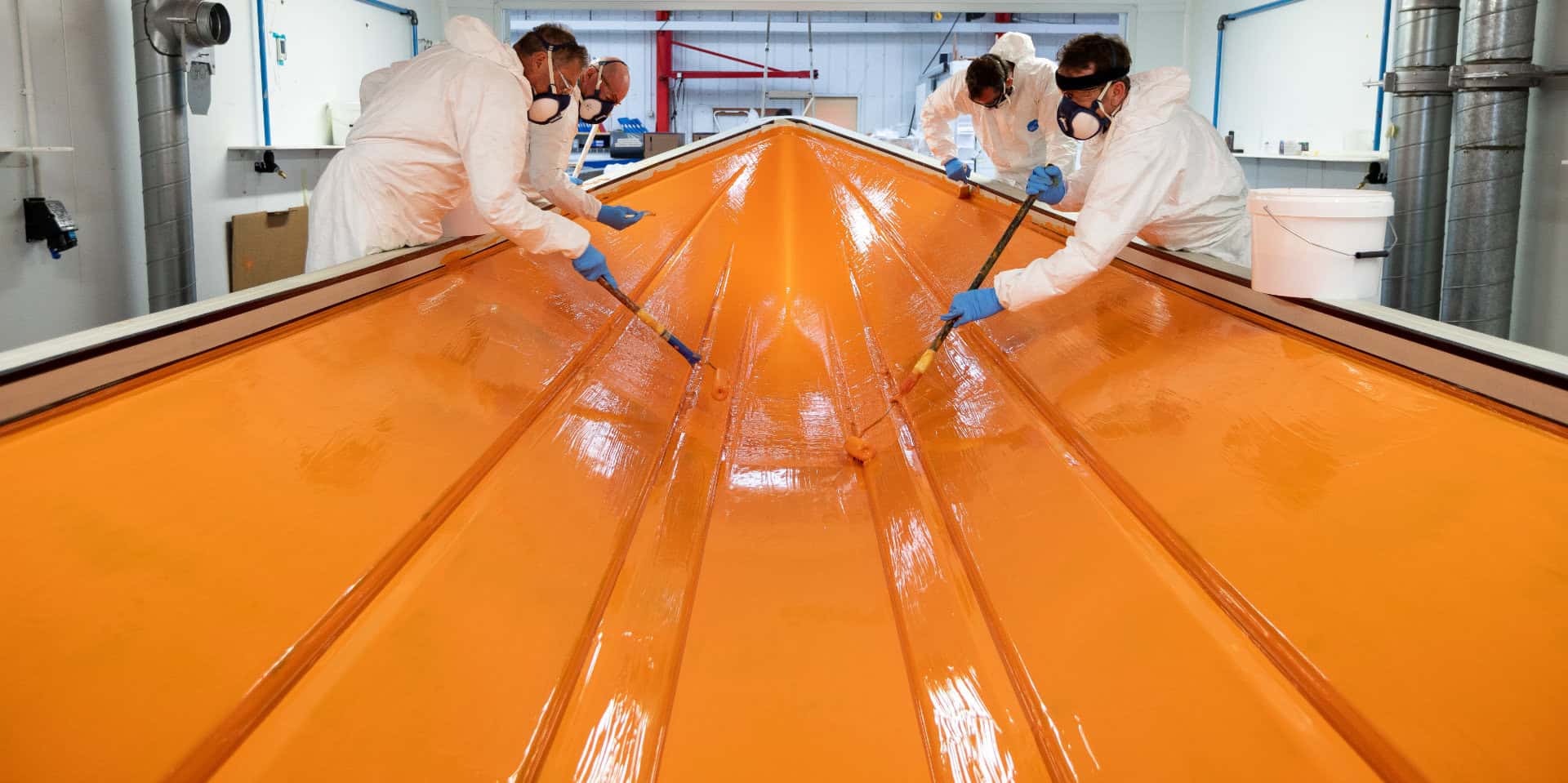
These workers build, maintain and repair lifeboats for more than half of the 238 stations the charity operates across the UK.
The petition calls on the RNLI to “think again”, recognise Unite as the workers’ union, and start negotiations.
It also accuses the charity of refusing to recognise Unite up to this point.
A site with six decades of history
The Inshore Lifeboat Centre opened its doors in 1963. Over more than 60 years, staff there have built, maintained and repaired close to 2,000 lifeboats.
The site currently handles up to 80 boats a year, including B class and D class inflatable lifeboats and inshore rescue boats used by lifeguards.
Why the RNLI wants to relocate production
The RNLI first set out its reasoning back in October 2025, as part of a Five-Year Plan and a 2040 Lifeboat Fleet Strategy.
The charity points to a shift in how people use the sea around the UK and Ireland.
More people now take part in activities such as open-water swimming and paddleboarding close to shore, rather than further out as in previous decades.
RNLI Chief Engineer and Technical Director Ross Barraclough explained this shift when the plans were first announced.
He said,
“Use of the sea around the UK is changing – our data shows 98 per cent of all RNLI rescues now are within ten nautical miles of the shore compared to years ago when demand was for commercial fishing further offshore.”
Demand for new lifeboats is expected to fall by around a third, and Mr Barraclough said this represents “an anticipated reduction of around 82,000 production hours” for production teams.
Keeping the Cowes site compliant would reportedly need about £5 million in capital investment, while Poole’s purpose-built facility already houses every stage of all-weather lifeboat construction under one roof.
Strike ballot now on the table
Unite confirmed it now intends to ballot members for strike action over the dispute.
The RNLI responded directly to this development in a statement to OnTheWight.
Mr Barraclough said,
“While we’re disappointed to hear of the plans to ballot for strike action, the wellbeing of our employees has been at the heart of our approach from the very beginning, and we will continue to provide support to all our staff at the Inshore Lifeboat Centre (ILC).”
He went further, challenging Unite’s account of the process directly.
He said,
“Unite’s statement misrepresents and does not accurately reflect the extensive engagement and the sincere efforts that have been made to support our colleagues throughout this period of change.”
RNLI sets out transition support package
The charity says it has built a transitional support plan through formal consultation, employee forum meetings, drop-in sessions and one-to-one conversations.
Mr Barraclough described the plan as offering “a range of potential tailored options for our people, including voluntary redundancy opportunities, redeployment, relocation support, and career transition assistance”.
He confirmed the RNLI has also committed to “guaranteed job opportunities in Poole for our production employees”, which he said reflects a determination to retain skills and experience within the charity.
He pointed to the length of the proposed transition as evidence of this approach.
He said,
“The phased transition over 18 months has been thoughtfully designed to give as much notice as possible to our valued ILC colleagues, so that we may support them and their families during this difficult time, whilst supporting the long-term delivery of the RNLI’s vital lifesaving service.”
Union recognition dispute continues
Mr Barraclough addressed the question of formal recognition for Unite directly.
He said the RNLI remains “fully supportive of the statutory recognition process being managed by the Central Arbitration Committee (CAC)”, and confirmed this was discussed with ILC and regional Unite representatives as recently as last week.
He said the charity is waiting on the CAC’s decision over granting Unite collective bargaining status, and understands the committee has asked for further information before deciding.
In the meantime, he said discussions continue informally between the two sides.
He said,
“We would wish to work openly and constructively with both Unite representatives and ILC employee representatives on matters affecting our colleagues, just as we would expect to do in any positive industrial relations environment.”
RNLI acknowledges impact on East Cowes community
Mr Barraclough closed by recognising the wider effect of the proposals on the local area.
He said,
“We recognise this is a difficult and unsettling time for our ILC colleagues and the East Cowes community.”
He said the charity remains committed “to treat everyone with fairness, openness, kindness, and respect, to continue engaging constructively with employees and their representatives, and to ensure the RNLI can continue delivering its lifesaving service for the future”.
What happens next
Unite’s petition remains live, calling for the RNLI to pause its plans and formally recognise the union.
The CAC’s decision on Unite’s recognition request is still pending.
A formal consultation process linked to the relocation proposal continues alongside the union dispute.