Jim McMahon, Minister for Local Government, has announced the Government’s intention to scrap the committee system of local council governance, aiming to simplify decision-making structures across England.
The announcement came during a ministerial statement to Parliament on 24th June, outlining upcoming legislation designed to improve efficiency, transparency and accountability in local government.
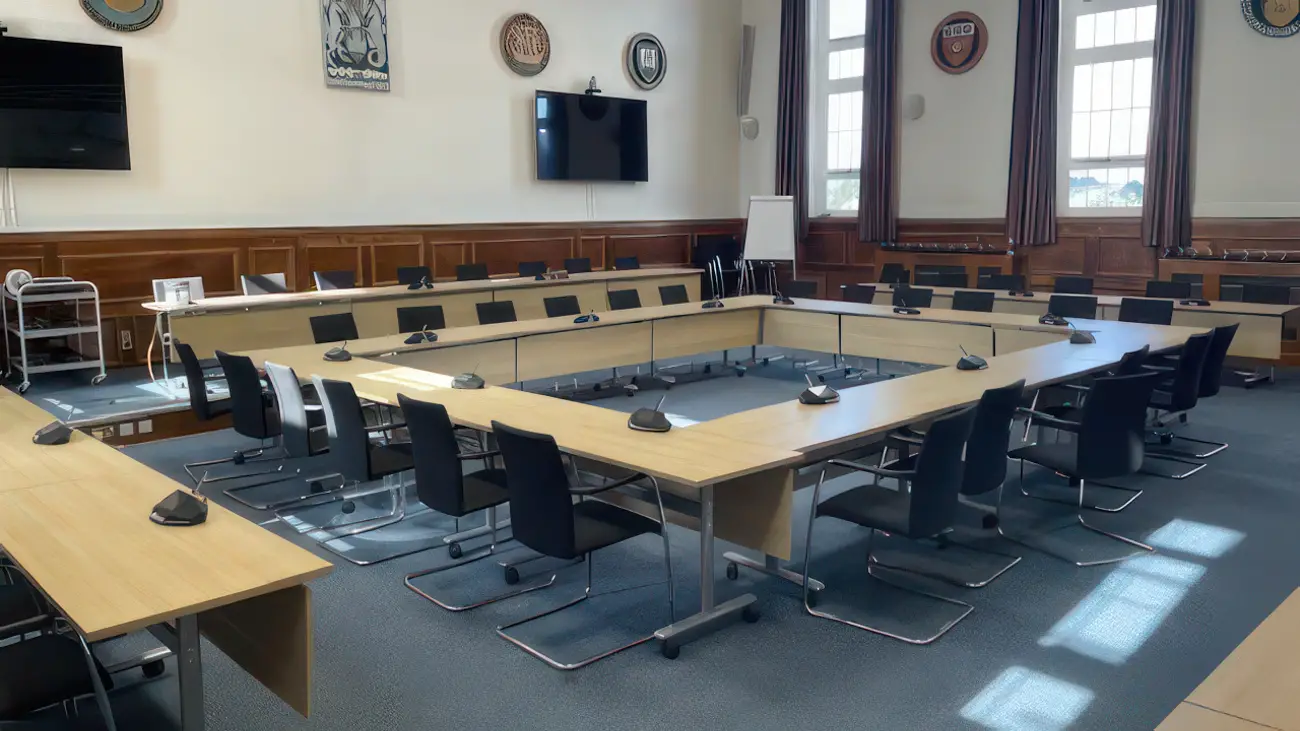
It comes just as Isle of Wight council switches from Cabinet system to Committee system.
Cabinet system to become standard
Currently, councils can choose from three governance models: leader and cabinet, directly elected mayor and cabinet, or the committee system.
Mr McMahon described this system as “complex and opaque”, particularly criticising the committee model as “unclear, duplicative and wasteful”. He argued it leads to slower and less effective decision-making, which can confuse the public and waste taxpayer money.
Under the Government’s proposal, all councils will be required to adopt the leader and cabinet model. This will become the standard for local authorities in England, with existing scrutiny arrangements remaining in place.
Isle of Wight council would need to reverse governance change
The Isle of Wight council, which only recently shifted from a cabinet to a committee model (as approved by Full Council in May 2024), would need to revert back to the leader and cabinet system if the legislation passes.
Mr McMahon acknowledged the transition will not be without challenges. Councils will need to carefully manage the process, including changes to leadership and administrative procedures.
No new directly elected mayors
The 13 councils that currently have directly elected mayors will be allowed to continue with that model. However, the Government will not allow new mayoral systems to be introduced in future.
Where new unitary authorities are created through local government reorganisation, they will be required to adopt the leader and cabinet structure from the outset.
Delays to planned referendums and elections
Pending governance changes will be paused through new regulations. This includes delaying any inaugural mayoral elections to May 2027, giving Parliament time to consider the proposed legislation.
A shift towards local empowerment
Mr McMahon stated that the reforms aim to place “the right powers in the right places,” empowering councillors and council leaders to deliver for their communities.
He said the measures would enable councils to tackle major local challenges more effectively, while giving residents clearer understanding of who is accountable.
The Government’s broader goal is to devolve more power from Westminster, with regional mayors playing a strategic leadership role, and local councils focused on delivering public services under a streamlined and consistent structure.
Read Jim McMahon’s speech in full on the Parliament website.
Our thanks to Ian Bond for the heads-up.