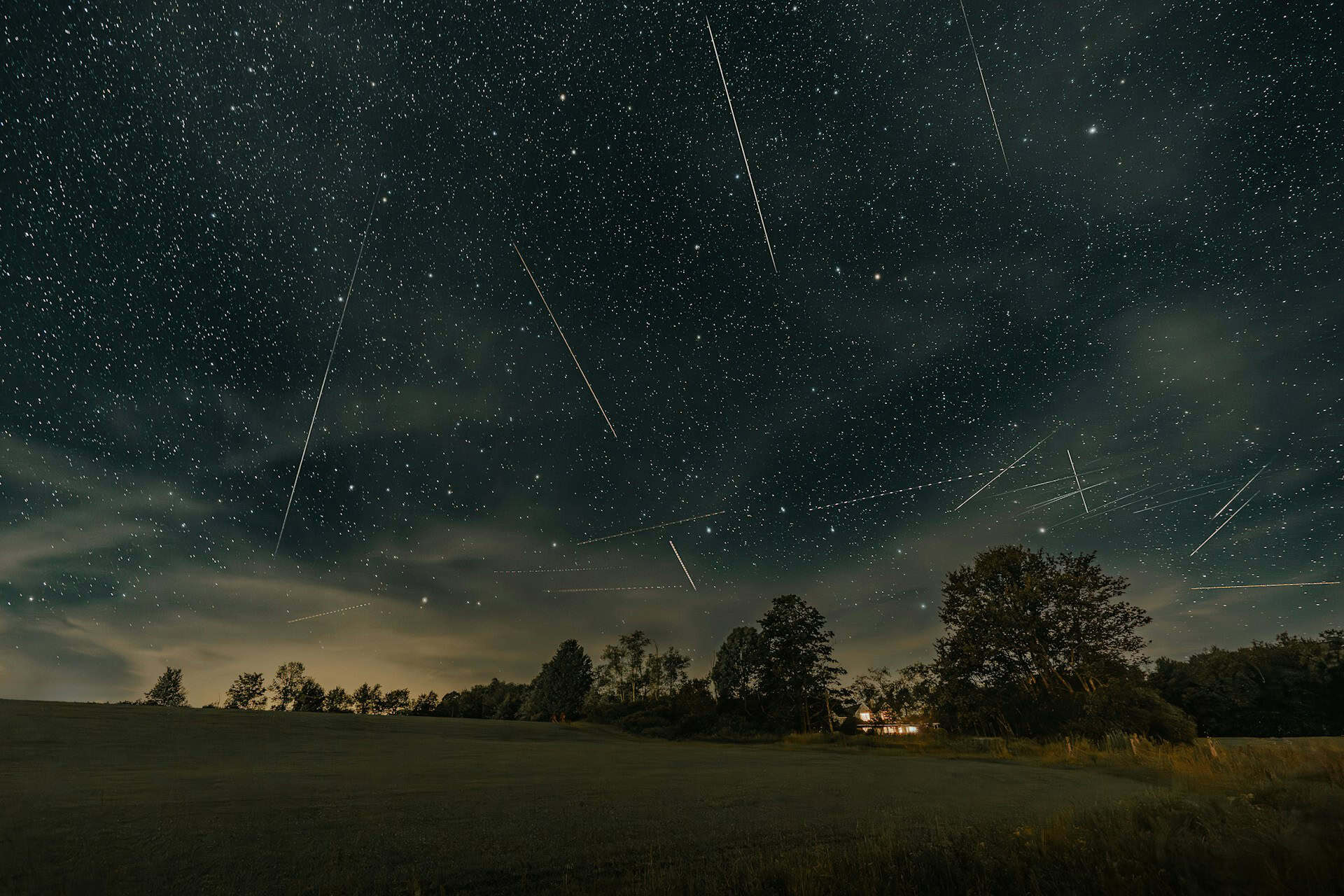
Tonight (Wednesday) offers one of the best chances this year to spot a meteor shower, as the annual Lyrid display reaches its peak.
The shower has been active since 16th April, but Wednesday night marks the highlight, with observers able to expect between 10 and 15 meteors per hour under normal conditions – and bursts of activity that could push that figure to as many as 100 per hour.
What causes the Lyrids?
The Lyrids occur each year as the Earth passes through a trail of dust left behind by Comet Thatcher, producing the streaks of light visible across the night sky.
According to the Royal Museums Greenwich, this year’s peak on 22nd April falls just two days before the First Quarter Moon, meaning moonlight will cause relatively little interference for observers.
Ideal conditions for the Island
High pressure sitting over the UK means cloud cover will be minimal over the coming nights, giving Isle of Wight residents a strong chance of a clear view.
Wednesday night will begin with near-cloudless skies across most of the UK. Those clear skies come with a cost – temperatures will fall sharply overnight, dropping to between 3°C and 5°C across much of the country by the early hours of Thursday morning.
How to get the best view
The shower will remain visible on Thursday night too. The best time to head outside is after 10pm BST, once the sky is properly dark.
Moving away from streetlights and other sources of light pollution will make a significant difference to what you can see.
A crescent Moon will sit in the north-western sky during the earlier part of the night, so looking towards the east or south-east will give a darker, clearer view.
For a completely dark sky, waiting until after 2am BST – when the Moon sets below the horizon — should give the clearest possible conditions.
No special equipment is needed; the meteor streaks are visible to the naked eye, though photographers will require a camera capable of high-exposure shots to capture them on film.
Apologies to those who receive this article in the Thursday morning newsletter – we only noticed this news on Wednesday morning