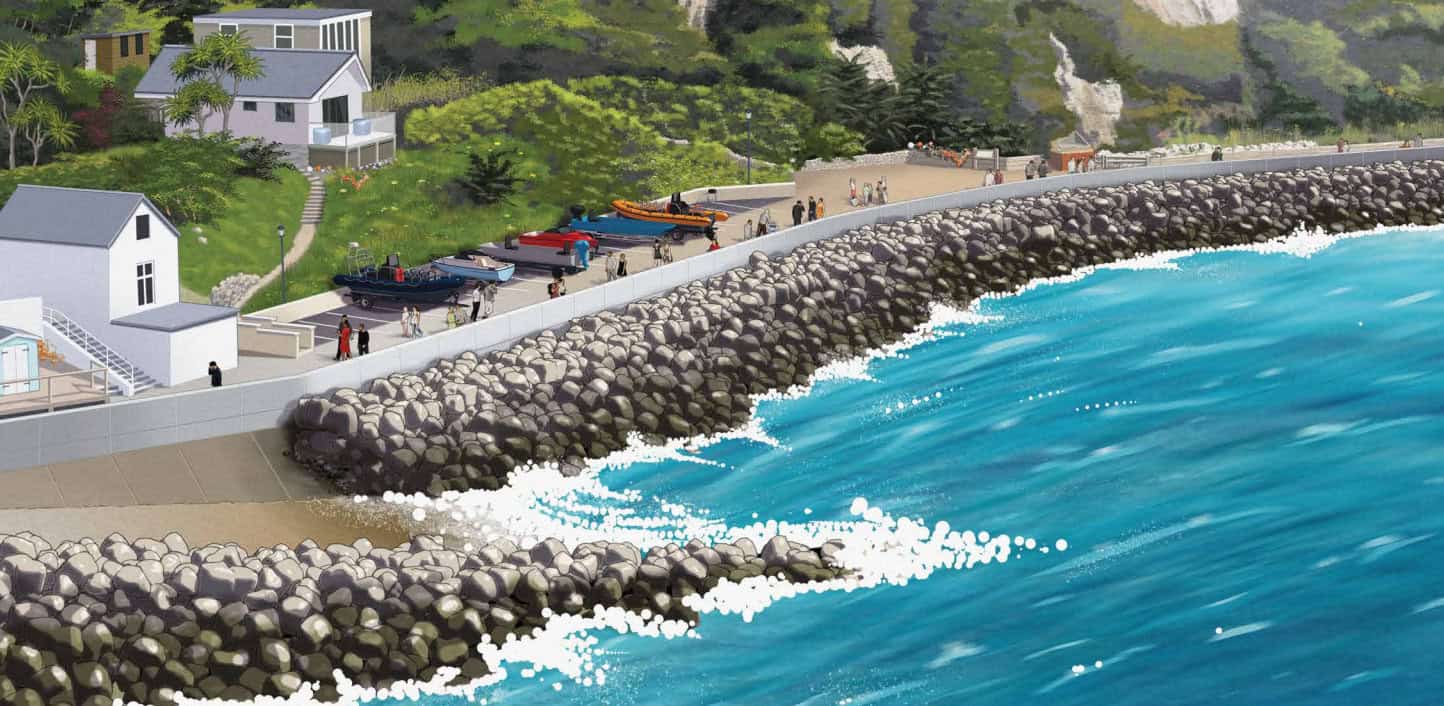
A new online resource has gone live, offering detailed information about the coastal defence schemes planned for Shanklin, Yaverland and Ventnor.
The pages includes background information, key documents, updates from public engagement events, as well as a summary of the next steps for each location.
Supporting community involvement
The online resource is a joint initiative by the Environment Agency and the Isle of Wight council.
They aim to make it easier for residents, businesses and other stakeholders to stay informed and contribute their views by allowing questions and ideas to be submitted directly online.
Public events gathered local views
Earlier this year, community engagement events took place in Ventnor, Shanklin and Yaverland.
More than 400 people attended, and over 200 submitted feedback.
The events focused on the urgent need to address coastal erosion and flooding, while also exploring opportunities to improve the seafront areas.
Community priorities identified
The Environment Agency say the feedback report highlights several clear themes.
People want coastal protection that is not only effective but also accessible, visually appealing and in keeping with local character.
There was strong support for placemaking features such as more seating, planting, better signage and the inclusion of public art.
Council and Environment Agency respond
Natasha Dix, service director of Waste, Environment and Planning at the Isle of Wight council, said:
“This feedback reflects the deep connection local people have with Ventnor’s coastline, and their clear vision for protection that enhances rather than detracts from what makes this area special.”
She added,
“Residents have shown they want coastal defences that are not just functional, but contribute to the character and accessibility of their seafront.”
David Gaskell, senior project officer for Ventnor at the Environment Agency, said,
“We’re grateful for the open conversations and creative suggestions shared, and we’re committed to building on this as we move into the next phase of design and planning.”
Next steps include engaging young people
As the projects develop, there are also plans to involve schools, ensuring that the views of younger generations—who will live with the outcomes of these schemes for decades—are heard.
Find out more
Residents can explore the new webpages for each scheme: