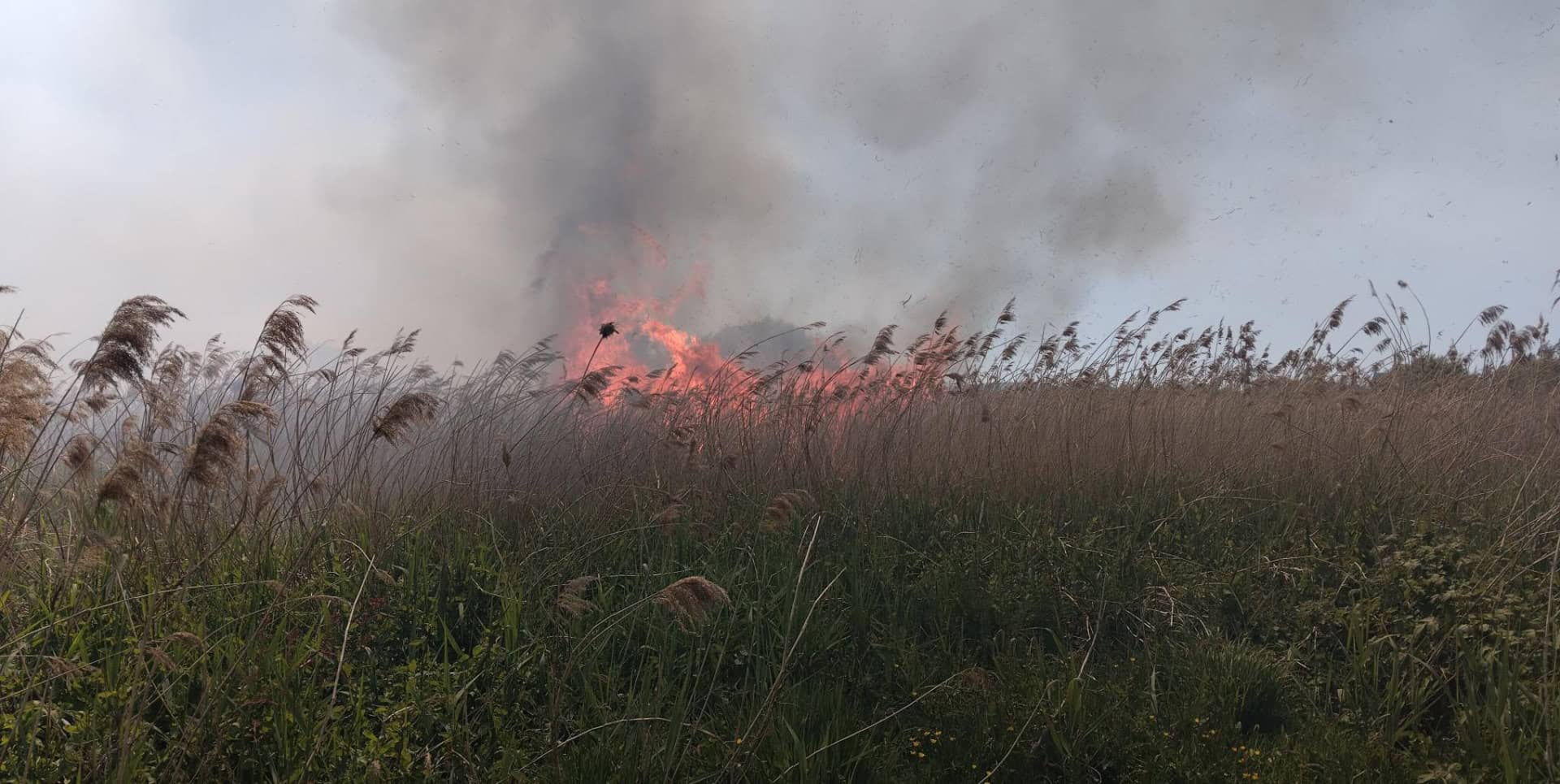
The hot summer of 2025 saw fires increase across Hampshire and the Isle of Wight by over a third.
Incidents surged due to a doubling of the number of outdoor fires, with climate change forecast to increase both the volume and severity of wildfires going forward.
These were April to September 2025 Annual Performance Report (Mid-Year Update) findings presented to the Hampshire and Isle of Wight Fire and Rescue Authority last week (18th December 2025).
36% increase in fires
Alex Quick, head of performance and evaluation at Hampshire and Isle of Wight Fire and Rescue Service (HIWFRS), told the supervisory body that fires increased by around 36 per cent, compared to the period between April and September 2024.
He said the summer had been the service’s busiest since 2022.
The HIWFRS report said,
“Whilst the weather in any given summer cannot be predicted, we have now seen two such hot summers in the last four years and climate change is predicted to increase both the volume and severity of wildfires going forward.”
Rise in response time
April to September 2025 also saw a six second increase in HIWFRS’s average critical response time to nine minutes and 57 seconds, against the previous year (nine minutes and 51 seconds).
Critical incidents are defined as those which endanger people or property.
Fran Carpenter, a Hampshire Conservative county councillor who serves on the fire authority, said,
“I’m really worried about this creepingly long response time – I know it’s a few seconds – but it worries me and I know it would worry the public, and its due to call handling.
“Are you dealing with that really robustly…it was on the news the other day…and secondly, what specific prevention work are you looking to scale up?
“We’ve had increased outdoor fires – are you targeting specific areas or putting out more media messages for this year, working with councils?”
Lucy: Our prevention teams are working really hard
James Lucy, assistant director of community safety at HIWFRS, said,
“The call times…to give you some assurance, we are dealing with that robustly. Unfortunately, in recent times…we have reduced that frontline workforce and that resilience that we perhaps did have across our organisation.
“How can we now work best to make sure that availability is appropriate? We’ve got the resources in the right place when we need them.
“We’re having colder winters, warmer summers and drier summers and that’s leading to us in a number of areas having an increased incidence.
“Our prevention teams are working really hard to identify those that are the most vulnerable…
“What we’ve got working really well – and the report reflects that – is our safe and well visits and our home fire safety visits for our residents in those most vulnerable areas.”
He added HIWFRS was also looking at how it can work with agencies and partners to try to prevent and reduce incidents such as wildfires and flooding.
This article is from the BBC’s LDRS (Local Democracy Reporter Service) scheme, which News OnTheWight is taking part in. Some alterations and additions may have been made by OnTheWight. Ed