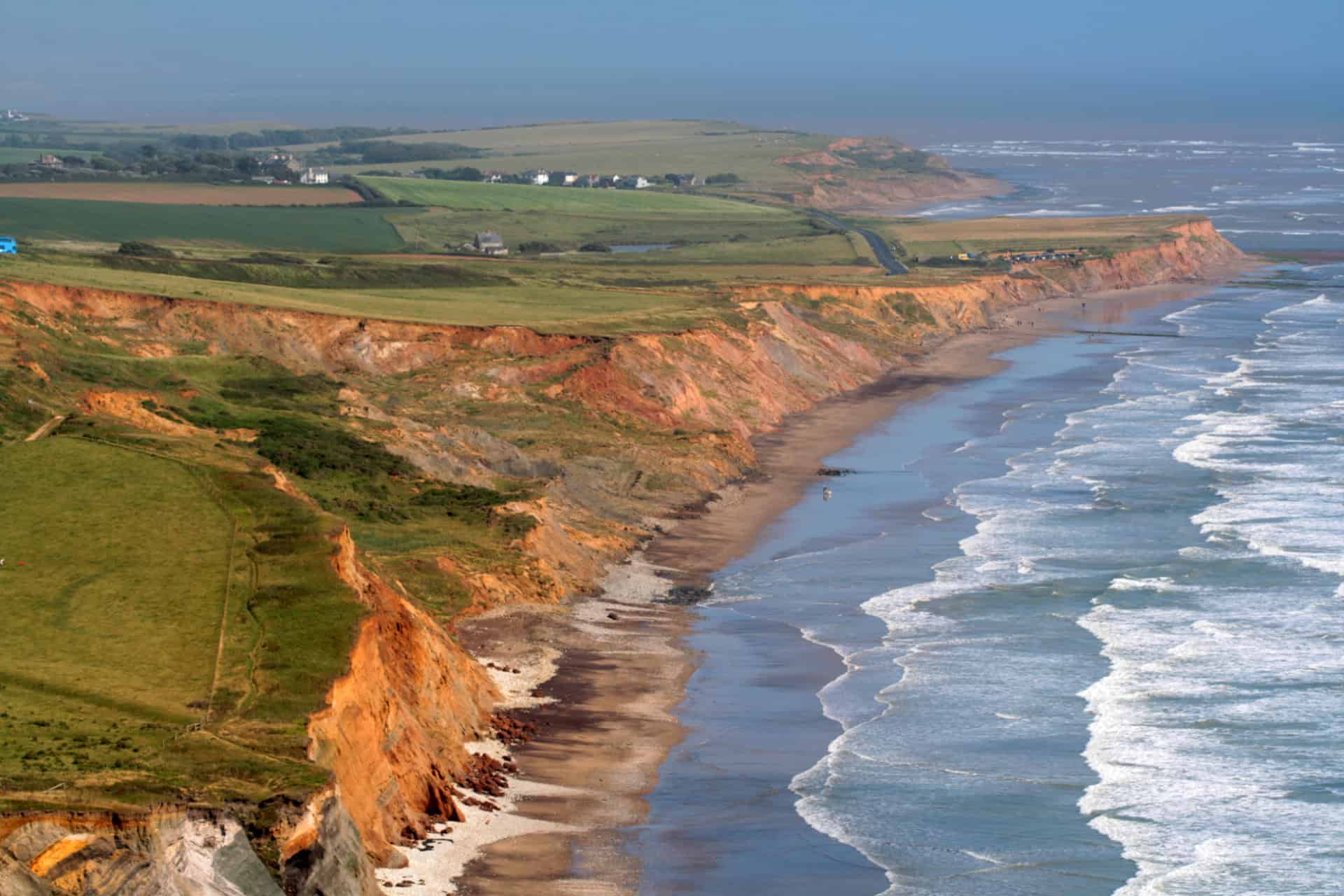
The Isle of Wight has been placed firmly at the centre of the national conversation on coastal erosion, following the publication of a major parliamentary inquiry that draws heavily on local evidence and Island expertise.
The Environment, Food and Rural Affairs Committee’s new report, Erosion of trust: the impact of coastal erosion on communities, delivers a stark assessment of the pressures facing coastal communities across the country.
But it is the Isle of Wight’s experiences, testimonies, and technical insight that have shaped many of its strongest findings.
Detailed evidence contributed to the inquiry
Many Isle of Wight Council officers and councillors, as members of the Coastal Loss and Landslide Forum, have all contributed detailed evidence to the inquiry.
Among them was Natasha Dix, service director for waste, environment and planning, whose oral evidence features prominently in sections addressing the human toll of living on an eroding coast.
The committee’s central conclusion is clear: coastal erosion is not just an environmental challenge but a profoundly human one.
Deep emotional and psychological strain
The report highlights the deep emotional and psychological strain faced by families at risk of losing their homes — feelings of grief, anxiety, and disconnection that, it argues, are still too often missing from national policy.
Isle of Wight testimony proved critical in illustrating these impacts.
The Island was cited directly in the report for distressing incidents where evacuated homes were entered by “social media creators and urban explorers” seeking online content, disturbing personal belongings in the process.
This case study strengthened the committee’s call for greater national action to protect evacuated residents and uphold dignity and safety during coastal change.
Dix: This report finally captures the human story
Natasha said the report reflects years of hard work and determination by Isle of Wight communities and officers.
She said,
“For years, Island communities have lived with the reality of a coastline that is changing faster than ever, and this report finally captures the human story behind that.
“It recognises the fear, uncertainty and emotional strain that residents feel when their homes, memories and sense of place are at risk. I’m proud that the Isle of Wight’s evidence has helped bring that to the forefront of national thinking.
“What we have shared is not theory — it is lived experience, and it has helped shape the committee’s call for fairer funding, proper relocation support, clearer information for homebuyers, and stronger national protections for our most vulnerable households.
“Islanders have shown remarkable resilience, and their voices deserve to be heard in Westminster. This report demonstrates that they are.”
Lucioni: We are co‑stewards of our unique coastline
Councillor Karen Lucioni, who chairs the council’s environment and community protection committee, echoed this sense of pride,
“We are co‑stewards of our unique coastline — our towns, villages, and landscapes that mean so much to us all.
“The committee’s findings show that the Isle of Wight is not just experiencing these changes; we are influencing national policy and helping shape solutions for the whole country. Islanders should feel proud of the role they are playing.”
The inquiry makes clear that the challenges facing coastal communities are growing, not shrinking.
But it also highlights the opportunity for places like the Isle of Wight to drive reform, champion fair funding, and shape a more compassionate national framework.
News shared by Isle of Wight council press office, in their own words. Ed