Isle of Wight-based artist collaborative, The Artist’s Husband, Joshua Raffell and Dave Smithers, is thrilled to unveil their latest commission for Tate Library’s Artist’s Book Collection.
Titled The Artist’s Husband 2, Lock Bottom this work marks the second of a series of unique crochet and mixed media Artists’ Books and represents an exciting new chapter in their artistic practice.
The journey from Tate Britain to Limehouse Basin and then to Braunston, Warwickshire is approximately 100 miles by water. A tablet shows a milestone similar to the ones often seen on the grand union canal.
This Artist’s Book explores the canal boat life of Joshua Raffell’s family. The work captures the personal and recorded histories from family history research. The family’s connections to Oldbury, Black Country to Limehouse, London and the centre of the Grand Union Canal at Braunston, where the Bunn family settled.
The naming of Winston
Joshua’s nan recalled her dad Henry Robert Bunn 1899-1979 worked on a boat called Winston, often partnered with a ‘butty boat’ (A boat with no engine) called Ironside. These boats were built in Nursers Boatyard in Braunston.
As a part of the Samuel Barlow fleet, they transported coal to Limehouse. Winston is believed to have been named following an unrecorded visit by Winston Churchill in 1947!
“No one wants to know about that”
This work touches on the story by Claire Steel (Clara Elizabeth Bunn) 1928 – 2025 who at the age of ten had to give up school, which she loved, to help with the back-breaking, dirty work of shovelling coal alongside her siblings and parents.
This heartbreaking moment contributed to a strong sense of shame and upset felt towards the canal life. And her resistance to talk, as shown by her most regular response, “No one wants to know about that”.
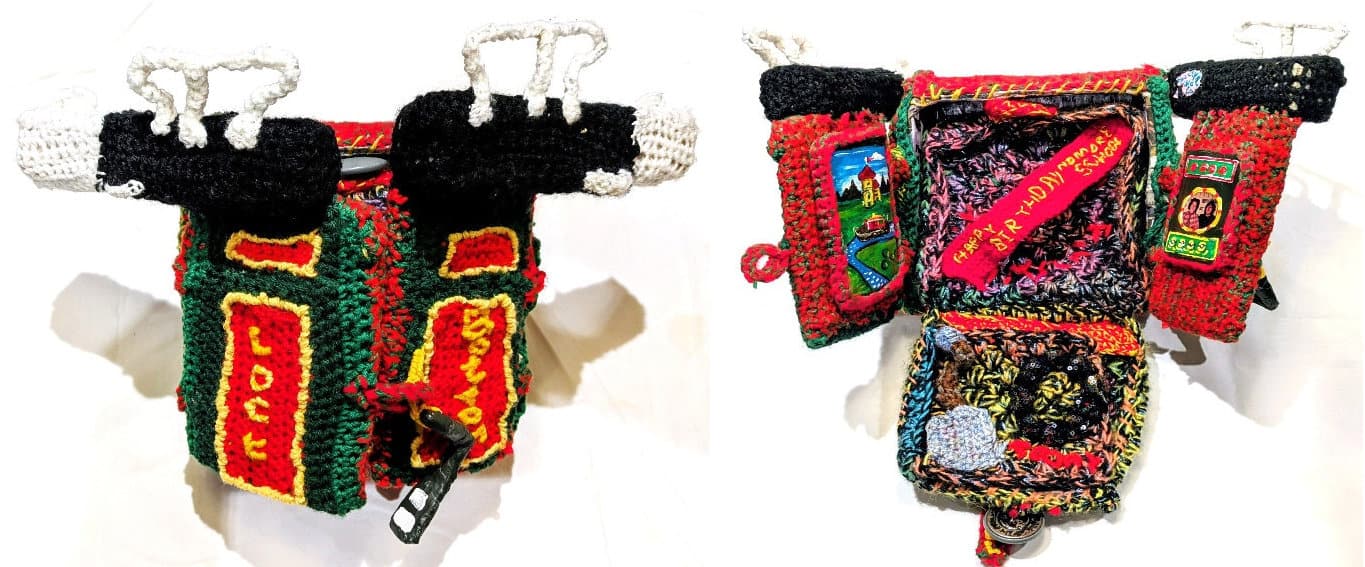
Japanned papier mache and crochet
The artists’ book and centre tile were created using papier mache. Japanned papier mache goods were made in Birmingham around the 1700s, and possibly inspired ‘Roses and Castle’, a folk art that adorns narrow boats. The work includes paint work with a gloss finish.
The work is covered in a rich colourful torrent of crochet, another feature of the homely cabin where the whole family lived.
The work serves as a broader commentary on pertinent social issues on the intersectionality of shame and pride evoked by status and resistance still felt as queer artists.
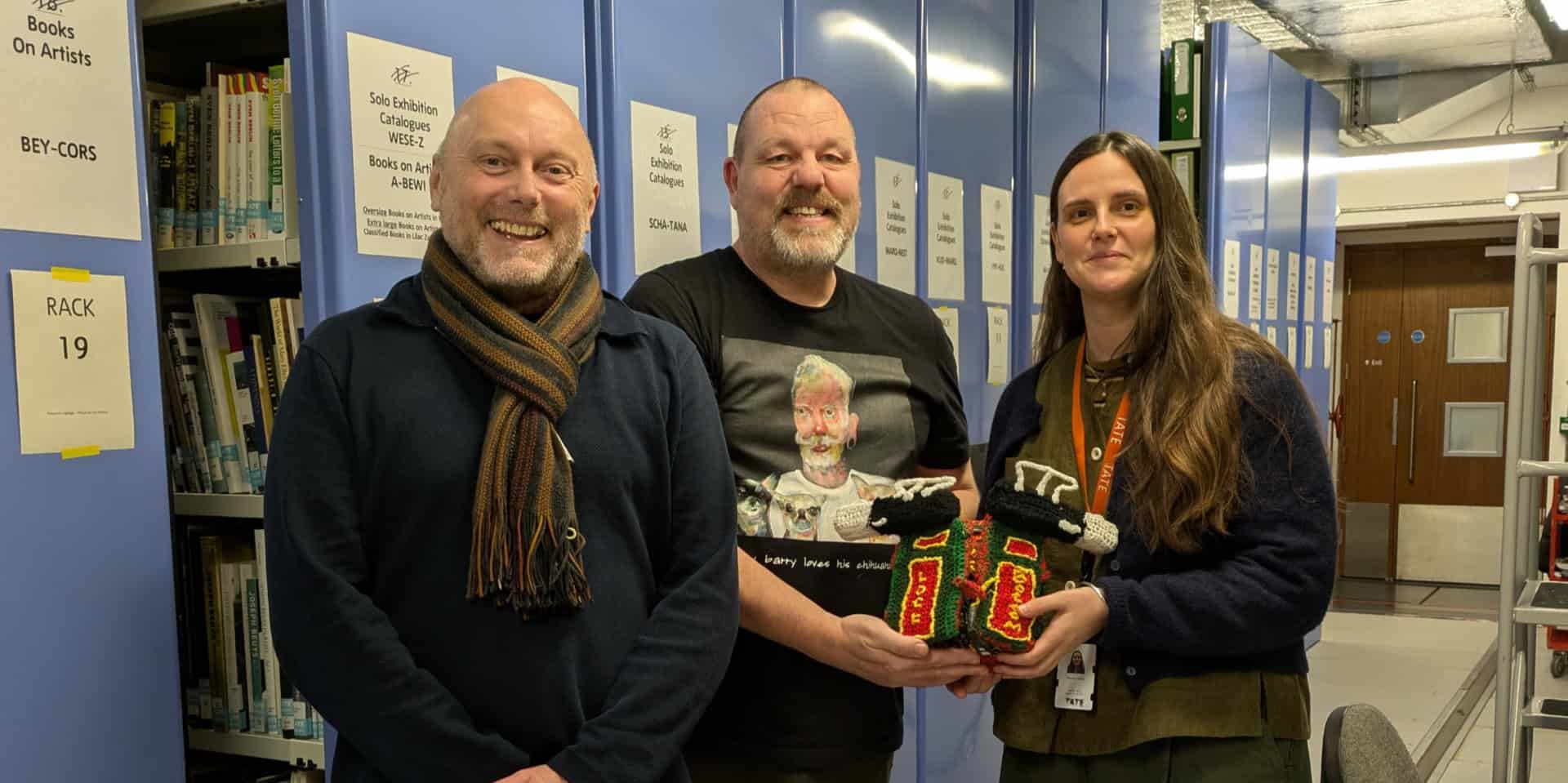
The artist was the winner of the Quay Arts Open, Isle of Wight, with an upcoming solo show later in 2026.
Visit the artists’ website for to stay up to date with their latest work.
News shared by Josh, in his own words. Ed