Lindsey Newberry shares this report from the first community screening of the People’s Emergency briefing. Ed
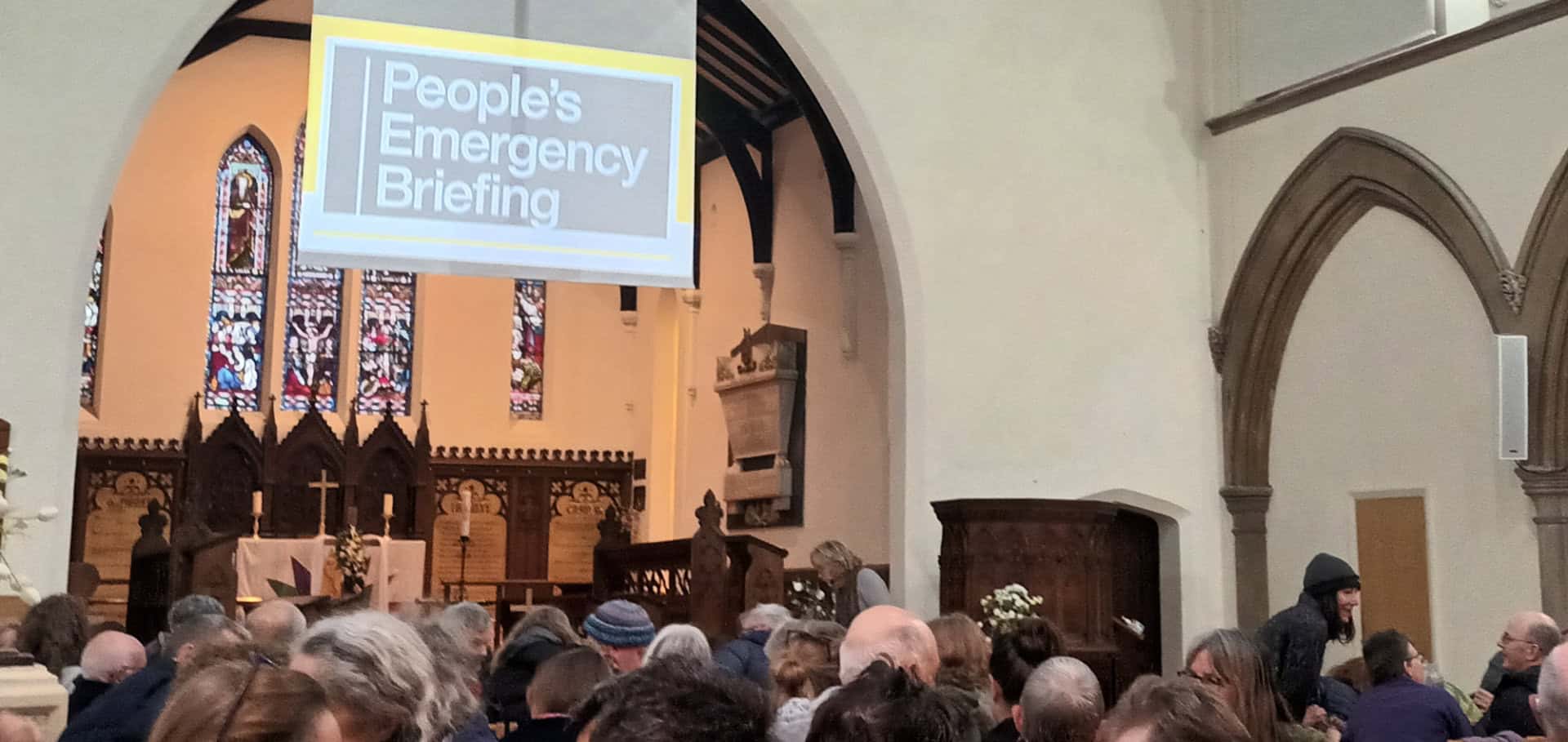
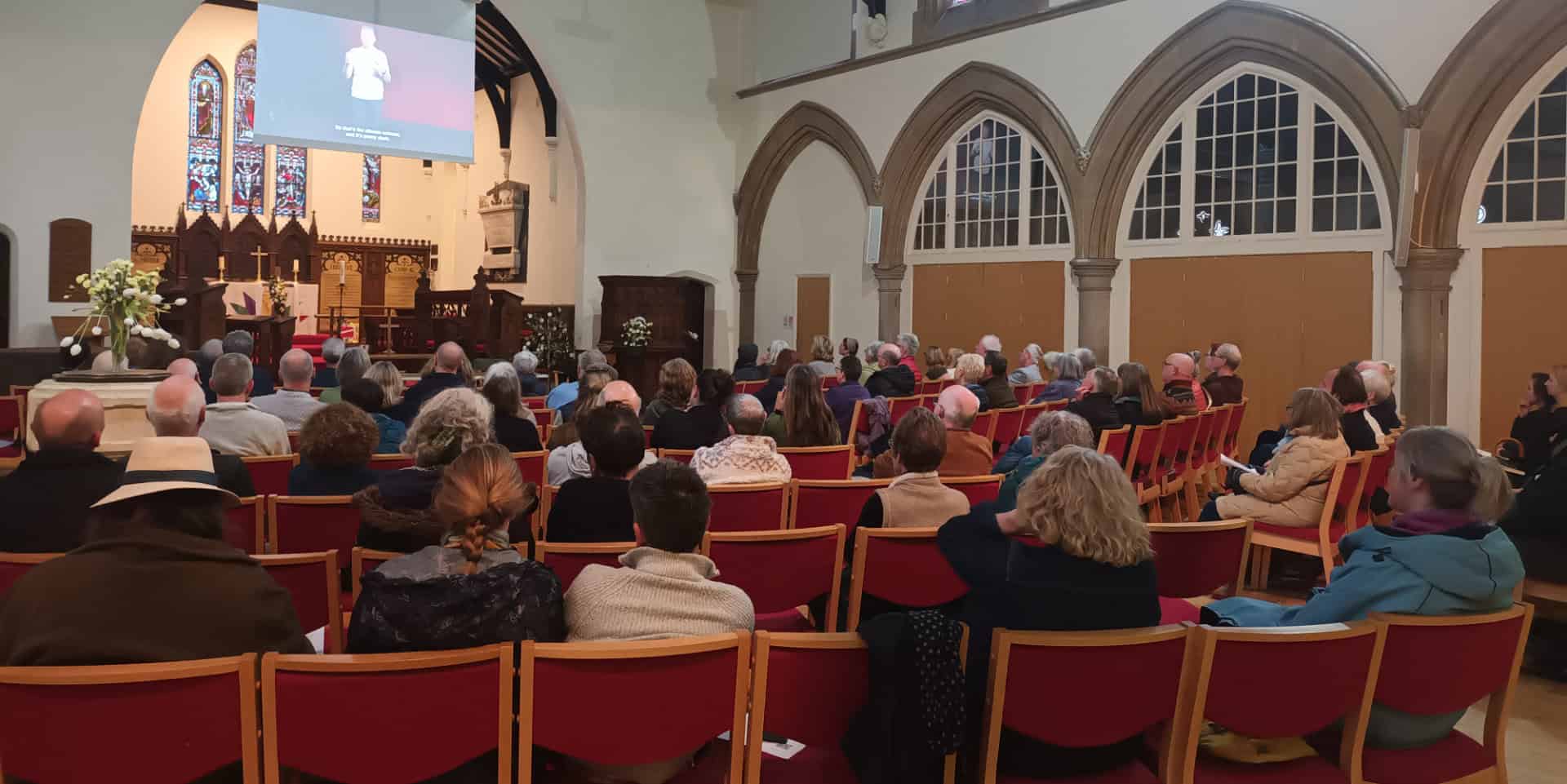
The first community screening of the People’s Emergency briefing was held last Friday (10th April 2026) at St Catherine’s C of E Church in Ventnor.
The documentary outlines the climate and nature crisis we face and potential solutions. Around 80 people came along to see the documentary, which is an adapted version of the National Emergency Briefing held last November at Westminster.
From Westminster to Ventnor
Here ten of the UK’s top scientists and experts explained the climate and nature crisis and its effect on areas such as security, food, health and the economy to over 1200 politicians and influential people. The aim is that the general public should be informed, prepared and protected about this crisis.
All Isle of Wight elected representatives and media were invited to the screening. Councillors Ed Blake, Susan Betts and Sophus Magill attended along with candidate Alice Walker. The session at St Catherine’s started with people talking to each other regarding the reasons that they had come to see the film; this was followed by a viewing of the documentary and then a tea and coffee break.
Anger, anxiety and hope
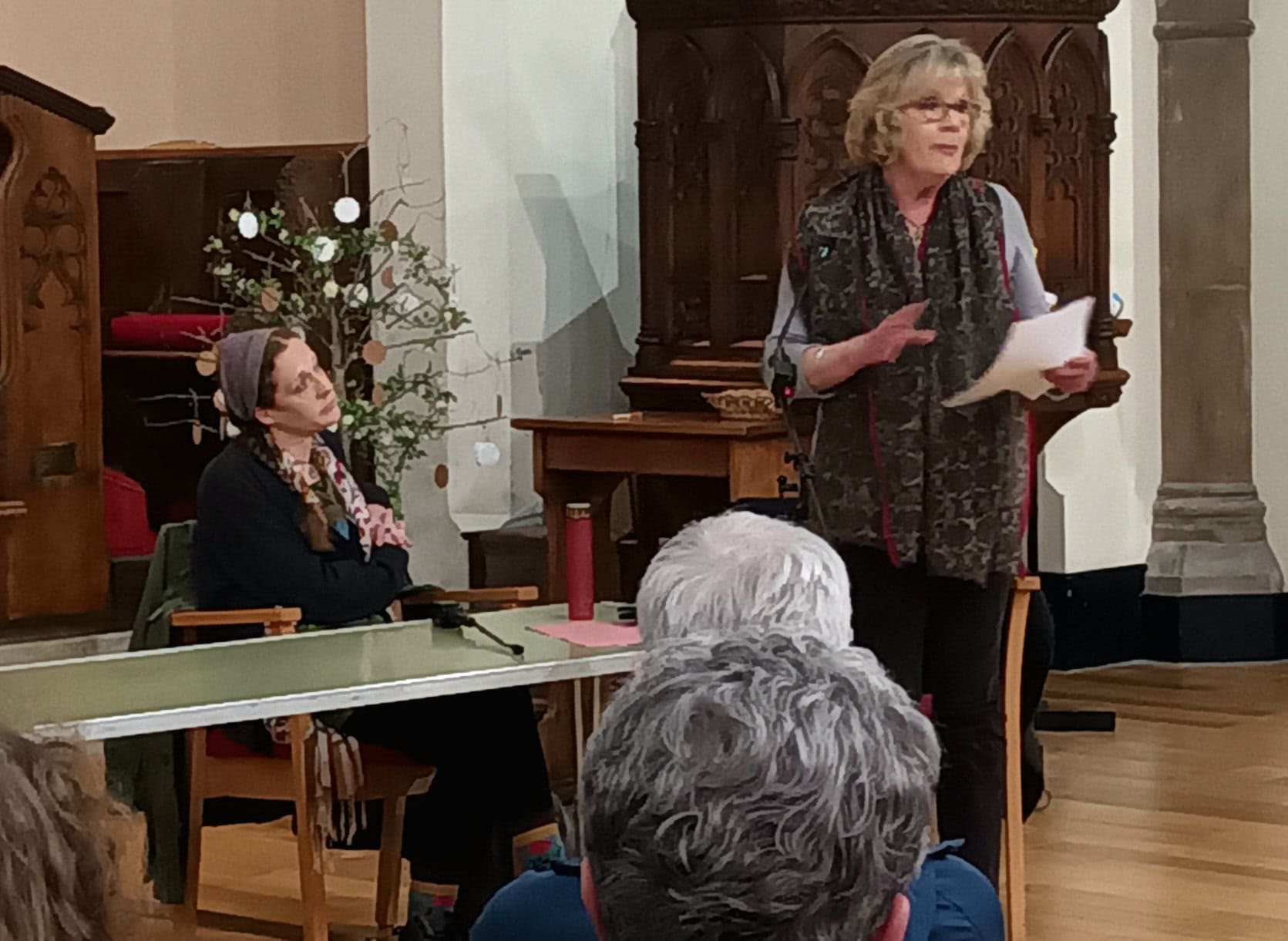
On return, there was a discussion around what people’s reactions were to the crisis the film outlined. Responses included emotions such as anger, sadness and anxiety.
There was anger aimed at politicians for the lack of progress on the climate and nature crisis and fury with the fossil fuel industry who have known about their role in this for over thirty years.
Living in the crisis already
People felt that they were now living in the crisis themselves with the blocking of the Strait of Hormuz, fertiliser and fuel inflation, flooding on the Island and landslips/landslides becoming common.
One person stated that earlier this year there was someone seen kayaking through the streets of Whitwell during flooding there!
Lack of local funding
Another person stated that we have the solutions to these problems, but the local council does not have the money to deal with these issues and that we needed national action and the support of our MPs.
Another attendee stated that they were pleased that the Island now had a fleet of electrified buses, but that we needed to travel more by bus and on foot and use our cars less.
Two responders stated that the biggest block to change was the political system where MPs only planned in the short term and were more interested in point scoring.
There was shock at the notion of tipping points and that our earth could become uninhabitable for humans. One person stated that:
“The potential Trigger Event was terrifying and reminded me of the likelihood of Nuclear Armageddon in the 1960s during the cold war, which I for one took seriously…”
What can we do about it?
However, there was also a response that the film was hopeful in that it did provide solutions for the crisis that we face and that we just need to take them. Someone stated that the film helped join the dots on what exactly we were facing and what we needed to do about it.
After discussing reactions to the film, the conversations turned to what actions we as a community could take to effect change. One person talked about how things were in World War Two with people growing their own vegetables in their gardens and everywhere possible.
Call for Government-backed televised emergency briefing
The link to being on a war footing is something the National Emergency Briefing highlights in the way the national government should be framing the situation that we are in and the changes that need to be made.
The main objectives of the National Emergency Briefing is for the participants to write to their MPs saying they want them to call for a Government-backed televised emergency briefing, so that the wider public has the chance to hear the same information and take part in a national conversation.
“A government that has been frank with the country about the reality of the threat will have to begin taking steps to address it.”
There was support for the call for the delivery of a prime-time, multi-channel televised national emergency briefing to the nation, launching a major public engagement plan to cut through disinformation on the crisis we face and how we need to deal with it.
Continued discussions
Alongside taking steps to address the national picture through our MPs, there was a discussion about to linking up with environmental groups locally and forming community groups to address the issue at a local level.
Several people from the screening will be meeting in Ventnor Exchange, on Friday 17th April 2026 at 7pm to continue discussions how this can be taken further.
Shock at the scale of the crisis
The evening was concluded with some saying this was information they already knew, but with some being shocked by the scale of the crisis that we face and wanting to act.
People talked about the changes they could make individually and locally and how they would petition their elected representatives at a national level.
Second showing of this film
Subsequently, some people have formed part of a local and Island-wide network to take these initiatives further. There will be a second showing of this film at the Bembridge Environment event on Saturday 18th April which will be attended by Joe Robertson MP.
This is a free but ticketed event; follow the link to reserve tickets. The film is available for any group of people arrange their own showings. Follow the link for more information.
Film being shown across the nation
At present 2,200 groups nationwide have committed to showing this film in their local communities which gives some indication of the demand there is for clear information and action on the climate and nature crisis we face.
Many thanks to St Catherine’s C of E Church in Ventnor for being the first venue to host these events and for providing such a welcoming environment for those who came.