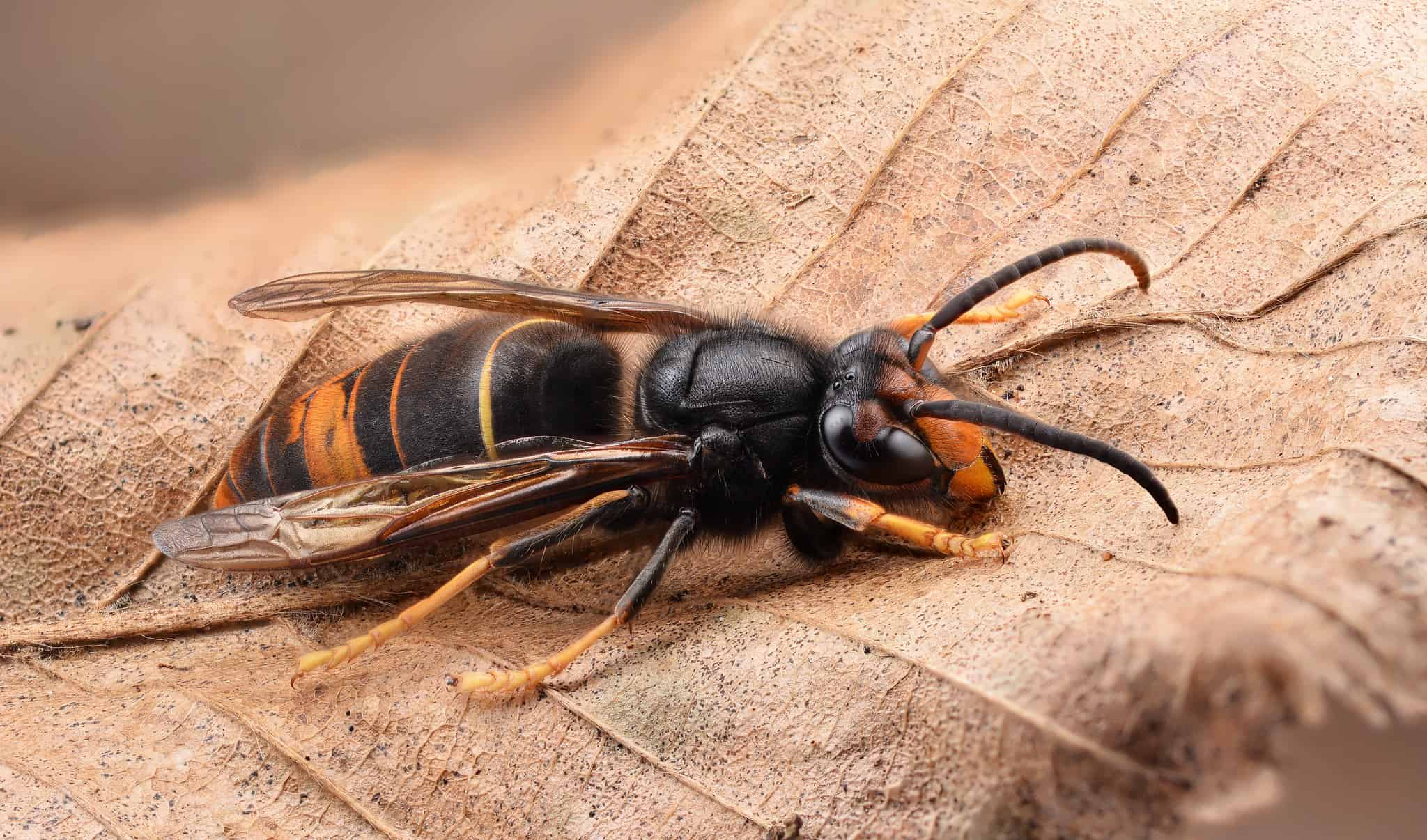
Residents across the Isle of Wight are being asked to remain vigilant following a credible sighting of a Yellow-legged Asian hornet in the Cowes area.
Photographic evidence of a suspected Yellow-legged Asian hornet (Vespa velutina), also commonly known as the Asian hornet, has been received following a sighting in Cowes.
At this stage, the sighting of an individual hornet does not mean that the species has become established on the Isle of Wight. However, finding and reporting any further hornets could be extremely important in helping specialists determine whether a nest is present.
Island team already monitoring the area
The Isle of Wight Asian Hornet Team was established to raise awareness of the Yellow-legged Asian hornet, help Islanders recognise the insect and encourage the prompt reporting of suspected sightings.
The team has been monitoring the Cowes area for some time and continues to work locally following the recent credible sighting.
Further specialist support is also on its way, with the National Bee Unit expected to arrive on the Isle of Wight next week to provide additional expertise and support.
‘They did exactly the right thing’
A spokesperson for the Isle of Wight Asian Hornet Team said,
“We would particularly like to thank the Islander who spotted the suspected Asian hornet, took a photograph and reported it.
“They did exactly the right thing. One person taking a few moments to photograph something unusual has given us the opportunity to investigate this sighting properly.”
The team added,
“We don’t want people to be alarmed, but we do want them to be alert.
“The Isle of Wight is a relatively small area and, with Islanders keeping watch in their gardens, on walks and while out and about, we have thousands of extra pairs of eyes helping us.
“A clear photograph and a prompt report could make a real difference.”
Why is the Yellow-legged Asian hornet a concern?
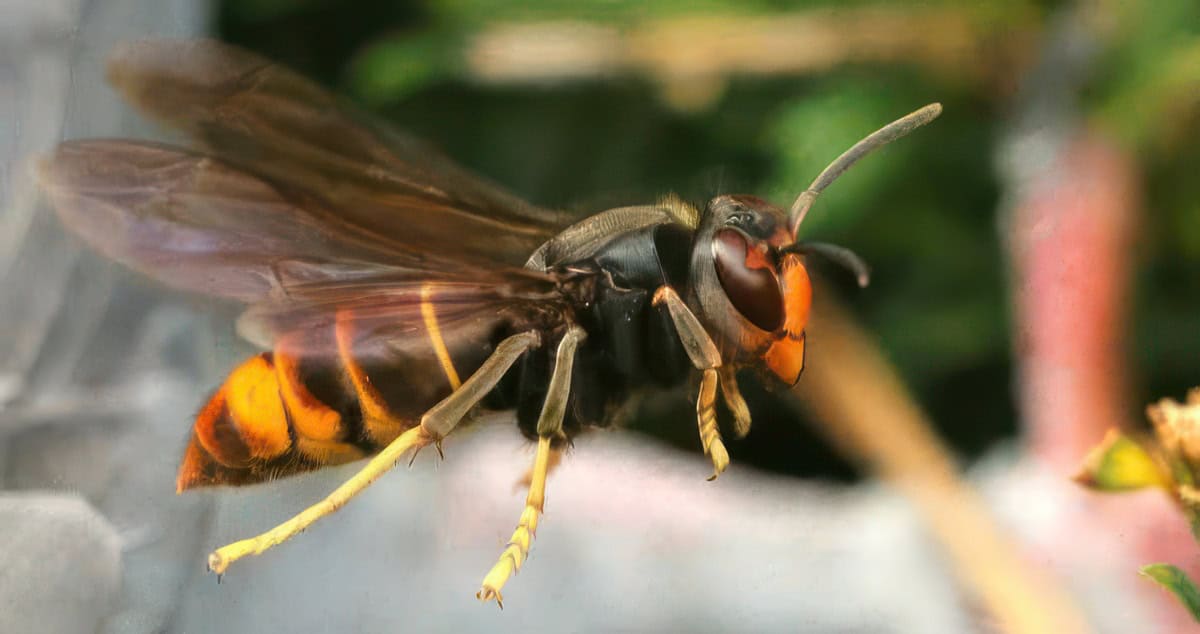
The Yellow-legged Asian hornet is an invasive, non-native species and a highly effective predator of insects.
Honey bees are particularly vulnerable because Asian hornets can hover outside beehives and catch worker bees as they return to the colony.
But this is not simply a beekeeping issue.
Asian hornets prey on a wide variety of insects, including wild bees, wasps, flies and other pollinators. An established colony can consume a considerable quantity of insects during a season.
Pollinating insects are an essential part of a healthy environment. They support wild plants, gardens and food production and, in turn, provide food and habitat for many other species.
A significant new predator therefore has the potential to place additional pressure on insect populations and affect the wider food chain.
The Isle of Wight has a particularly rich and varied natural environment, making early detection and preventing this invasive species from becoming established especially important for the protection of the Island’s biodiversity.
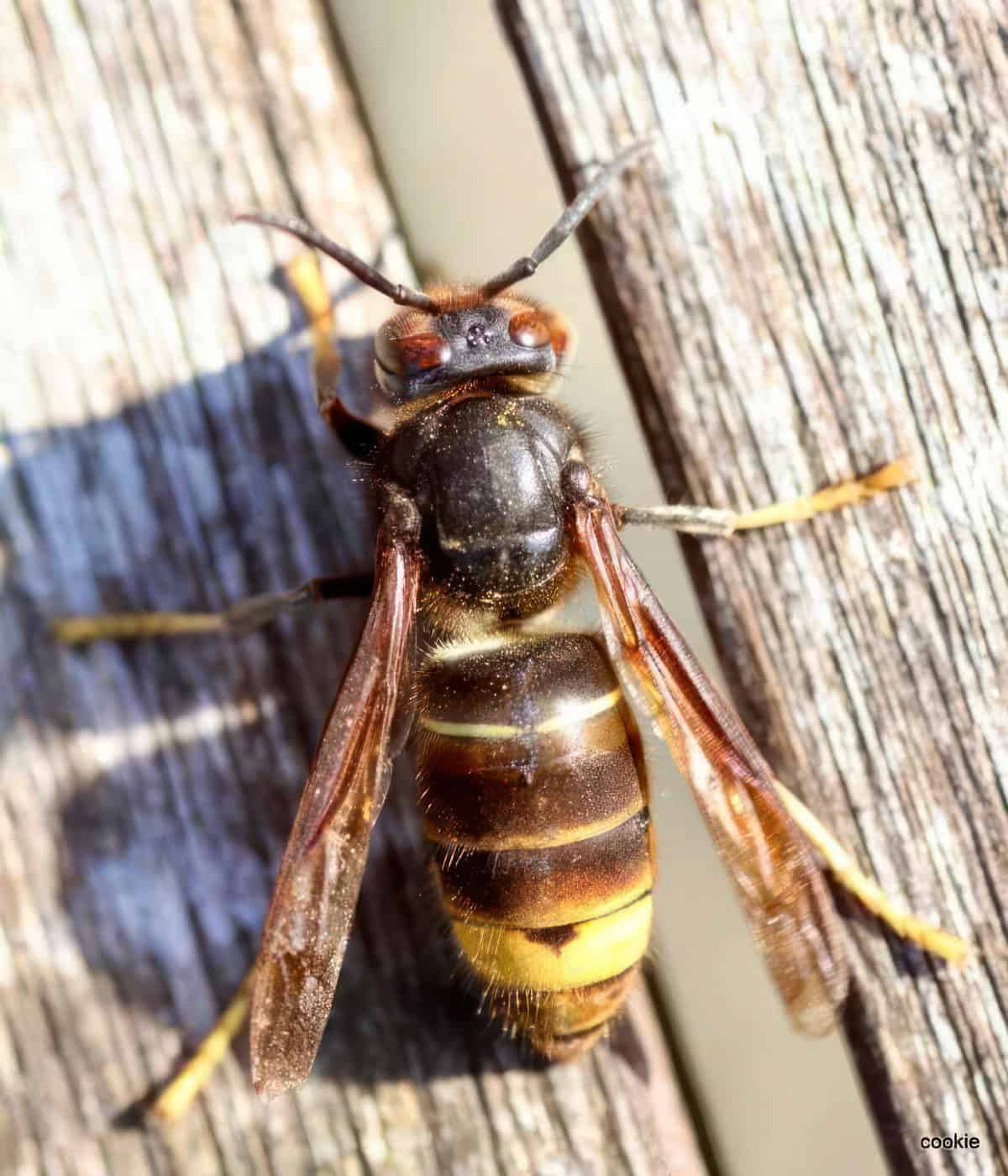
What should Islanders look for?
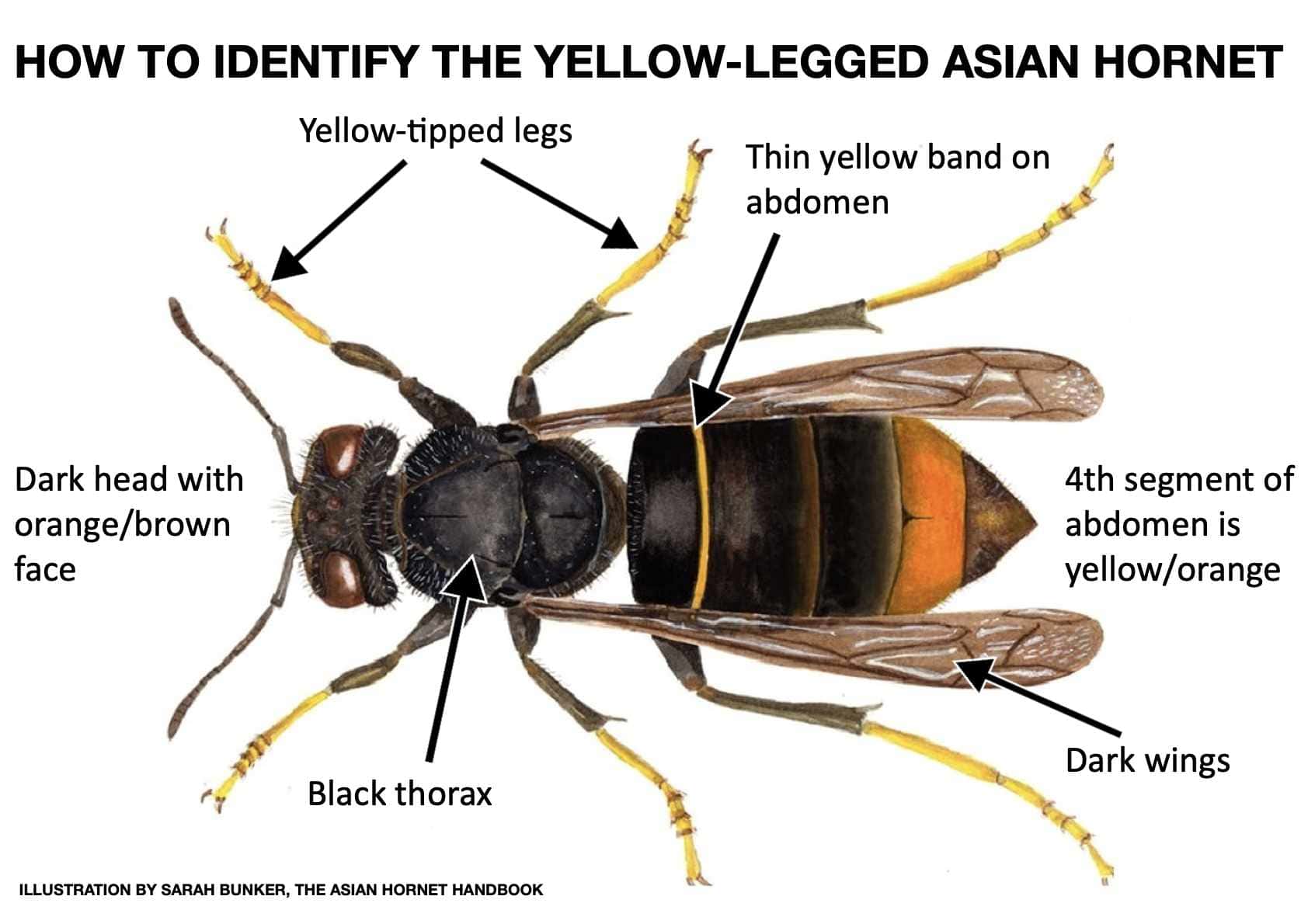
Once you know its main characteristics, the Yellow-legged Asian hornet is quite distinctive.
Look for:
- A very dark, almost black, velvety body
- A broad orange/yellow band towards the rear of the abdomen
- Yellow ends to the legs — often described as looking like “yellow socks”
- An orange/yellow face
- A hornet that is smaller and considerably darker than our native European hornet
They may be noticed feeding on flowers or ripe fruit, around outdoor food and drink, or hunting other insects.
See it. Snap it. App it.
The public can play a vital role in helping to protect the Island.
If you think you have seen a Yellow-legged Asian hornet, do not try to catch it.
If it is safe to do so, take a clear photograph and report your sighting immediately using the free Asian Hornet Watch app.
Visit the website to download the app.
Photographs are extremely important. They allow specialists to assess a report quickly and determine whether further investigation is required.
If possible, also make a note of exactly where you saw the insect and the direction in which it flew.
Never approach or disturb a suspected nest.
Please don’t harm our native insects
The Isle of Wight is home to many native bees, wasps, hoverflies and our native European hornet, all of which have an important place in the Island’s ecosystem.
People are therefore asked not to kill insects simply because they think they may be Asian hornets.
Take a photograph and report it instead.
Yellow-legged Asian hornets are not generally aggressive towards people when away from their nests, but, as with other social wasps and hornets, a nest should never be approached or disturbed.
Thousands of pairs of eyes can make the difference
Gardens, parks, footpaths, allotments, farmland and the countryside mean there are countless places where an Asian hornet might be noticed.
No monitoring team can be everywhere, but Islanders can help.
Whether you are gardening, walking the dog, working outdoors, visiting the countryside or simply sitting in your garden, taking a moment to notice an unfamiliar insect could prove extremely valuable.
The message from the Isle of Wight Asian Hornet Team is simple:
- Learn what it looks like.
- Keep an eye out.
- Take a photograph.
- Report it promptly.
Early detection gives specialists the best possible opportunity to locate and deal with a nest before a colony can reproduce and spread.
Protecting our honey bees, wild pollinators and other insects ultimately helps protect the wider biodiversity of the Isle of Wight.
SEE IT. SNAP IT. APP IT.
News shared by Christine on behalf of the Isle of Wight Asian Hornet Team. Ed