Four white-tailed eagles set free on the Isle of Wight back in 2020 have this summer helped raise a new generation of chicks – though none of them on the Island itself.
Eagles G405, G471, G463 and G466 were all part of the 2020 release cohort from the Isle of Wight-based reintroduction project run by Forestry England and the Roy Dennis Wildlife Foundation.
Six years on, all four have paired off and settled along England’s south coast, well away from where they were originally freed.
Sussex and Dorset pairs
G405 and G471 formed a bond and established territory in Sussex, where they have bred every year since 2023. This summer the pair fledged two male chicks, known as GE36 and GE37.
Meanwhile G463 and G466 set up home at Poole Harbour in Dorset. The pair’s single male chick, GE38, is their second successful fledgling after G834 in 2024. The achievement is made more notable by the fact that G463, the male, has hunted and bred successfully despite losing a leg five years ago.
Nine wild-born chicks and counting
This year’s three fledglings – two in Sussex, one in Dorset – bring the total number of white-tailed eagles born in the wild through the project to nine, all descended from Isle of Wight releases and subsequent cohorts.
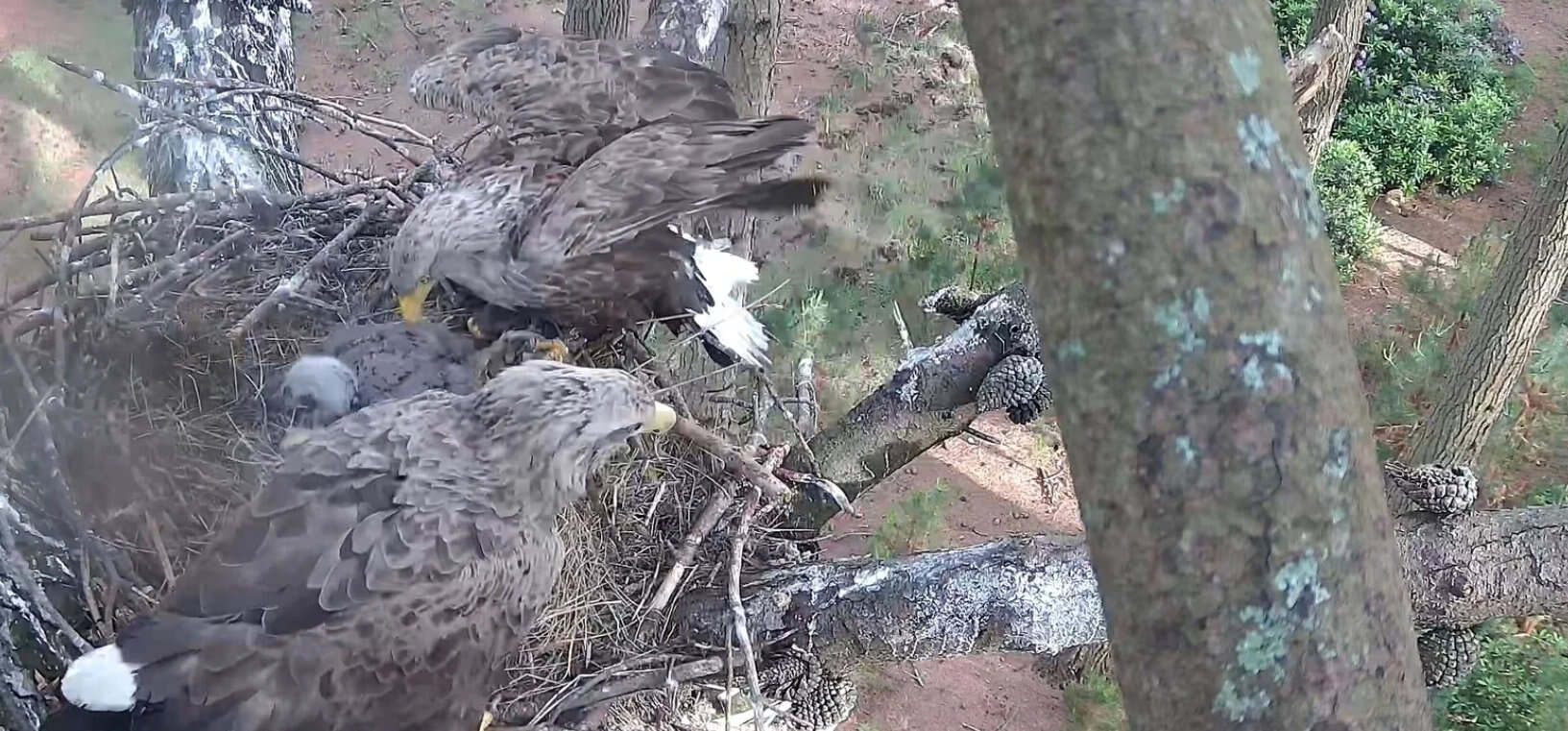
Project figures show five pairs of released eagles have now formed established bonds, with two of them breeding successfully this year. All three chicks have been fitted with satellite tags so the team can track them as they begin exploring further afield, just as their Isle of Wight-released parents once did.
For the first time, cameras were also used near the nests to monitor what the parent birds were feeding their young. More than 300 food deliveries were recorded, with fish overwhelmingly the most common catch.
Reactions from the project team
Roy Dennis OBE, of the Roy Dennis Wildlife Foundation, called it another milestone in restoring the species to England, noting it is now the fourth consecutive year the released birds have raised chicks successfully, with three further pairs also established.
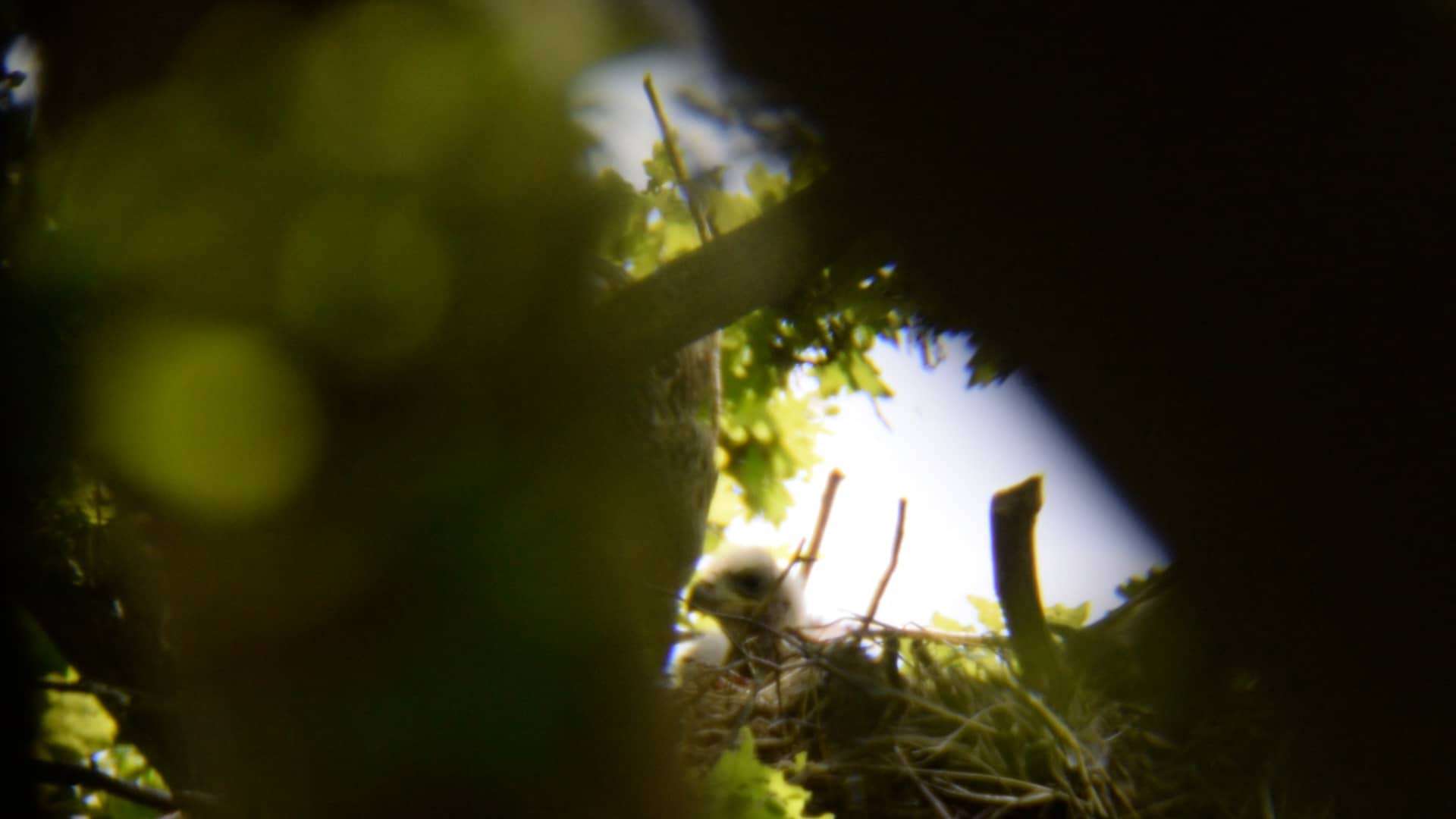
Steve Egerton-Read, White-Tailed Eagle Project Officer for Forestry England, said the team spends the summer “watching and hoping” for successful hatchings, and that this year they were able to closely monitor the nests, confirming fish as by far the favoured food for the wetland-loving birds.
Background to the reintroduction
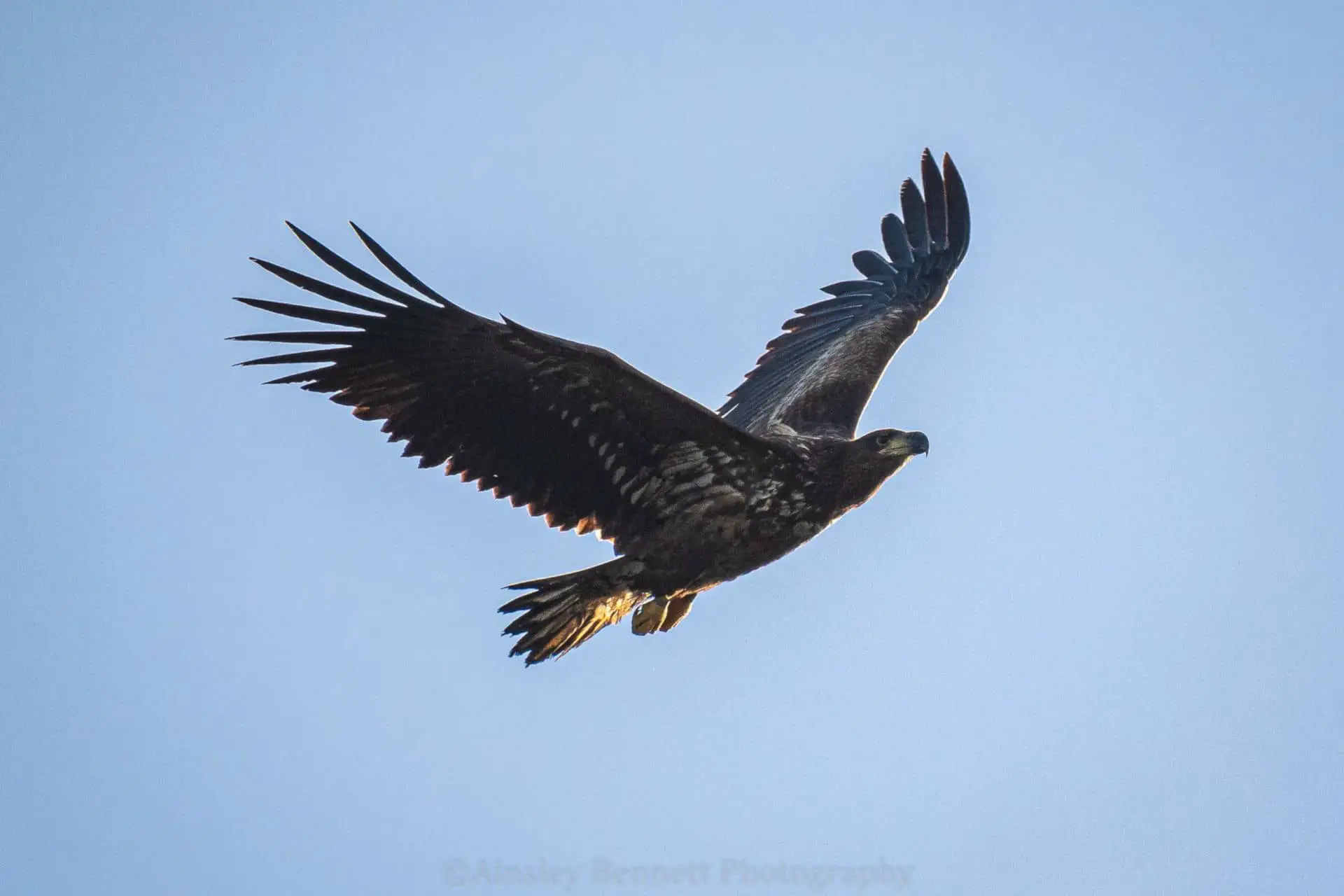
White-tailed eagles are Britain’s largest birds of prey, with a wingspan of up to 2.5 metres. They were once widespread across England but were driven to extinction through human persecution, with the last breeding pair recorded in southern England in 1780.
Forestry England and the Roy Dennis Wildlife Foundation began reintroducing the species in 2019, working under licence from Natural England, with young birds collected from wild nests in Scotland under a NatureScot licence.
To date, 56 young white-tailed eagles have been released through the project. Five of those were freed this summer from the team’s base on the Isle of Wight, and for the first time this year, a further six birds were released at Exmoor National Park in partnership with Exmoor National Park Authority.