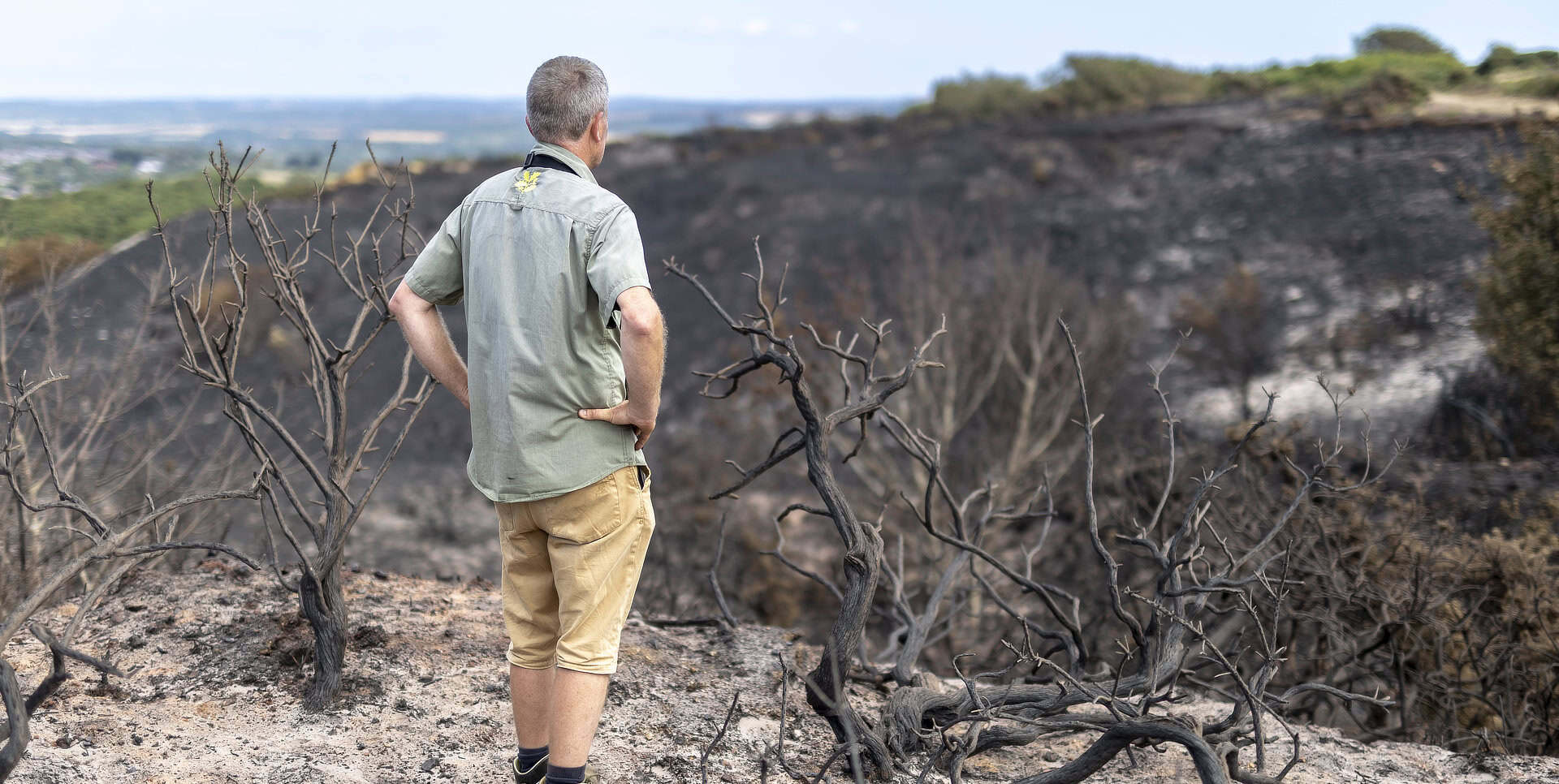
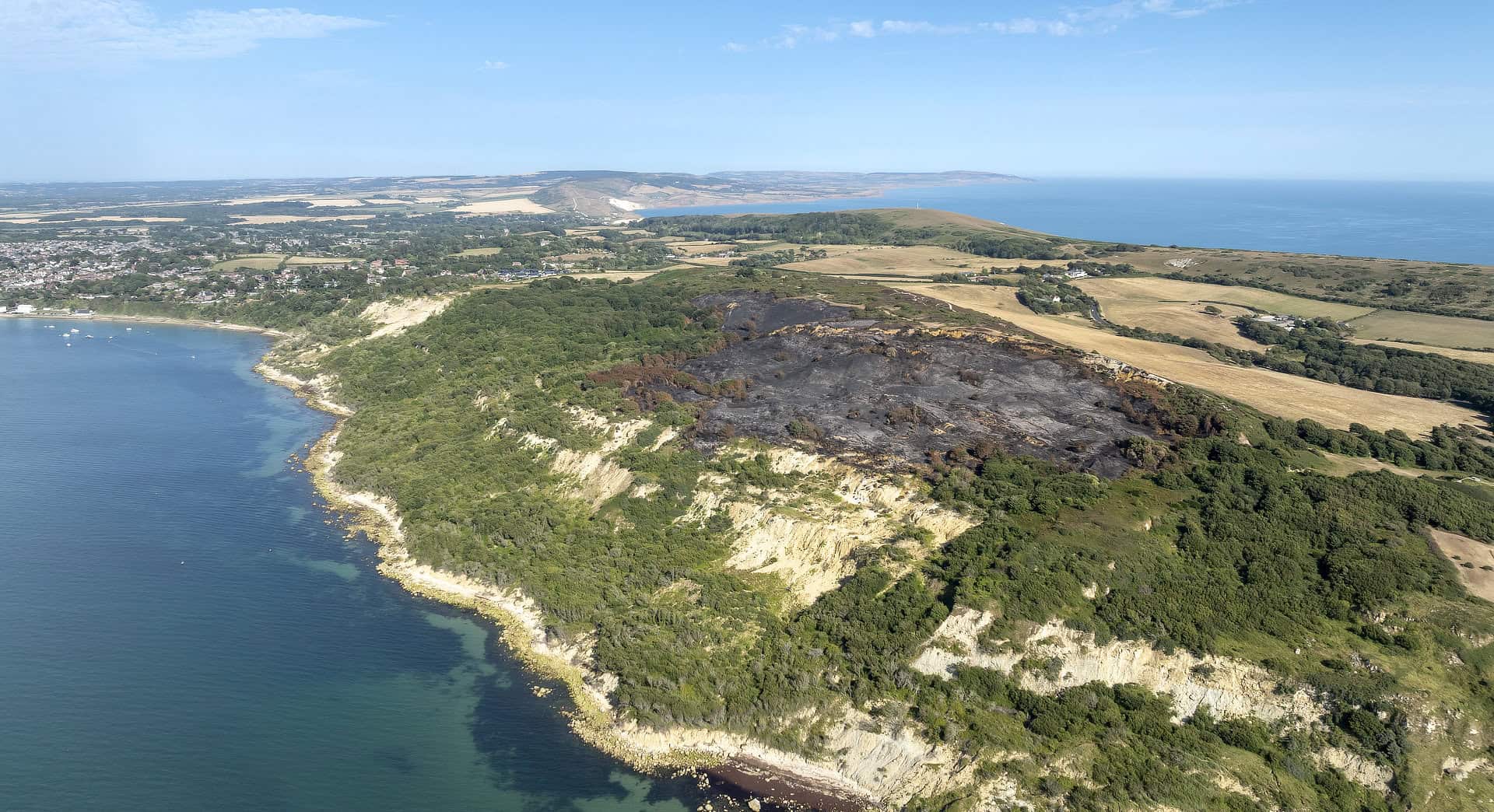
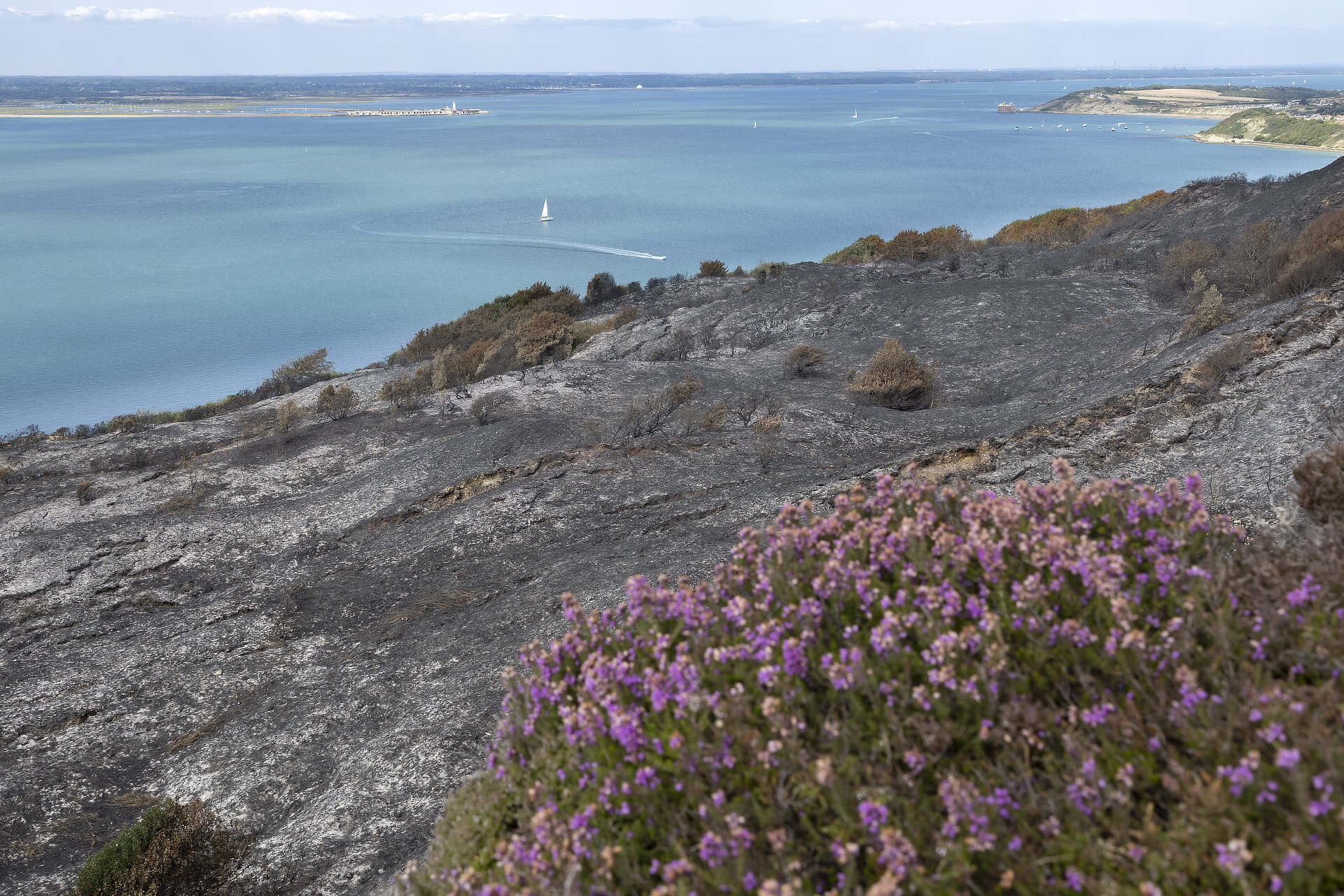
Approximately nine hectares of nationally important maritime heathland and rare limestone grassland have been damaged following a major wildfire at Headon Warren on the Isle of Wight, prompting Hampshire & Isle of Wight Fire and Rescue Service, the National Trust, and the business that farms the land to urge residents and visitors to help prevent future fires.
How the fire was tackled
The blaze which broke out on Thursday 23rd July at one of the Island’s most important wildlife sites is thought to have been caused by a small campfire. The incident required a significant four-day, multi-agency response involving up to 80 firefighters at its peak.
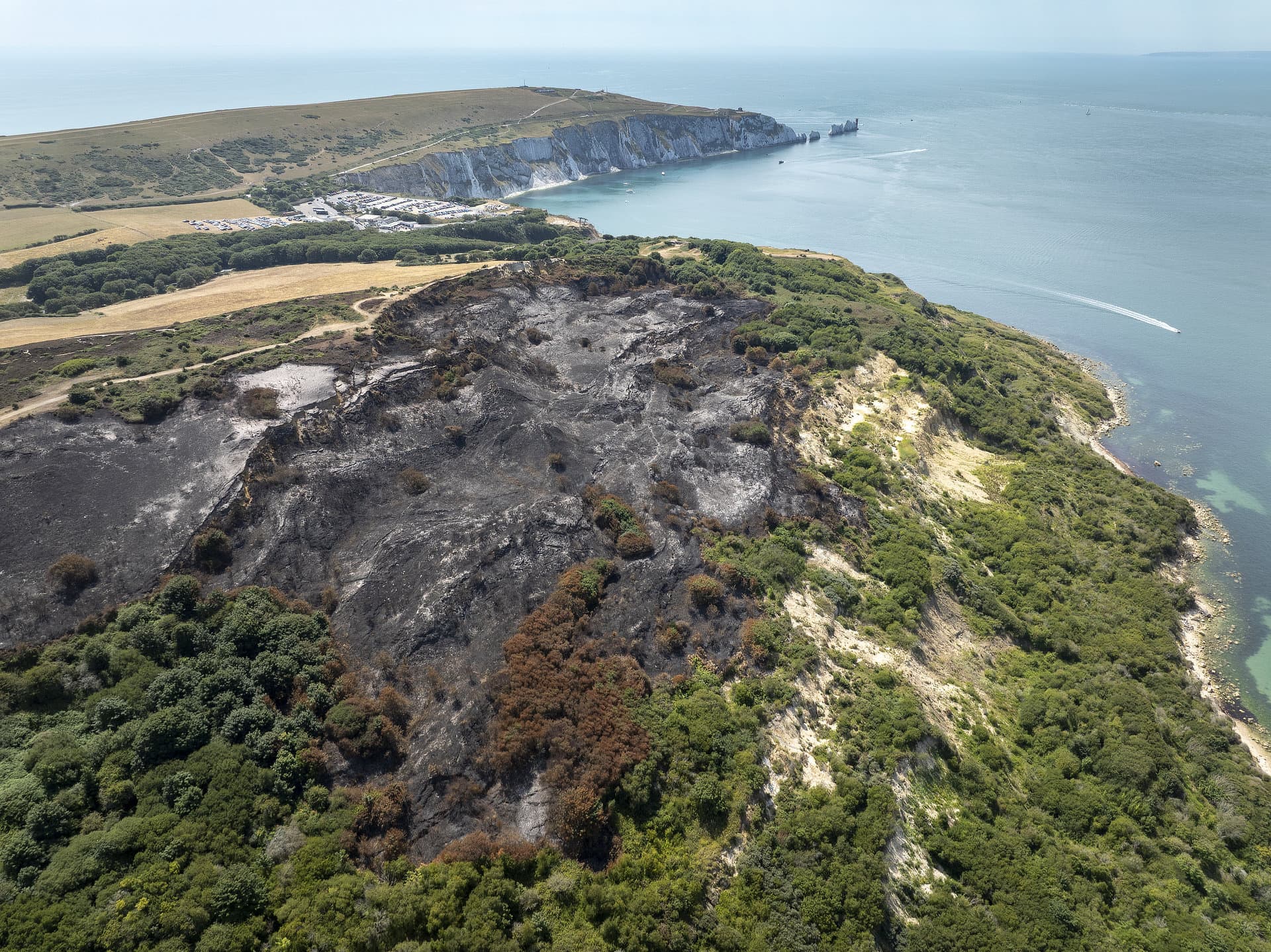
Crews from across the Isle of Wight were supported by mainland colleagues, specialist wildfire teams, high-volume pumps drawing water from the sea and local farmers who created fire breaks and a range of partner organisations.
The remote location, steep slopes and proximity to the cliff edge created exceptionally challenging conditions for firefighters, with large areas inaccessible to vehicles and difficult to reach safely on foot.
Working alongside Hampshire & Isle of Wight Fire and Rescue Service, the National Trust – who care for the land – supported the operational response by deploying a helicopter, funded through its insurance fund, to carry out targeted aerial water drops on inaccessible hotspots.
Home to some of the Island’s rarest habitats
Paul Davies, Countryside Manager, National Trust, Isle of Wight, said,
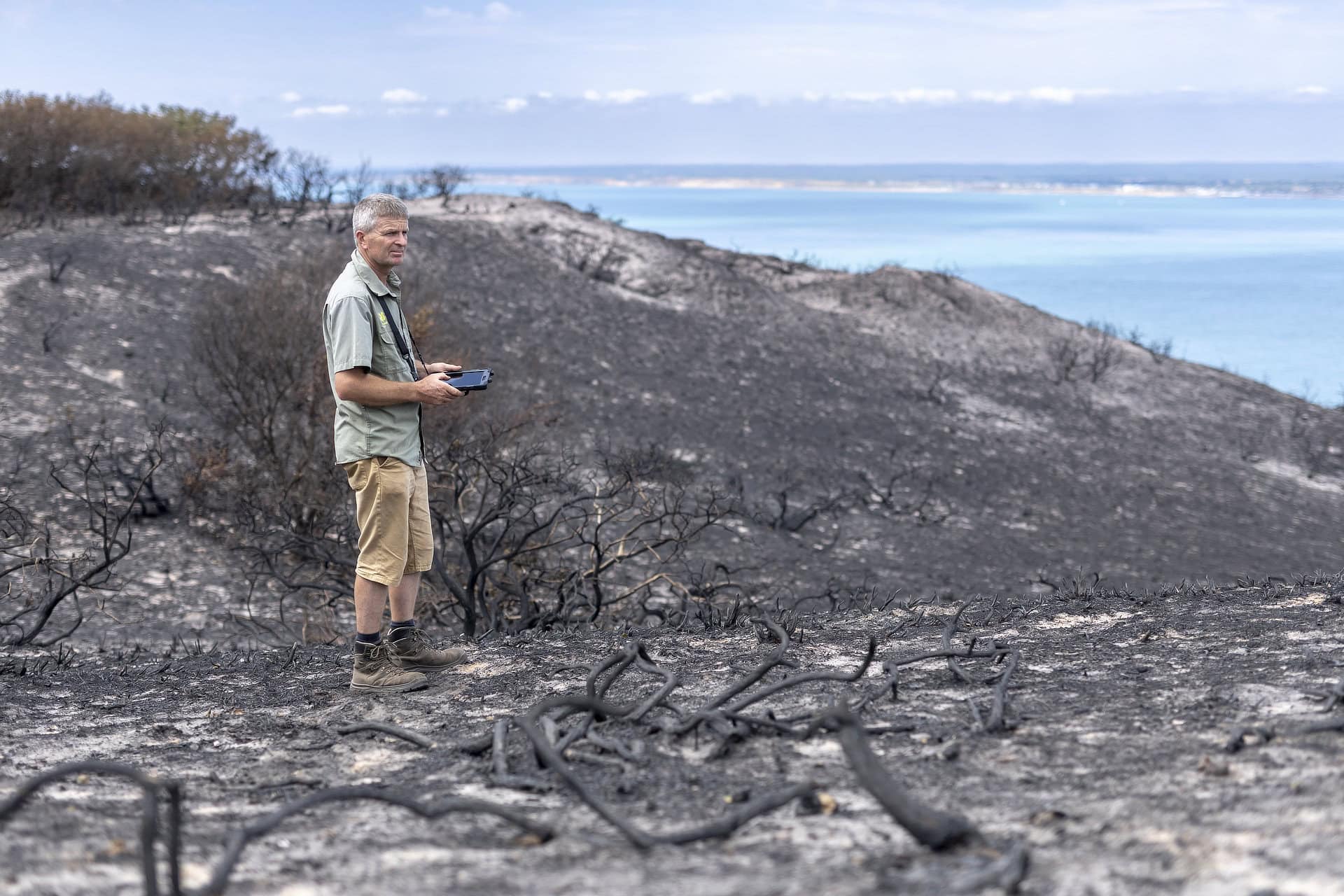
“Headon Warren is far more than a beautiful view. It is home to some of the Isle of Wight’s rarest and most valuable habitats, supporting wildlife including Dartford warblers, nightjars, whitethroats, stonechats and a number of rare invertebrates including beetles and the beewolf wasp that depend on the mosaic of heathland and grassland habitats found across this special landscape to survive.
“We’re incredibly grateful to Hampshire & Isle of Wight Fire and Rescue Service, the helicopter crew, all fire crews and support teams, and the many partners who helped tackle the fire, including our tenants at Warren Farm, neighbouring farmers, local landowners, community organisations and partner agencies. Their combined efforts helped prevent the fire from spreading further across Headon Warren during what was a challenging and complex incident.
“While nature will recover, some areas are likely to take years to return to full health, and inevitably it will impact our long-term restoration efforts. This fire is a reminder that even a small spark can have an impact on wildlife and the landscapes we all cherish. By taking care when visiting the countryside, we can all help protect these special places for generations to come.”
Impact on the land
Headon Warren is cared for by the National Trust and farmed by Warren Farm as part of a long-term partnership with Natural England to restore rare maritime heathland and limestone grassland habitats.
James Osman at Warren Farm added,
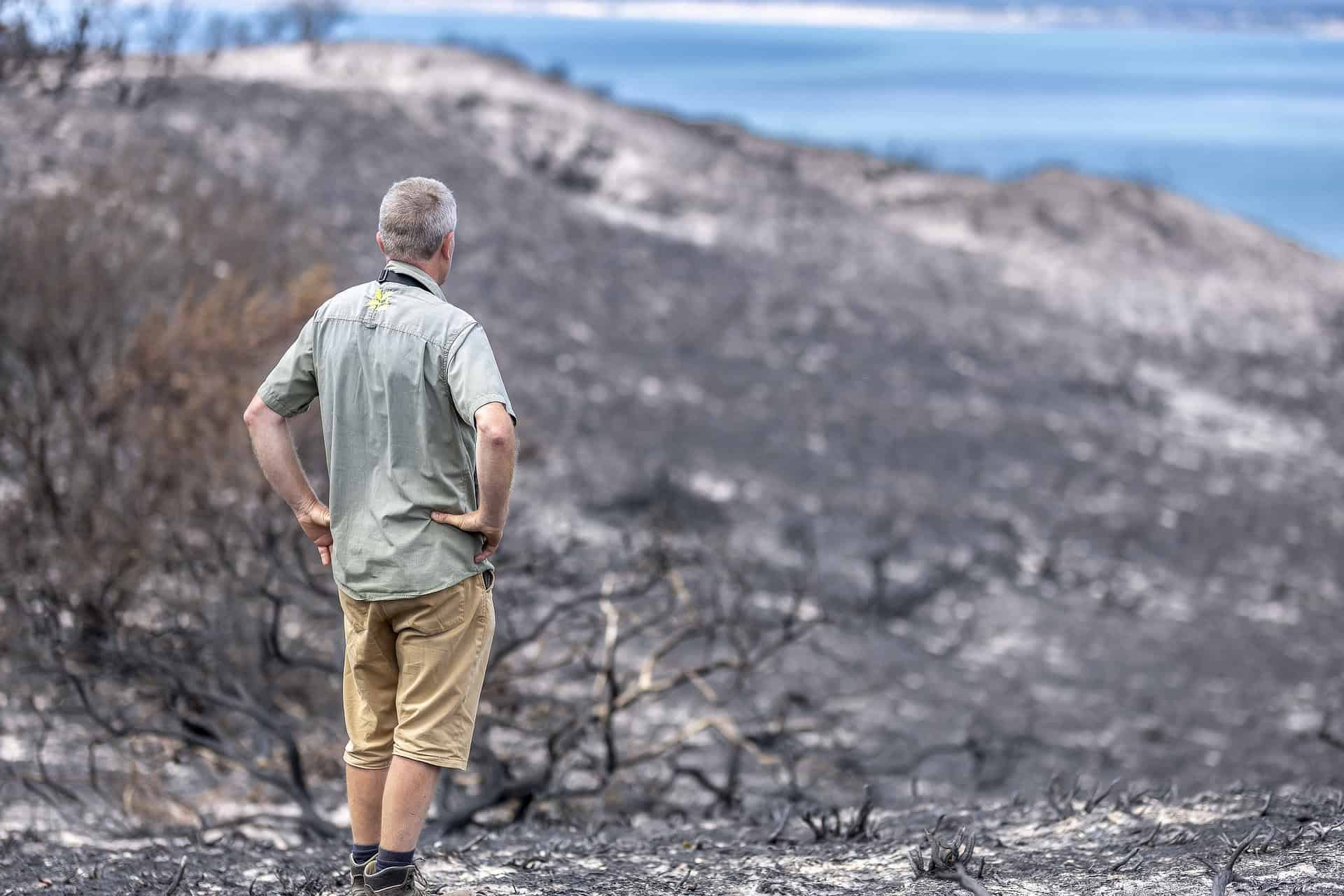
“It was very upsetting to see the impact of the wildfire on this precious heathland habitat that we have been working hard to protect over the past few years. Through conservation grazing and land management, we help manage around 30 hectares of heathland and grassland across Headon Warren, creating the conditions needed for rare wildlife and plant life to thrive.
“Seeing the fire spread so quickly was shocking. It is a stark reminder of the dangers that wildfires pose to the countryside, especially during these prolonged dry conditions. Thankfully, there were no livestock on the site at the time, although animals grazing in an adjacent field were moved further away from the danger zone as a precaution. With little rain forecast, the coming weeks will be a critical time for all of us to work together as a community to help prevent further fires and protect these special landscapes.”
A growing risk
The Headon Warren wildfire is the latest in the series of fires tackled by HIWFRS this year. In addition to the Headon Warren fire, the Isle of Wight has had 13 large fires in the open so far this year, this is more than the whole of 2025.
Larry Mackrell, Wildfire Support Officer at HIWFRS, said,
“During periods of hot, dry weather, even the smallest spark can quickly spread, causing fires that put people, wildlife, and the countryside at risk.
“The Headon Warren fire was particularly challenging due to the terrain, its remote location and proximity to the cliff edge. Incidents like this require a significant emergency response, which can take firefighters away from other incidents where they may be needed.
“We are urging anyone visiting the countryside to take extra care and avoid lighting campfires or using barbecues, as they can easily start fires. Please also dispose of cigarettes, litter, and other waste responsibly.”
As climate change brings warmer temperatures and longer periods of dry weather, the risk of wildfires continues to increase. With half of England now officially in drought conditions, according to the Environment Agency, and with over 200 wildfires in the UK in just the last fortnight, the risk to people, landscapes and wildlife continues to increase. Even a small spark can quickly become a major incident, threatening people, wildlife, livestock and nationally important habitats.
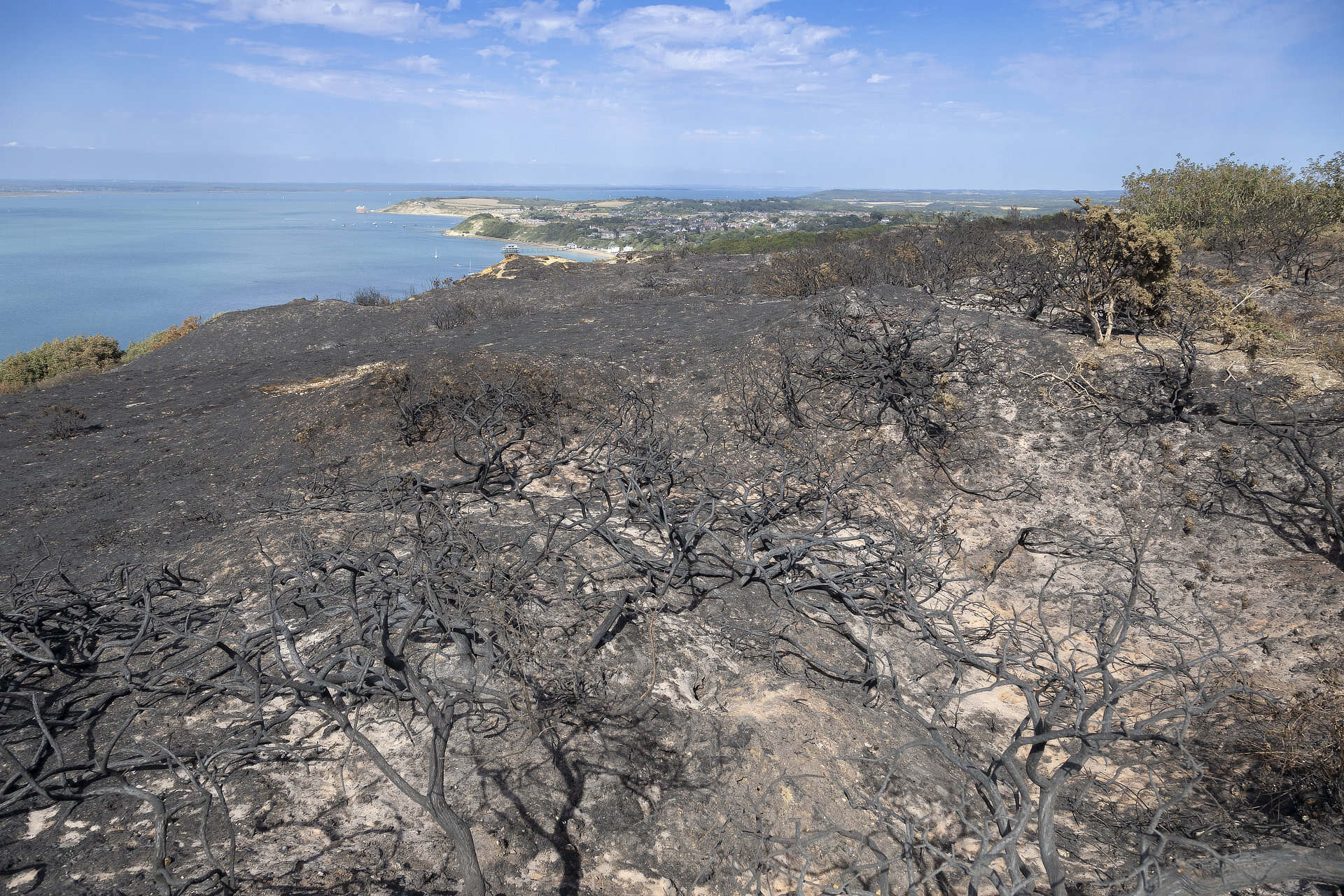
The fire at Headon Warren is a reminder that everyone has a part to play in protecting the places we all love. It may take years for some areas to recover from this fire and the National Trust will never stop protecting, caring and restoring nature.
To make a donation, visit the website.
How to help prevent wildfires
Visitors are asked to follow these simple steps whenever they’re enjoying the countryside:
- Never light disposable or portable barbecues in the countryside.
- Never light campfires or open fires.
- Dispose of cigarettes and smoking materials safely.
- Take all litter home with you, especially glass bottles, which can increase the risk of
fire. - Follow local advice, signage and any temporary access restrictions.
- Keep dogs under close control around livestock and wildlife.
- If you spot a fire, move to safety immediately and call 999. Never attempt to tackle a
wildfire yourself.
News shared by Lucy on behalf of the National Trust. Ed