A new £6 million funding pot from the government has prompted mixed reactions from Isle of Wight political leaders.
What the funding will support
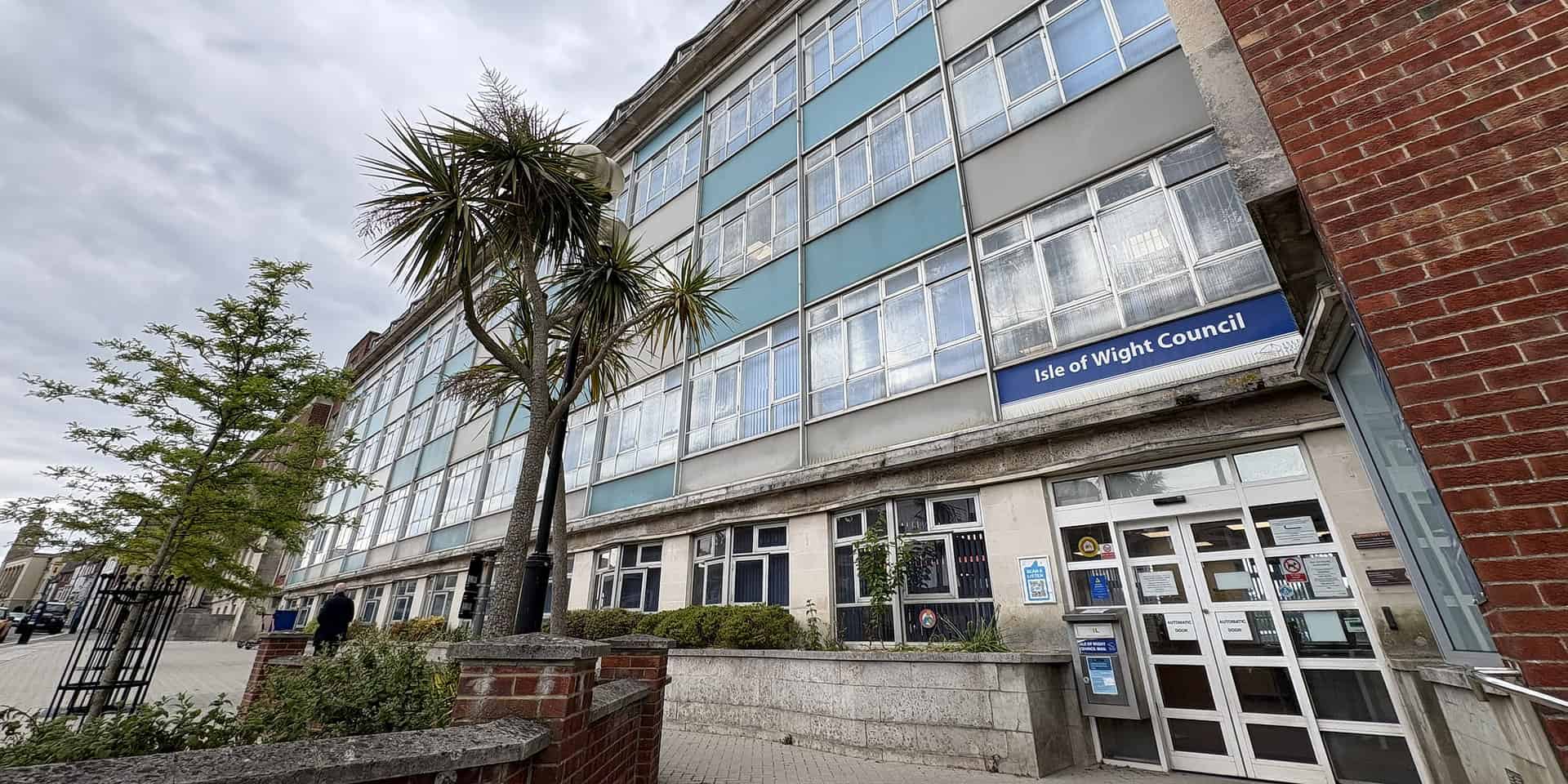
Isle of Wight Council leader Councillor Jonathan Bacon said the funding will support a range of improvement programmes within adult social care and children’s services.
However, Isle of Wight East Conservative MP, Joe Robertson, said it was not new money and he hoped the council weren’t expected to say thank you.
Councillor Bacon said the programmes are designed to improve outcomes for residents, strengthen support for vulnerable people and families, and build on the work already taking place across council services.
The £91 million national allocation
The £6 million allocation is part of a £91 million fund from the Ministry of Housing, Communities and Local Government (MHCLG) for 14 councils across England which already receive Exceptional Financial Support (EFS).
EFS is one of the key sources of funding for financially distressed local authorities.
MHCLG said local authorities struggling with high-cost services will benefit from the £91 million allocation to help modernise services, harness AI and reduce their reliance on emergency support.
The government’s package for the Isle of Wight will provide £2.72 million in 2026-27 and £3.28 million in 2027-28.
Conservative MP questions the funding
Joe Robertson claimed the £6m award is not extra money, but is to help find £50 million savings in the council’s annual budget in the next three years to avoid the council from collapsing. He said,
“The government cut our council’s funding to redistribute money to northern cities in the first place.
“I hope the Minister doesn’t expect us to say thank you.”
Labour welcomes the support
Richard Quigley, Labour MP for Isle of Wight West, welcomed the £6m which he said reflects the “unique challenges” that are “all too familiar to us all”.
He added,
“This new support will help the council manage some of the significant pressures it faces, particularly in adult social care, and I welcome the government’s acknowledgement that our isolation by sea creates genuine additional costs.”
Council group responses
Councillor James Whelan, leader of the Reform UK group, said the funding recognises the challenges local authorities face and provides an opportunity to transform services, reduce long-term costs and improve support for residents. He said,
“We remain committed to delivering value for money while protecting the services our communities rely on most.”
Councillor Lora Peacey-Wilcox, Island First Network leader, said her group welcomes the grant which will help address pressures in adult and children’s social care.
She added,
“However, it does not resolve the fundamental unfairness in our funding or recognise the exceptional costs of providing statutory services on an Island separated from the mainland by water.”
Questions over adequacy remain
Liberal Democrat leader Councillor Andrew Garratt said that while all money is welcome and will be well-used, it is “disappointing” that it is just a fraction of what is needed. He said,
“Once again, there is no recognition that the greatest challenge to the council’s financial sustainability is the unfairness of successive governments’ funding formulas.”
Councillor Chris Jarman, who leads the All for Islanders group, said the continuing financial crisis at the council is well known and that repeated annual calls on central governments of various political views have been refused or met with minimal responses.
He said the money won’t deliver what the Island “desperately needs”.
Government perspective on funding
Jim McMahon MP, Minister for Local Government, Devolution and Regional Growth, said councils have been under “enormous strain” from a broken funding system and spiralling demand for services like care and temporary accommodation.
He added that the targeted £91 million support for councils facing the toughest pressures will help end reliance on emergency funding and provide a blueprint for reform across local government.
This article is from the BBC’s LDRS (Local Democracy Reporter Service) scheme, which News OnTheWight is taking part in. Some alterations and additions may have been made by OnTheWight. Ed