John Dekhane, a British citizen based in France, often writes tribute articles dedicated to fallen World War II heroes. He does this work voluntarily, with the sole goal of keeping these often-forgotten stories alive.
Our thanks to John for sharing the story of Petty Officer Kenneth Charles Frank Barton, a serviceman from the Isle of Wight. Ed
The Second World War engulfed the globe in turmoil, calling countless young men from across England to leave behind their homes, families, and dreams to rescue a world in peril. From the coastal towns of the Isle of Wight to the bustling streets of London, they ventured into the unknown, driven by a shared conviction that freedom was worth every sacrifice.
Week after week, they faced brutal trials, unimaginable loss, and the constant shadow of death—yet they stood firm. Among the brave men who left the Isle of Wight, but never returned, was Petty Officer Kenneth Charles Frank Barton.
Grew up on the Island
Born on 16th January 1911 in Newport, Isle of Wight, Kenneth was the eldest son of Frank Charles Barton and Elsie May Croad. He grew up in a loving household at 33 Hearn Street, Newport.
Raised with strong values of integrity, respect and honour, Kenneth forged the character that would determine the course of his life.
Joined the Royal Navy
Motivated by a profound desire to serve his beloved country and defend the ideals he believed in, Kenneth joined the Royal Navy in 1929, at the age of 18. His commitment and sense of service were evident from the start.
Day after day, he took pride in fulfilling his responsibilities with discipline and professionalism. Kenneth’s loyalty to his shipmates made him someone everyone could count on.
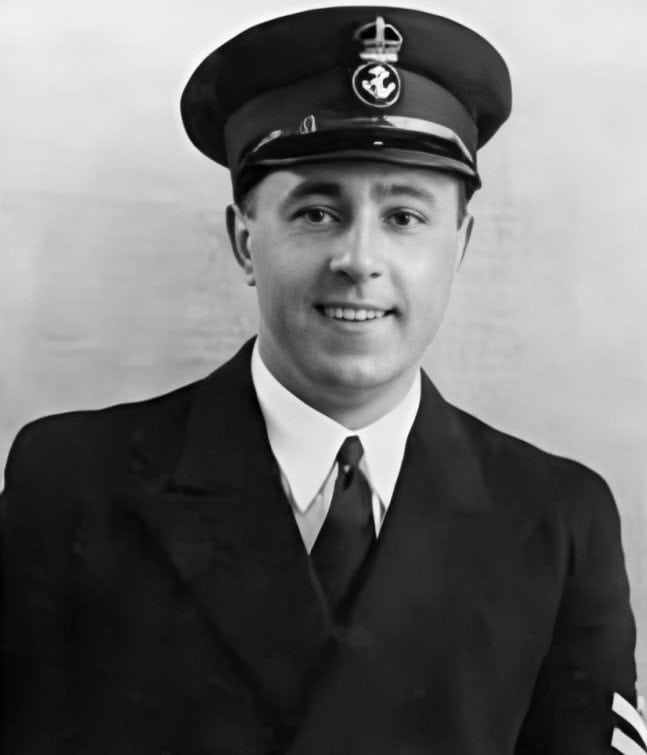
The “Mighty Hood”
Kenneth eventually served aboard HMS Hood, the pride of the Royal Navy and one of the largest and most powerful battlecruisers of its time. Known as the “Mighty Hood,” the ship symbolised British naval strength.
As a Petty Officer, Kenneth carried out his duties with unwavering dedication, exemplifying the very best of naval service.
Kenneth gave his all
In a world ravaged by war, where the forces of tyranny swept across nations like a relentless tsunami, Kenneth gave his all—pouring heart and soul into this desperate, fierce battle for survival.
He knew that the very freedom he cherished was at stake. Yet, during this struggle, his life was tragically cut short in one of the war’s most devastating naval disasters.
The Bismarck battle
On 24th May 1941, HMS Hood engaged the German battleship Bismarck in the North Atlantic, near Greenland.
During the ferocious confrontation, a catastrophic explosion tore through Hood’s rear magazine, causing the mighty ship to break apart and vanish beneath the waves within minutes.
Only three survived
Of the 1,418 crew aboard, only three survived, making it one of the worst naval disasters in British history.
Petty Officer Kenneth Charles Frank Barton was among the men who perished. He was only 30 years old, with so much life ahead and so much to give. His body was never recovered—forever taken by the unforgiving sea.
A deep loss
Back on the Isle of Wight, news of Kenneth’s death sent waves of grief through his family, friends, and the entire community.
The loss was deeply felt by all who knew him, made even more painful by the absence of a grave where they could lay flowers or find comfort in remembrance.
Remembered on the Portsmouth Naval Memorial
Today, Kenneth’s name is proudly inscribed on the Portsmouth Naval Memorial in Portsmouth, England.
This monument honours those who lost their lives at sea without a known grave. It stands as a lasting tribute to the courage and sacrifice of Petty Officer Barton and the countless others who answered history’s harshest call in humanity’s darkest hours.
Kenneth’s legacy
It is our solemn duty to remember Petty Officer Kenneth Charles Frank Barton and to commemorate the legacy he left behind.
His story echoes the lives of so many young men from the Isle of Wight who sailed into the unknown—not for glory or recognition, but to serve a cause greater than themselves. Each had their own story—a life, a family, a future—and every single one of them deserves to be honoured.