A century after workmen in Newport stumbled upon one of the Island’s most significant archaeological treasures, Newport Roman Villa is set to mark the milestone with a special community day.
The Isle of Wight Heritage Service will open the doors of the 3rd‑century Roman farmhouse on Saturday 28th March, from 10am to 2pm, inviting visitors to explore the site for a special discounted admission price of £1 per person.
Guests will have the chance to step back more than 1,700 years and view the villa’s remarkably preserved bath suite, one of the best in southern England, along with its hypocaust central heating system and recreated Roman-style garden.
Free guided tours will be offered at 10.30am, 11.30am, 12.30pm and 1.30pm, though visitors are welcome to explore independently.
History of the site
The event commemorates the moment when workmen digging foundations for a new garage between Avondale and Cypress Road uncovered fragments of Roman roof tiles and box flue tiles.
A council inspector quickly realised the potential importance of the find and a full archaeological excavation was launched soon after.
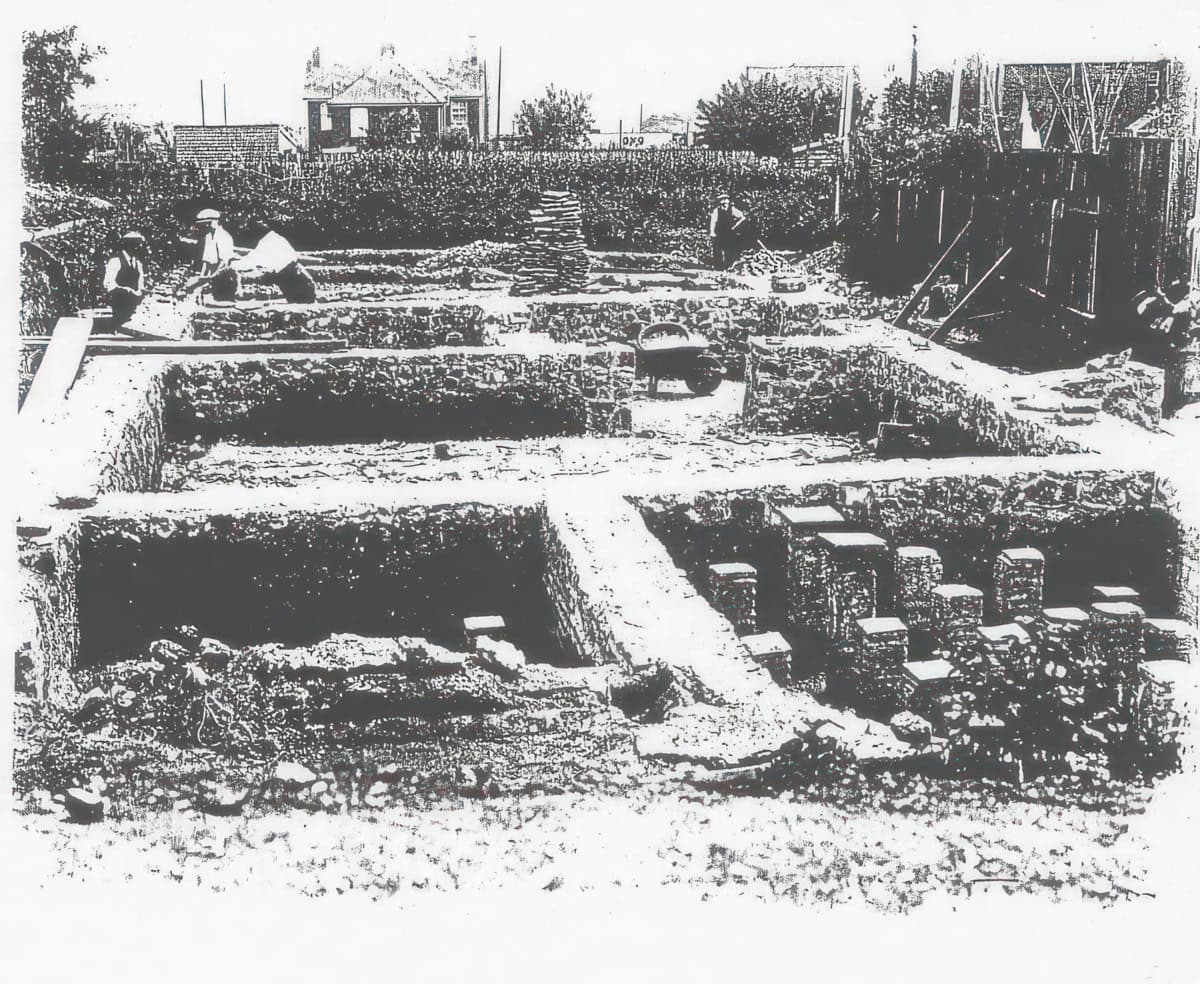
Members of the Isle of Wight Archaeology and Natural History Society, including architect and antiquarian Percy Stone and Carisbrooke Castle Museum curator Catherine Morey, led the investigation.
What they uncovered captured widespread attention: tessellated mosaic floors, an extensive bath suite, and a sophisticated underfloor heating system – clear evidence of a Roman villa of considerable status.
Public fund launched
The discovery sparked significant community interest. The Isle of Wight County Press at the time launched a public fund to support the work, and crowds flocked to watch the excavation take shape.
One memorable report recorded three boys walking all the way from Cowes simply to witness history being unearthed.
Mayor sought to protect the land
Later in 1926, Newport’s Mayor, John Curtis Millgate, purchased the land and commissioned a protective building to safeguard the archaeological remains.
His daughter, Grace Millgate, later gifted the villa to the Isle of Wight Council in 1961, ensuring its care for future generations.
Today, Newport Roman Villa stands as a Scheduled Ancient Monument, preserved and managed by the Isle of Wight Heritage Service.
Tait: We’re proud to care for this remarkable site
Dr Rachel Tait, museum curator, said,
“This centenary event isn’t just about marking 100 years since the villa was found — it’s about celebrating the Islanders who helped protect it.
“From the local people who crowded around the excavation in 1926 to those who continue to visit and support us today, the villa’s story is really a community story.
“We’re proud to care for this remarkable site and delighted to welcome people back to rediscover it a century on.”
Jones-Evans: The villa is a true gem
Councillor Julie Jones-Evans, chair of the council’s economy, regeneration, transport and infrastructure committee, said,
“Newport Roman Villa is such a treasured part of our town’s heritage, and this centenary is a wonderful opportunity to celebrate the people who uncovered it, protected it, and continue to value it today.
“Often overlooked, the villa is a true gem – well worth discovering – and one of my favourite places. It’s a reminder of how deeply our history is woven into the everyday places around us.”
News shared by Isle of Wight council press office, in their own words. Ed