Our thanks to Caroline Dudley, IW Swift Box Scheme Co-ordinator, for sharing this news for Swift Awareness Week. Ed
The eighth national Swift Awareness Week runs from Saturday 28th June to Sunday 6th July 2025.
During this week, local Swift groups will be hosting events all around the country to raise awareness of Swifts, bring a focus to their plight and provide information about how to help them.
Truly amazing birds
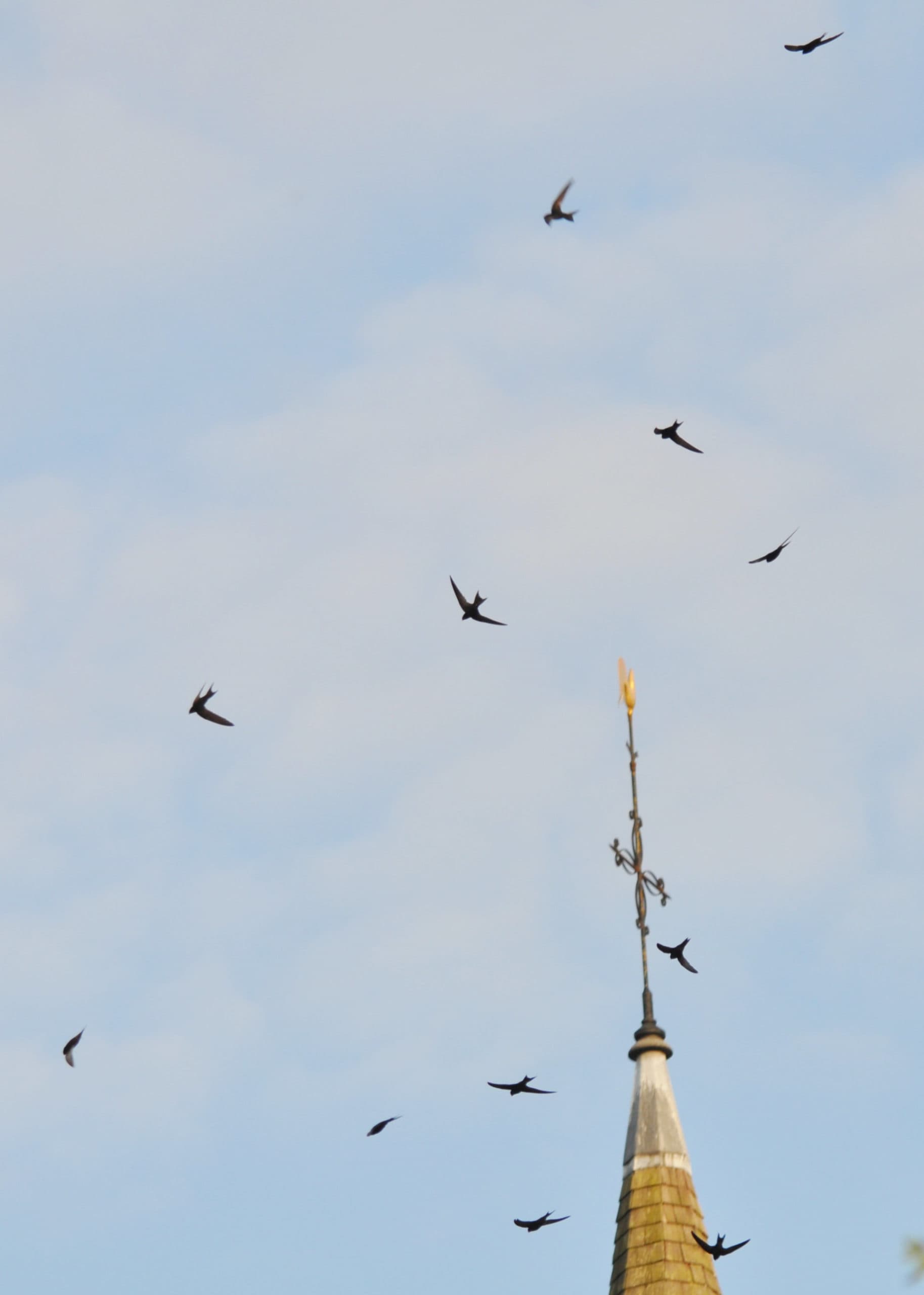
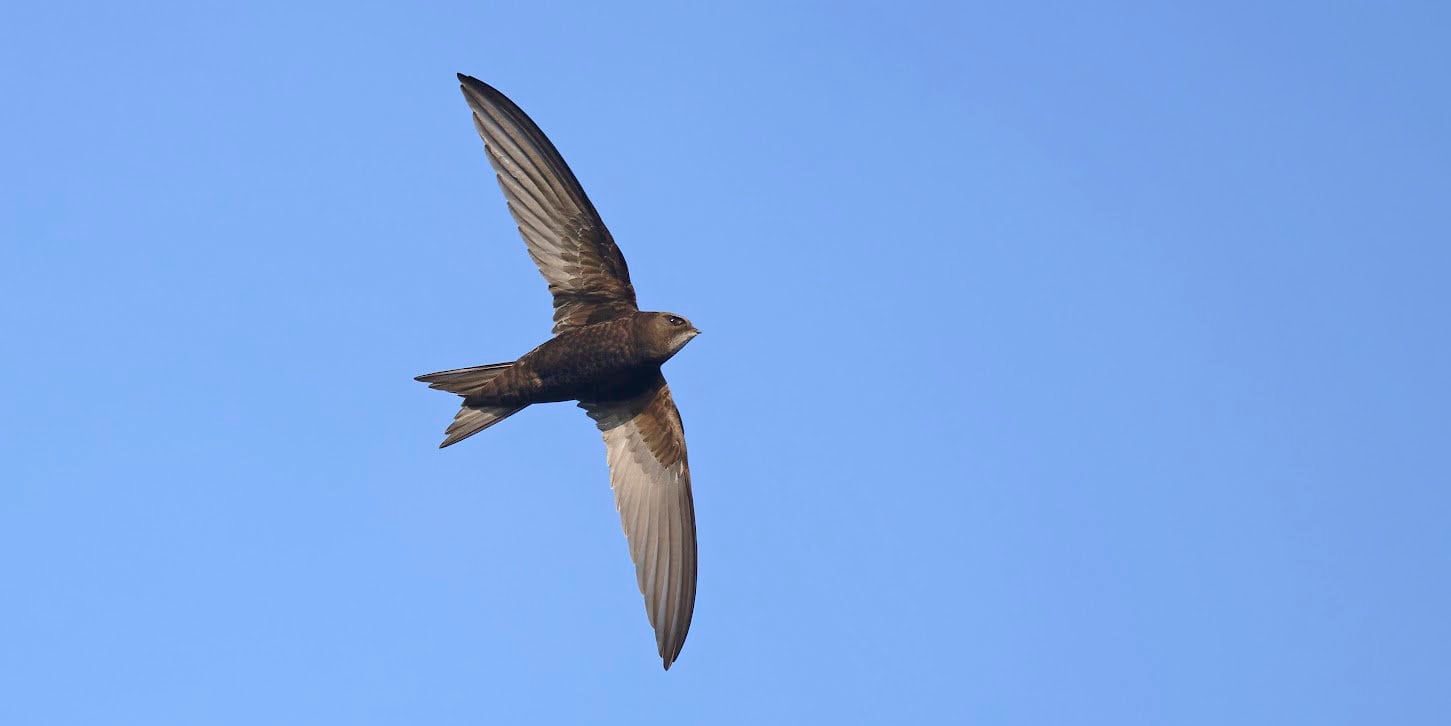
Swifts are truly amazing birds, quite unlike any other. They treat us to spectacular aerial displays as they fly low and fast in chasing groups over the rooftops, giving their distinctive screaming calls on warm summer evenings.
They are built for an aerial lifestyle and have long, curved wings to allow for rapid, agile flight, but their legs are short and they cannot perch, which means that they are clumsy on land and more vulnerable to predation. They are safer in the skies and eat, preen, mate and even sleep on the wing.
Can stay in the air for as long as two to three years
Once a young Swift has fledged, it may stay in the air for as long as two to three years, when it begins to look for a nest site of its own.
Swifts spend the winter months in tropical Africa but visit the UK at the end of April or in early May each year to breed and take advantage of the longer day lengths in which to gather airborne insect food for themselves and their young.
Declining numbers
Sadly, Swift populations are struggling and numbers have more than halved since the year 2000, putting them on the Red list of birds of conservation concern. One of the main reasons for this severe decline is a loss of nest sites.
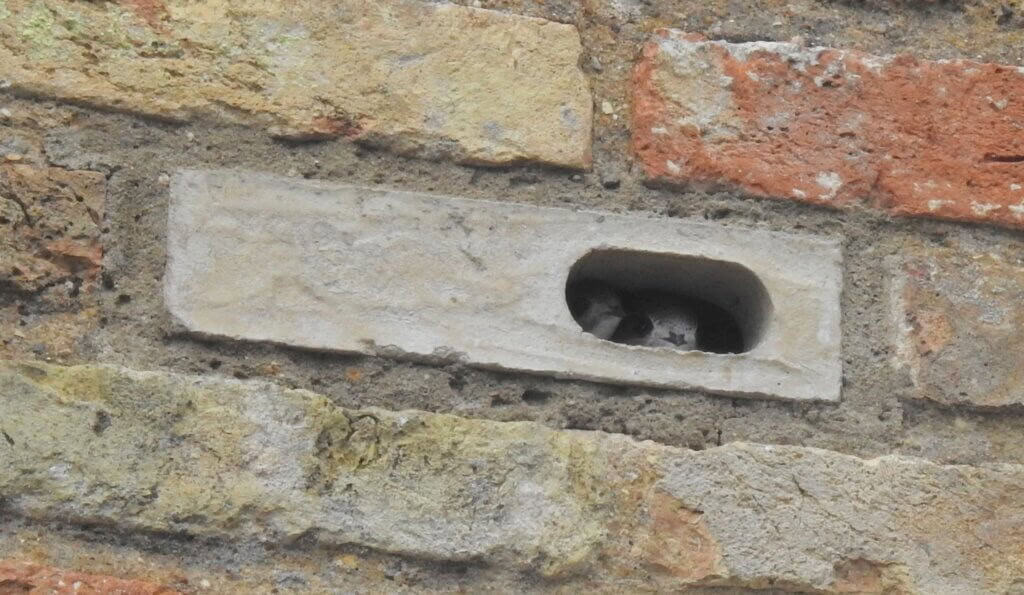
Swifts make their nests in spaces under roofs and in nooks and crannies high within the walls of old buildings. These old buildings may be demolished or renovated and the Swifts then lose their homes. Favourite nesting places are between the soffit and the top of the wall under the eaves.
Losing access to nest sites
When wooden soffits and fascias are replaced with plastic, the narrow gaps that were used by the Swifts are destroyed and they can no longer access their homes.
Holes in churches and other public buildings are covered with mesh or board to keep out pigeons, but the mesh and board also keep out the Swifts.
Declining insect population
Another big problem for Swifts is the huge declines in their insect food. The Bug’s Matter car number plate splat survey shows that there was a 78% decline in insect abundance between 2004 and 2023.
This means that Swifts have to use more energy flying to find the food to feed themselves and their young.
What can we do to help Swifts?
The Swift is one of the few endangered species many of us can help since Swifts nest in buildings, including our homes.
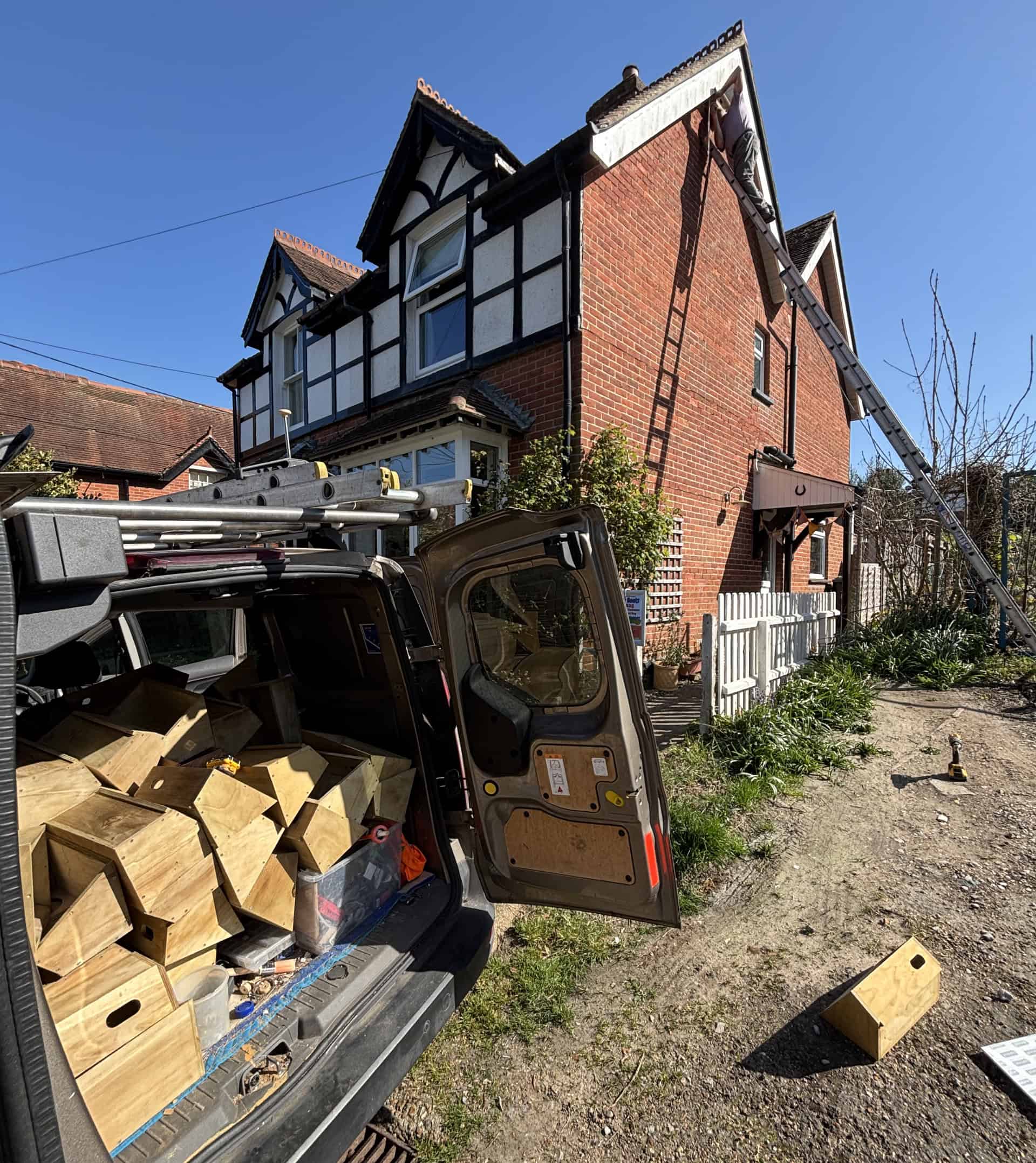
Firstly, we can provide them with alternative homes in the form of nestboxes. The Isle of Wight Swift Box Scheme was set up in conjunction with the group Hampshire Swifts in 2022 with the aim of helping those living on the Isle of Wight to purchase and install nestboxes on their properties.
The scheme is hosted by the IW Natural History and Archaeological Society (IWNHAS) through their project iWatch Wildlife thanks to funding from Isle of Wight National Landscape.
Orders are currently being taken for spring 2026. Please contact [email protected] if you would be interested in purchasing a box and have a wall at least 4.5 metres (15 feet) high with overhanging eaves.
Boxes for church towers
Churches have historically been good places for Swifts to nest and the scheme has also started making and installing internal boxes for church towers. These are placed out of sight behind the louvre windows.
The boxes are self-contained, and the birds can only get into the nestbox and not inside the tower. Please contact [email protected] for further information.
Builders can help enormously by installing Swift bricks in new builds, providing permanent homes for Swifts and other cavity-nesting birds.
Growing nectar-rich plants
Secondly, we can help Swifts by gardening in a nature-friendly way to benefit insects and other wildlife.
This could involve leaving a patch of grass to grow long between spring and autumn, growing nectar-rich plants, not using harmful chemicals or building a garden pond.
RSPB and RHS Swift garden
One of the feature gardens at this year’s Hampton Court Palace Garden Festival, which runs between 1st and 6th July, is the ‘RSPB and RHS Swift garden’. The garden has been designed for a wide range of wildlife and showcases plants and planting principles that encourage the insects and other invertebrates that Swifts feed on.
Coverage on the show is on BBC2, for example in the Gardeners’ World programme on Friday 4th July. For more information on the garden, see RHS website.
Report nesting Swifts
The IW Swift Box Scheme would be grateful for any records you might have of nesting Swifts so that we can map hotspots and ensure that important nest sites are not destroyed through demolition or renovation during the nesting season.
The summer months are the time when most renovation work is carried out and that is the very time when Swifts are nesting. It is illegal to disturb Swifts and their nests but the birds are so unobtrusive – flying in and out of their sites extremely quickly and making little or no mess – that it may not be realised that they are nesting there.
Sign up for the Swift Walk
Here on the Isle of Wight, a walk around Ryde to see Swifts and their nest sites has been arranged for Wednesday 2nd July.
The walk is part of the Isle of Wight Biosphere Festival events programme and will be run jointly by members of the IWNHAS and the group Wight Swifts (@Wight Swifts on Facebook).
There are currently very few spaces left but please contact us if you’d like to go on the reserve list. See the Isle of Wight Biosphere website for more information and how to book a place on the walk.