The Vectis Astronomical Society (VAS) will host its next public talk on 24th April 2026, with Professor Isobel Hook of Lancaster University presenting “Understanding the Accelerating Universe”.
The event takes place at 7.30pm at Newchurch Pavilion and simultaneously over Zoom, with tickets for both available via Eventbrite at a suggested donation of £3 or non-members of VAS.
A Nobel Prize-winning discovery
More than 25 years ago, two teams of astronomers made a startling discovery: the expansion of the universe is accelerating.
Researchers based their findings on careful measurements of supernovae, and the unexpected result earned the Nobel Prize for physics in 2011.
The cause of that acceleration, however, remains unexplained, with one leading hypothesis pointing to a mysterious force known as “dark energy” that pushes the universe apart against the pull of gravity.
What the talk will cover
Professor Hook will walk the audience through the original research that led to the discovery, before turning to the latest observational advances in supernova science and recent results on the nature of dark energy.
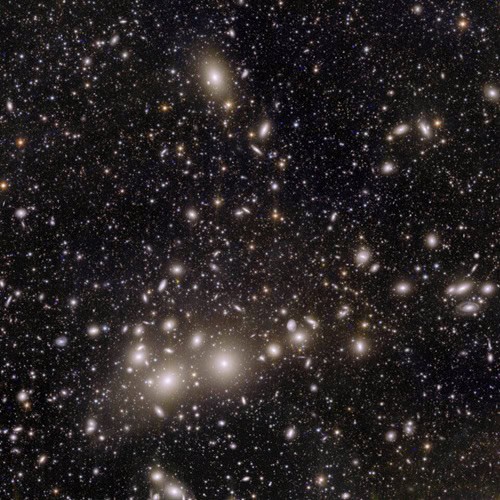
She will also look ahead to the next generation of telescopes coming into operation, including the ESA Euclid mission, the Vera C. Rubin Observatory, and the European Extremely Large Telescope – set to become the biggest optical telescope in the world.
About Professor Hook
Professor Hook holds a PhD from the University of Cambridge and completed postdoctoral fellowships at UC Berkeley and the European Southern Observatory’s headquarters in Germany.
She went on to hold roles connected with the Gemini Observatory, including a two-year position at the Gemini-North telescope in Hawaii, before working on the European Extremely Large Telescope project from bases in Oxford and Rome.
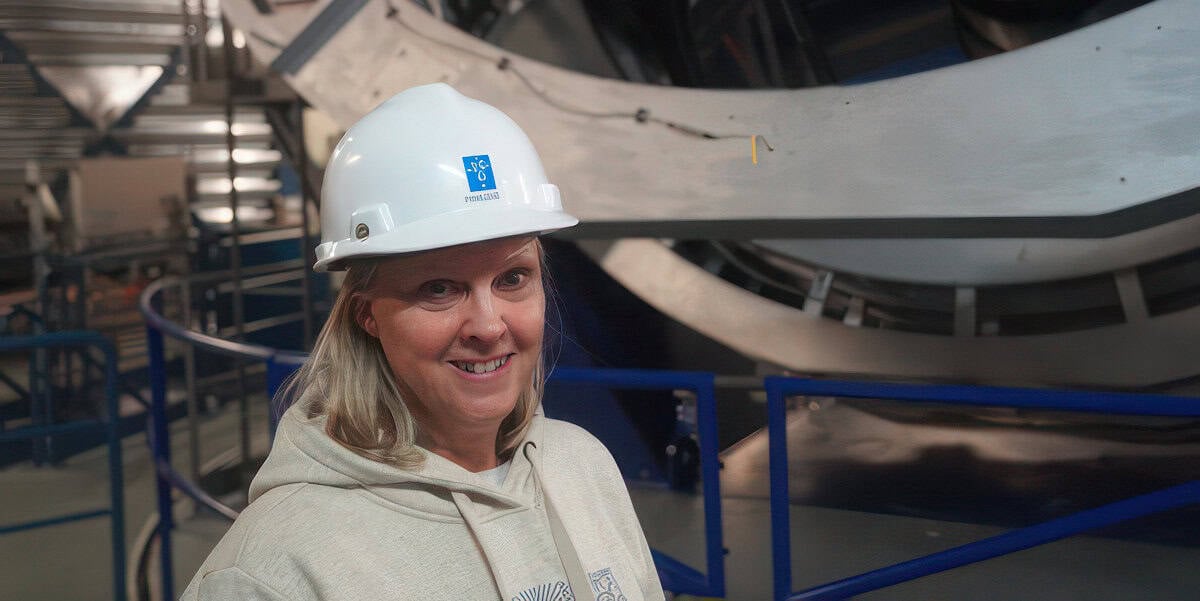
In 2016, she moved to Lancaster University to lead a new Observational Astrophysics group.
Award-winning research
As a member of the Supernova Cosmology Project, Professor Hook contributed directly to the discovery of the universe’s accelerating expansion, earning her a share of the 2007 Gruber Cosmology Prize and the 2015 Breakthrough Prize in Fundamental Physics.
The Royal Astronomical Society and the German Astronomical Society recently awarded her the Caroline Herschel Medal jointly, recognising her contributions to cosmology and astronomical instrumentation.
Attending the talk
The Vectis Astronomical Society meets on the fourth Friday of most months, excluding December, and opens its talks to non-members with a suggested donation of £3.
Speakers typically present for around 45 minutes, followed by a question and answer session.
Those wishing to attend in person or online can book via Eventbrite. Full details of upcoming events are available on the society’s website.