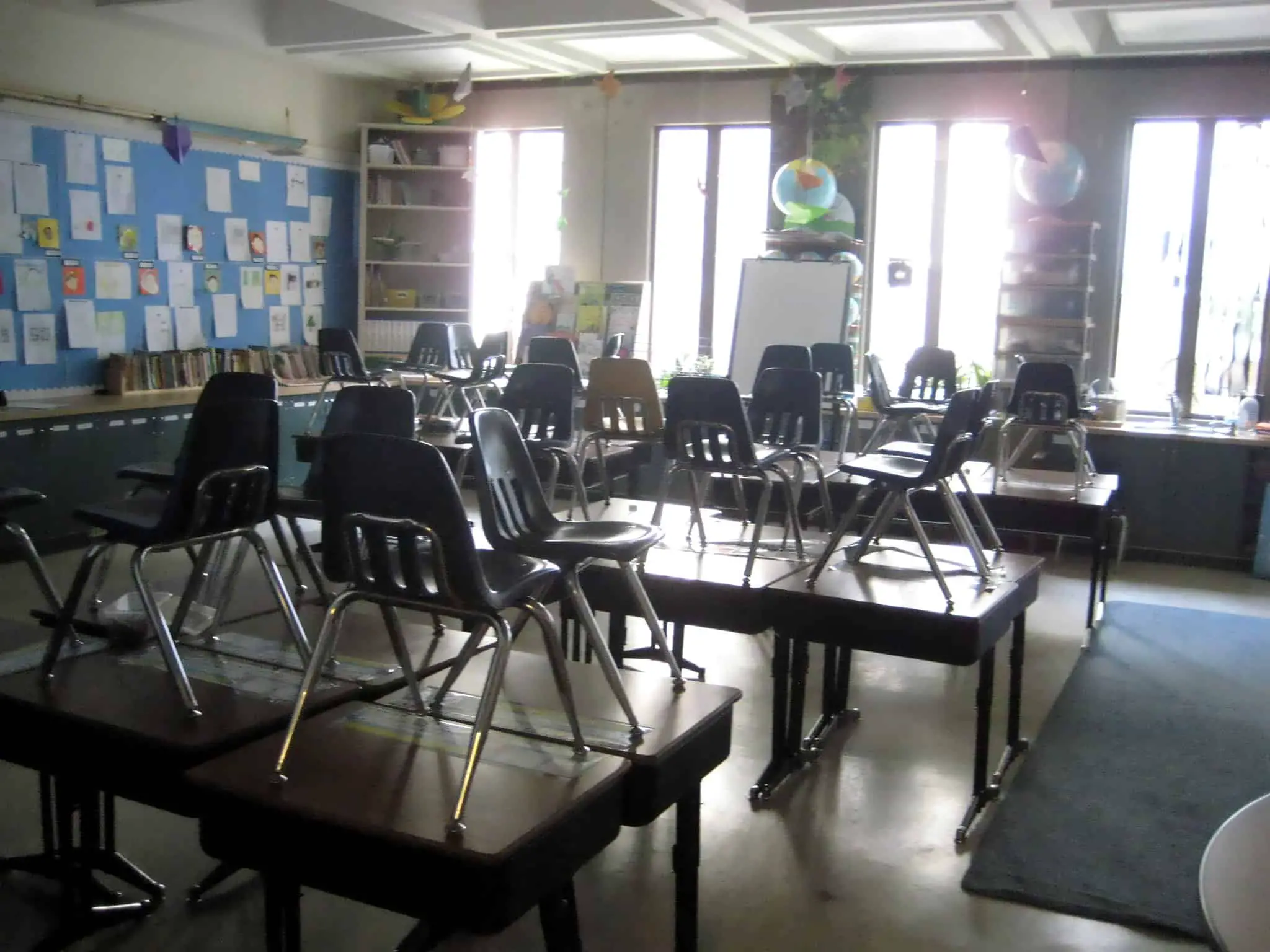
Reducing school places on the Isle of Wight, which may mean school closures, has been recognised as a ‘critical and urgent’ priority by councillors.
However, nothing will happen before the council elections in May.
How to cut surplus capacity
The Children’s Services, Education and Skills Committee last Thursday (5th March) decided the panel’s first meeting after the 7th May 2026 local elections should consider recommendations on how to cut surplus capacity.
County Hall is currently implementing a new education strategy to improve educational outcomes for children, according to a report from the strategic director of children’s services, Ashley Whittaker.
It states a ‘vital element’ of this is aligning the number of school places with the decreasing number of children living on the Isle of Wight.
Five key elements
Presenting his paper, Mr Whittaker mentioned the strategy’s five key elements, including high aspirations, developing rich curricular experiences, high-quality SEND provision, a highly trained workforce and developing a sustainable education infrastructure.
He said school place planning, the subject of the report, relates specifically to the strategy’s fifth pillar.
279 surplus reception places across 37 primary schools
Conservative committee chair Paul Brading cited 279 surplus reception places across 37 Island primary schools for September 2026, referred to in the report.
He said,
“If they were all full, just over £5,100 pound per pupil, there’s £1.5 million of extra money that will be in the coffers because schools are still funded per pupil.
“Only eight school are going to be in (financial) surplus this year and for those of us that are school governors or go to your local schools regularly, you’ll realise what pressure schools are under.”
Mr Whittaker’s report shows 23 Island maintained primary schools with financial deficits in 2026/27.
Jarman: Only two solutions
Councillor Chris Jarman, Empowering Islanders group leader, said,
“The only way to change this materially is either, assuming the government doesn’t change the funding model, is that we have lots more children come to the Island…or we close quite a large number of schools to balance the books.
“Those are the only two solutions I can see.”
Love: I’m not criticising specific schools
Independent East Cowes councillor Karl Love said,
“Until we fix this, in terms of the numbers and the Published Admission Numbers that we’re taking in, we won’t be able to make significant inroads in the recovery of the quality and standards of education.
“I’m not criticising specific schools. If a school is having to think about its finances as a priority in terms of staying alive, it’s not thinking about how we increase attainment within schools.”
Mosdell: We need to do it on a level playing field
Very Broad Church councillor Clare Mosdell said,
“We all agree schools look like they will need to be closed, but we need to do it on a level playing field with understanding and lessons learnt and a much more nurturing process on how it is done.
“I don’t think many of the people who are sat here today, if they’ve got certain parties against them, will be back (in the chamber). Sorry, I don’t think you will.”
Critchison: It’s going to be awful…it’s really difficult
Councillor Claire Critchison, a Green Party committee member, said,
“We are going to lose that sense of community in some places and that is what they’re (parents) most scared of.
“Whatever lessons we’ve learned, it’s going to be awful…it’s really difficult.”
Lilley: We’ve got to get all those stakeholders on board
Councillor Michael Lilley, of the Liberal Democrats, said,
“We’ve got to get all those stakeholders – the unions, the schools, the diocese and providers on board.
“If I am on the council and I might not be…I would want to know when you (Mr Whittaker) come back with a report the diocese was on board, the trade unions are on board.
“If you take the diocese for instance, they said right through the (last closures) process they would go to court and law, whether it was judicial or the school’s adjudicator. And they did.”
This article is from the BBC’s LDRS (Local Democracy Reporter Service) scheme, which News OnTheWight is taking part in. Some alterations and additions may have been made by OnTheWight. Ed