Jonathan Dodd shares his review of the latest Isle of Wight Symphony Orchestra (IWSO) concert. Images with kind permission of Allan Marsh. Ed
The year rolls on, and the time flies by, and the fourth concert by the Isle of Wight Symphony Orchestra was upon us last Saturday, 17th May 2025.
Driving towards the Medina Theatre, I reflected on the years I have now been lucky enough to review these concerts, and I was pleased that my enthusiasm remains as fresh as when I started.
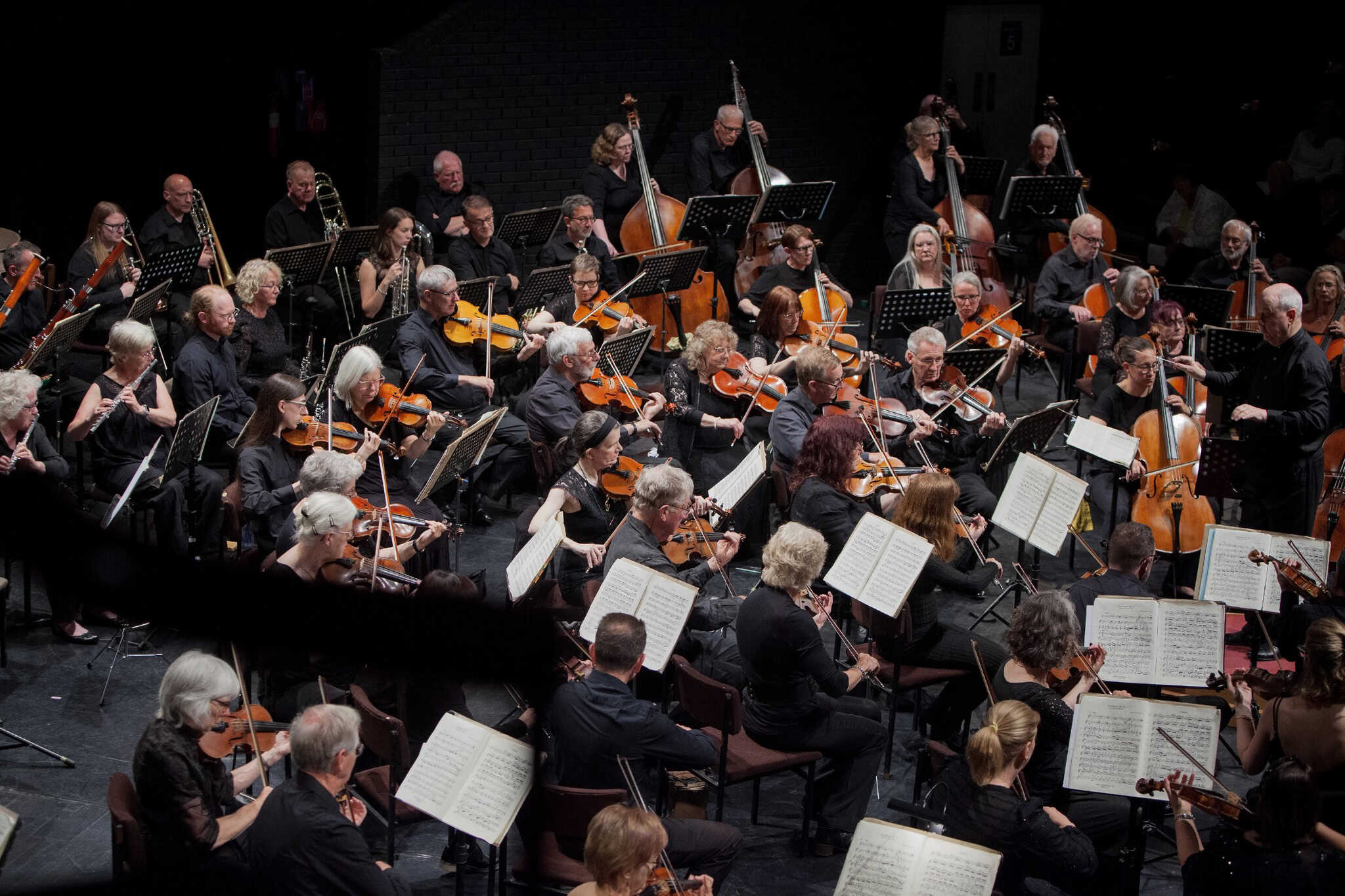
This night there were going to be two pieces I actually knew, the first time. I’m always grateful for the opportunities I am provided to experience and take a small part in. I was looking forward to it very much. As I approached the entrance, I could see that it would be a full house again.
A Fantasia on a Theme
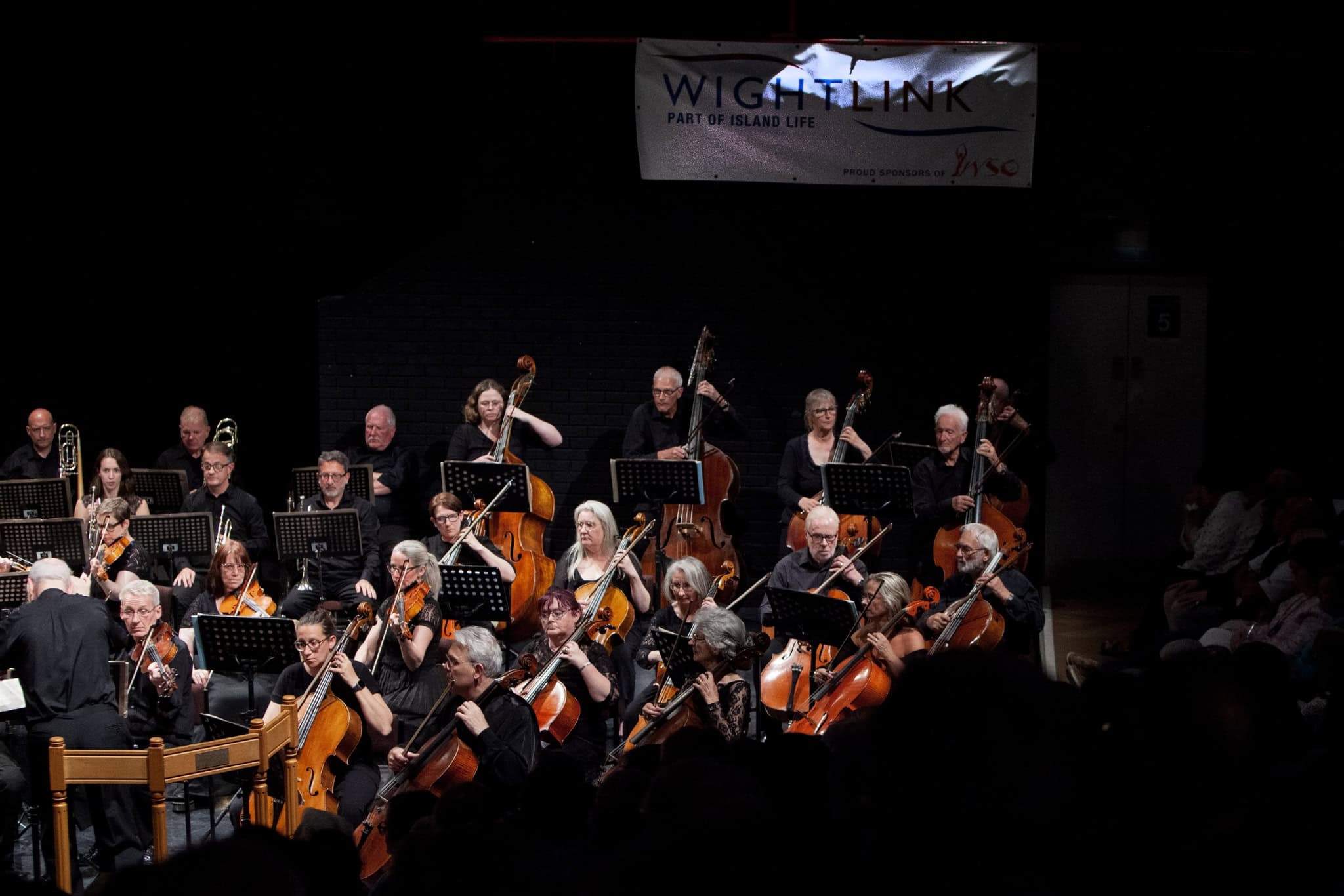
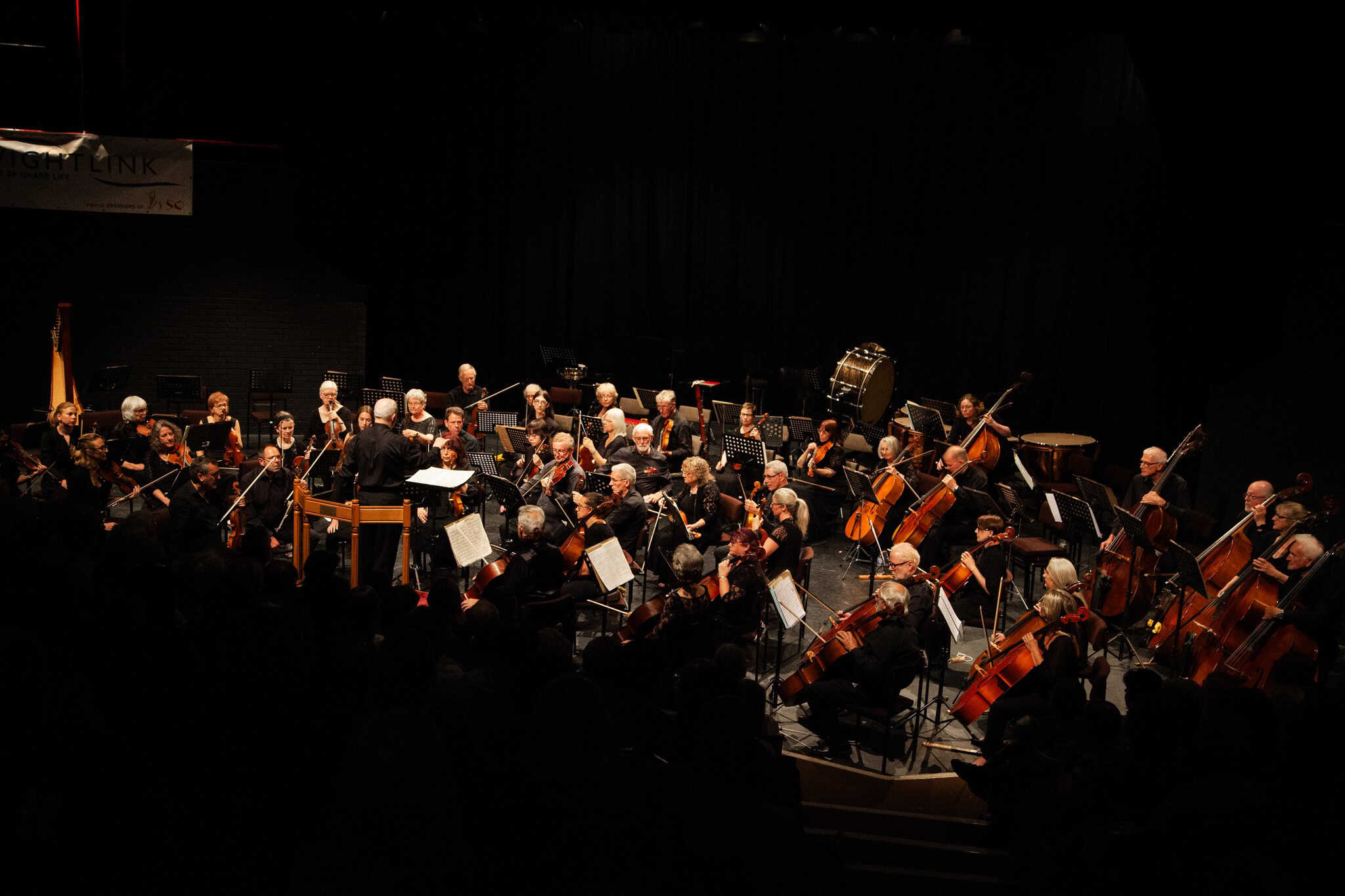
The first difference I noticed about this concert was the complete absence of non-stringed instruments. I hadn’t realised that the Fantasia was only for strings until I saw it, and I was strangely thrilled. Thomas Tallis wrote the original tune in 1567 as a Psalm, and Ralph Vaughan Williams created his Fantasia from it in 1910.
Vaughan Williams divides the orchestra in two, and adds a quartet. Each member of the quartet plays solos, and the quartet plays ensemble, and the two orchestras play separately. The result is an extraordinary and very beautiful sensation that the music is flowing from side to side, and around, and rising towards the ceiling.
It is very quiet and slow, and feels almost like prayer, or meditation. The different strands of the music swirl around each other, and I was carried away by the complexity that seems effortless and very simple. I was reminded in a way of Barber’s Adagio for Strings, with the power of its simplicity, and the strong emotions at its heart. I loved it, and I thought the IWSO string players performed beautifully. Thank you.
Gliere Horn Concerto
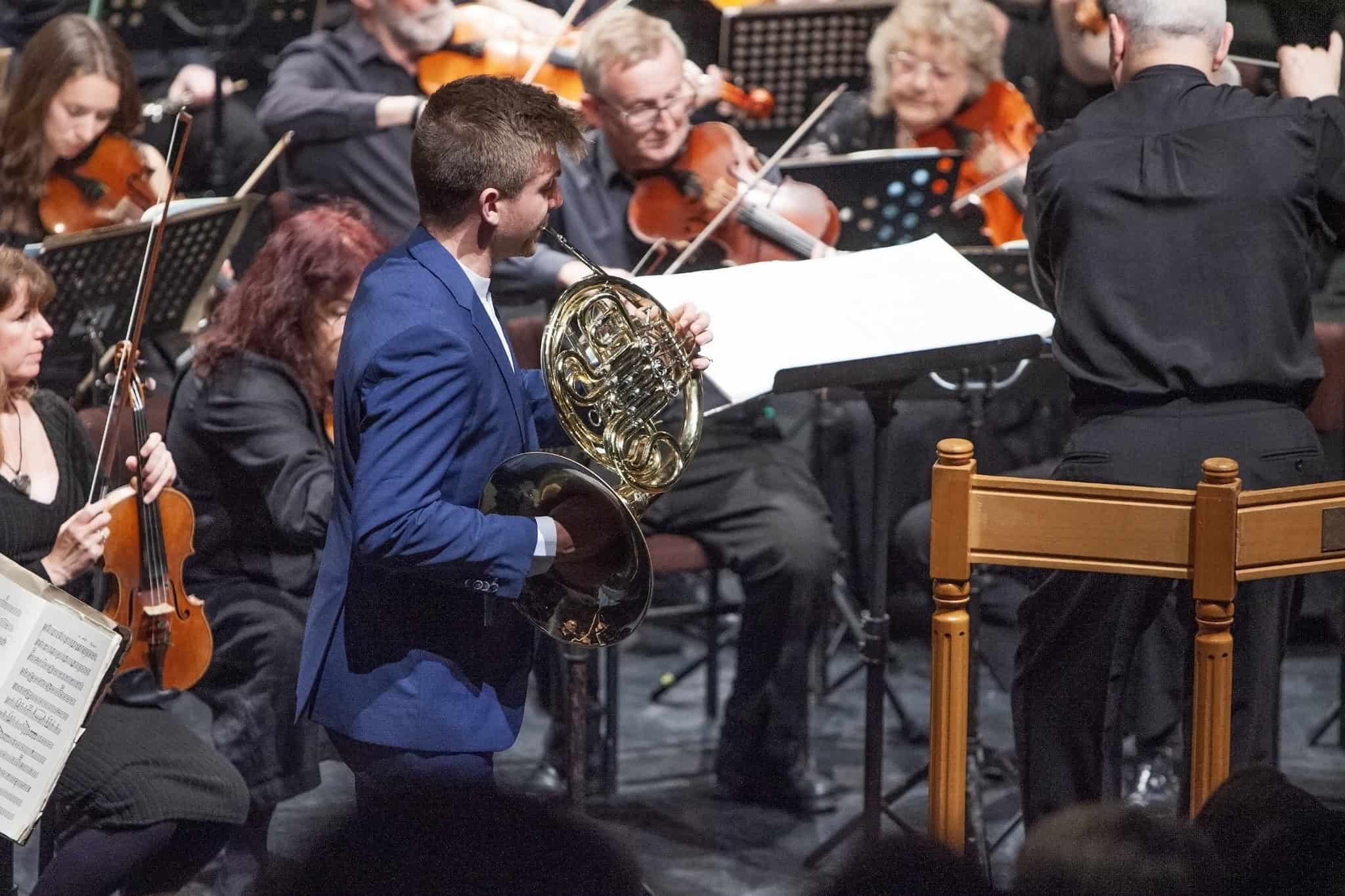
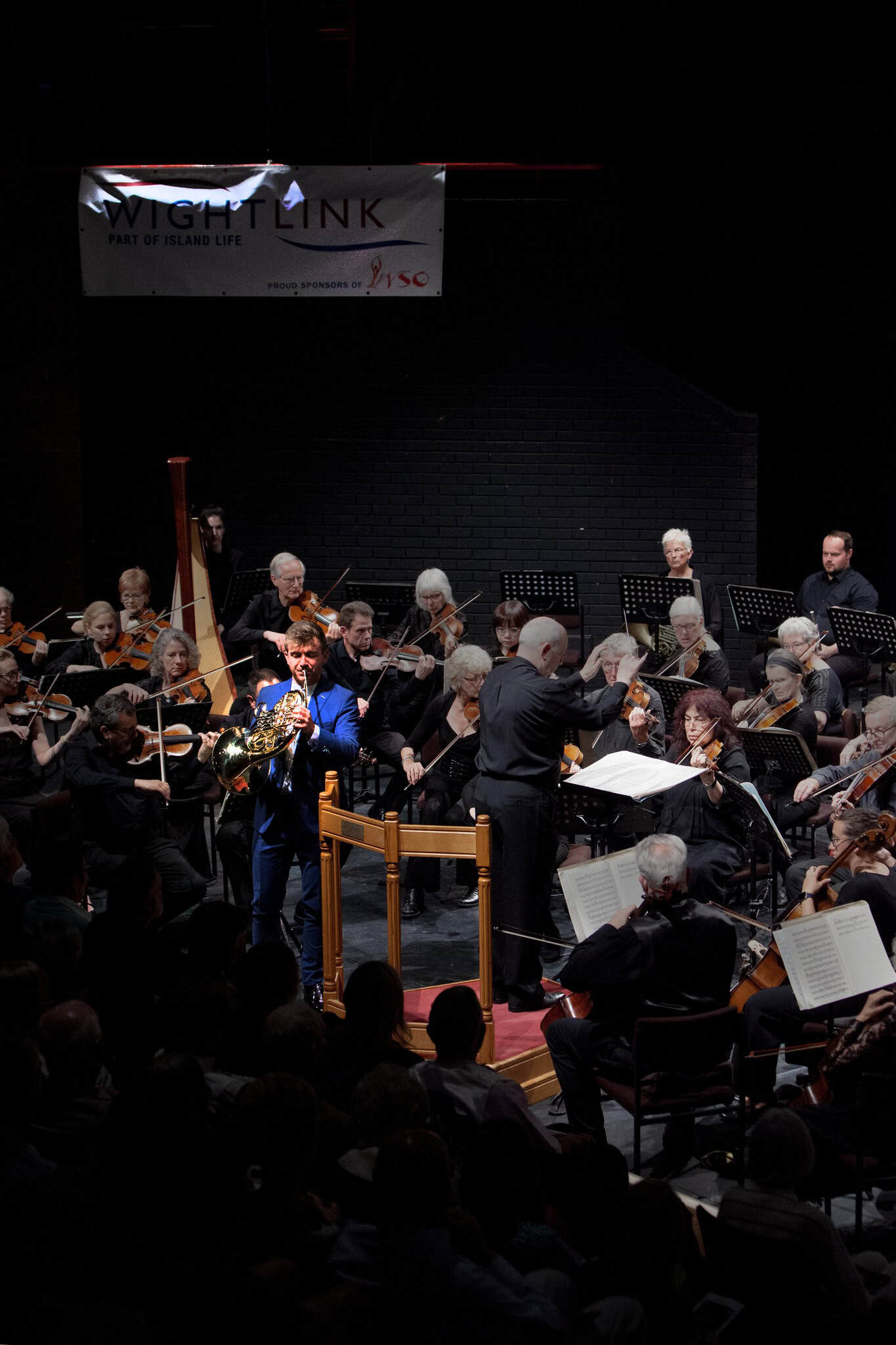
After the bliss of Vaughan Williams, the rest of the musicians filed in, and the stage reorganised for the arrival of Ben Goldscheider, to play Gliere’s Horn Concerto. Reinhold Glier was born in Kiev in 1874, of a Saxon father and Polish mother, and remained in Russia for all his working life. He changed his name to Gliere in 1900, and once taught Prokofiev.
He was renowned during his lifetime, but mostly in his home country. I had never heard of him before Saturday night’s concert, so I was interested to listen to his work for the first time.
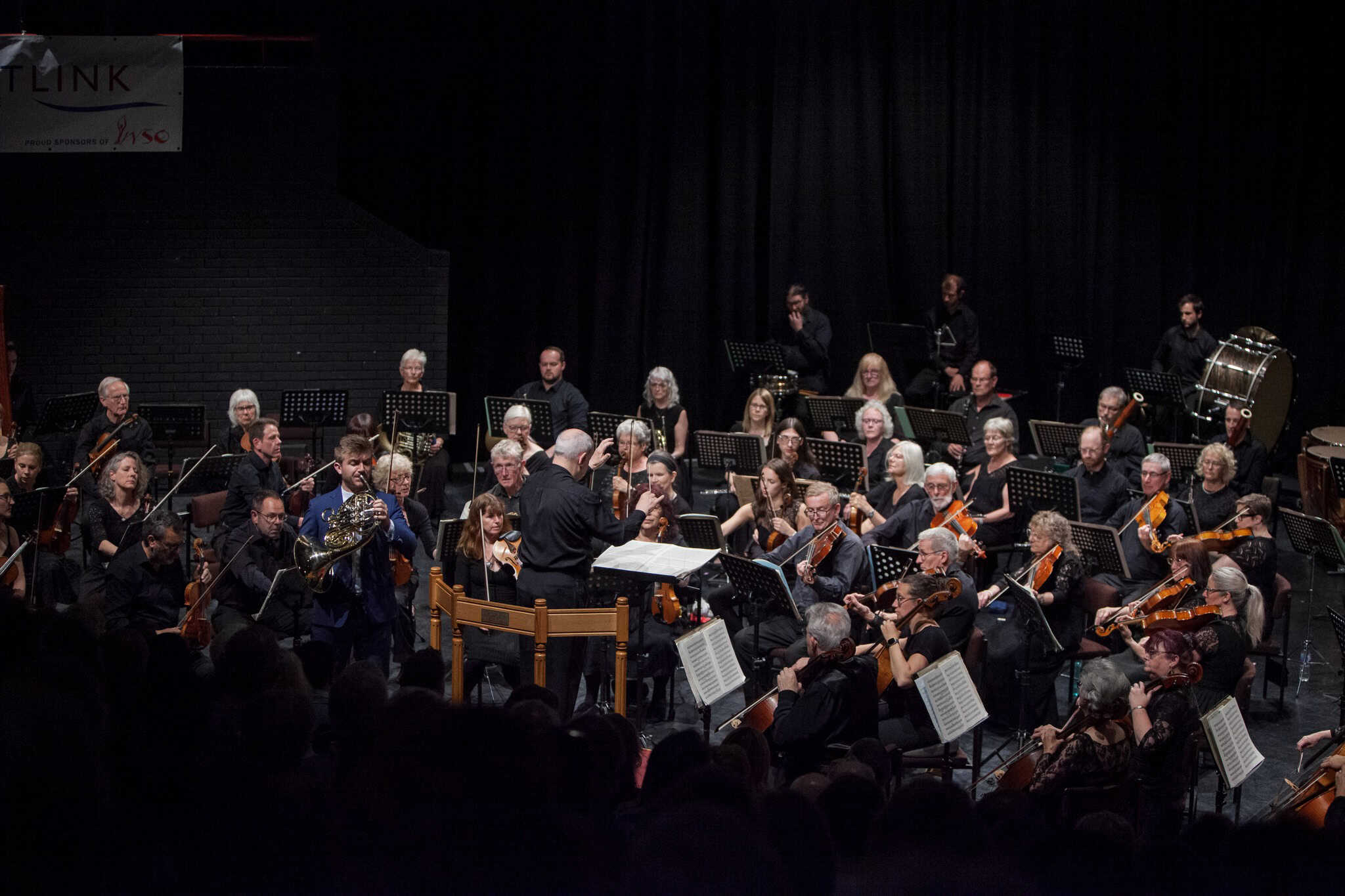
The Horn Concerto was written in 1951, five years before he died. The concerto feels somewhat timeless, as if it was written much earlier. The horn is featured in a very clear way, with clear tunes and a strong orchestral backing that lends it stature and weight.
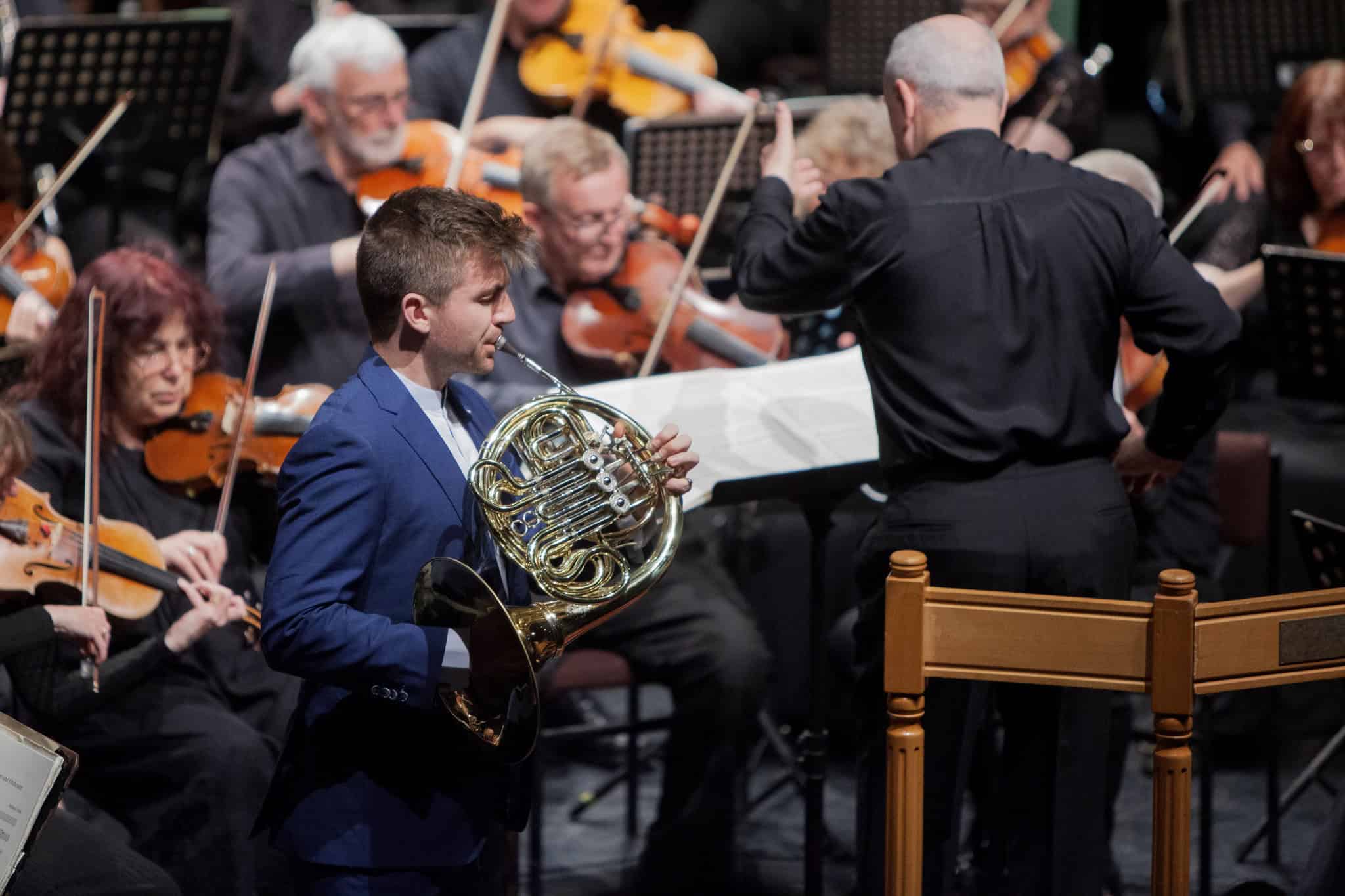
Each movement features a different mood from the horn, and its unique sounds and timbres are highlighted, from leading instrument to sensitive smooth tones, with a last movement full of vigour and movement and drama. Mr Goldscheider played masterfully throughout, making full use of the range of his instrument, with the lovely tones of the horn filling the auditorium through to a lovely ending. It was excellently played by both soloist and orchestra.
Journey Home
After the interval, the orchestra reassembled for a performance of Journey Home, by Clive Malabar, a well-known figure in Island music. Clive was a percussionist, playing with the English National Opera and the London Symphony Orchestra, and took part in innumerable film scores, particularly John Williams. He loved composing, and teaching, and worked for Music services on the Island, teaching and composing, particularly with young people and local bands.
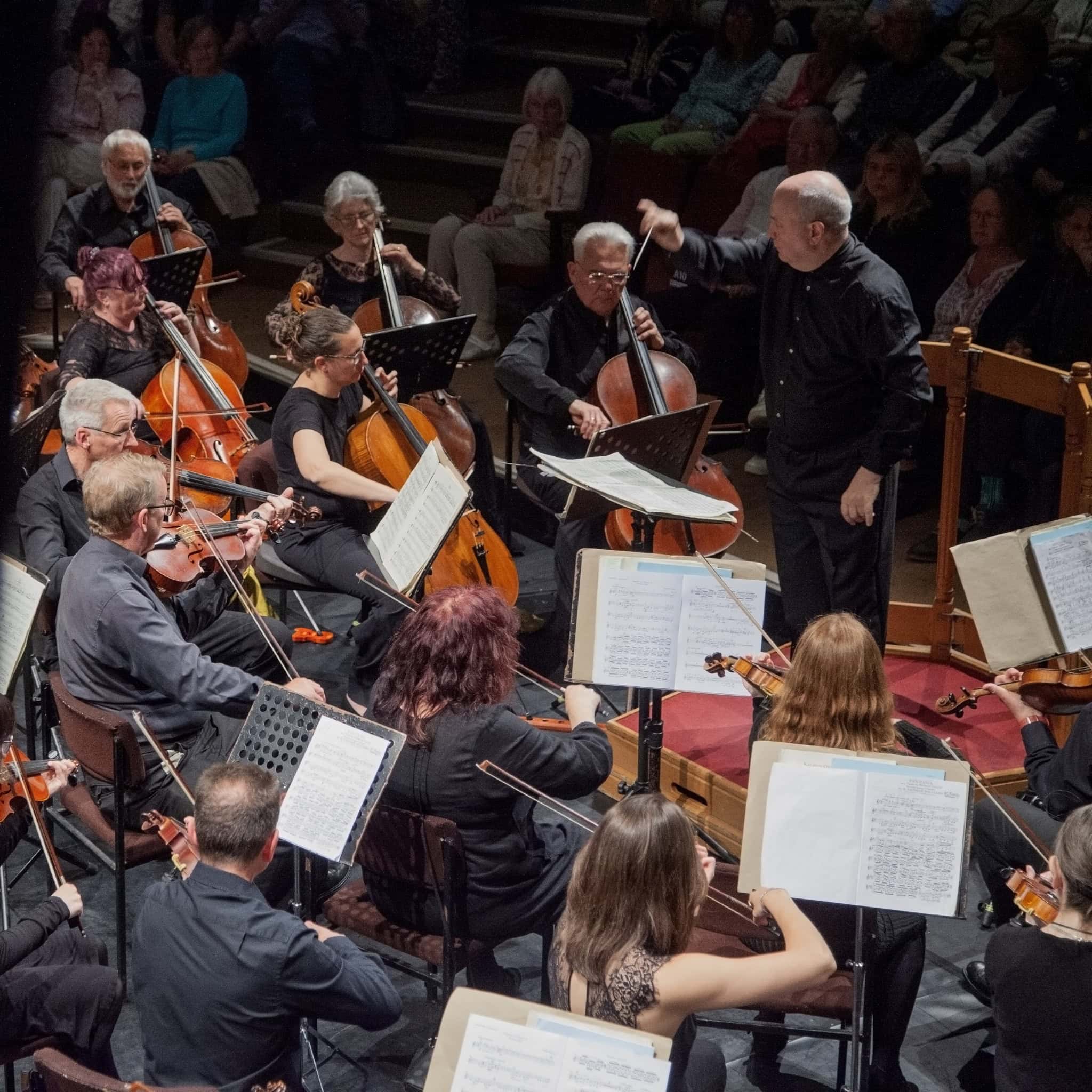
The IWSO played Clive’s piece Journey Home, about his love of music and the Island, and his lifelong work within the world of music, and has a feel of the presence of john Williams as well. It was beautifully and reverently played by the orchestra, and I could feel the memories and appreciation of Clive’s work and passion their rendering of this short and beautiful piece. Magical.
A New World
The final piece of the concert was a performance of Antonin Dvorak’s Ninth Symphony, one of the greatest and best-known symphonies, and my personal favourite. From the first time I heard it back in my callow youth, I was captured form the moment the orchestra burst into life after the quiet opening, and took me on a whirlwind journey through vast distances, across huge landscapes, in all sorts of weather, leaving me gasping at the end, wondering what had hit me. No matter how often I have heard it, this music still has the same effect. But until last Saturday I had never watched it being played live. I was looking forward so much to this moment.
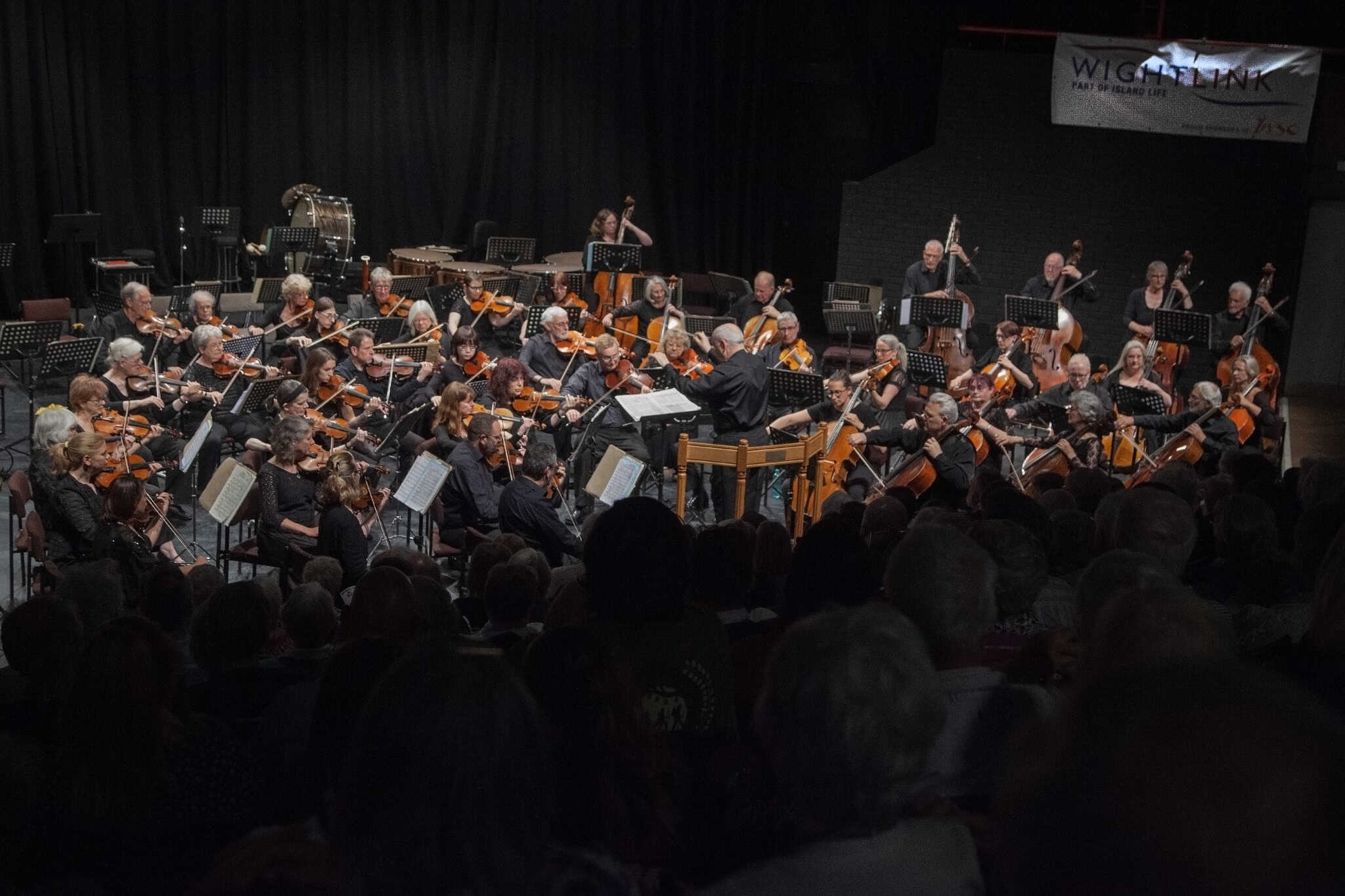
Antonin Dvorak was fifty-one, and a successful composer in Czechoslovakia, when he was tempted across the Atlantic to become the Director of the first American musical conservatory in New York. The Golden Age in the United States was a swirling mixture of old heritage and new money, and Dvorak landed in the midst of a defining time in America’s history.
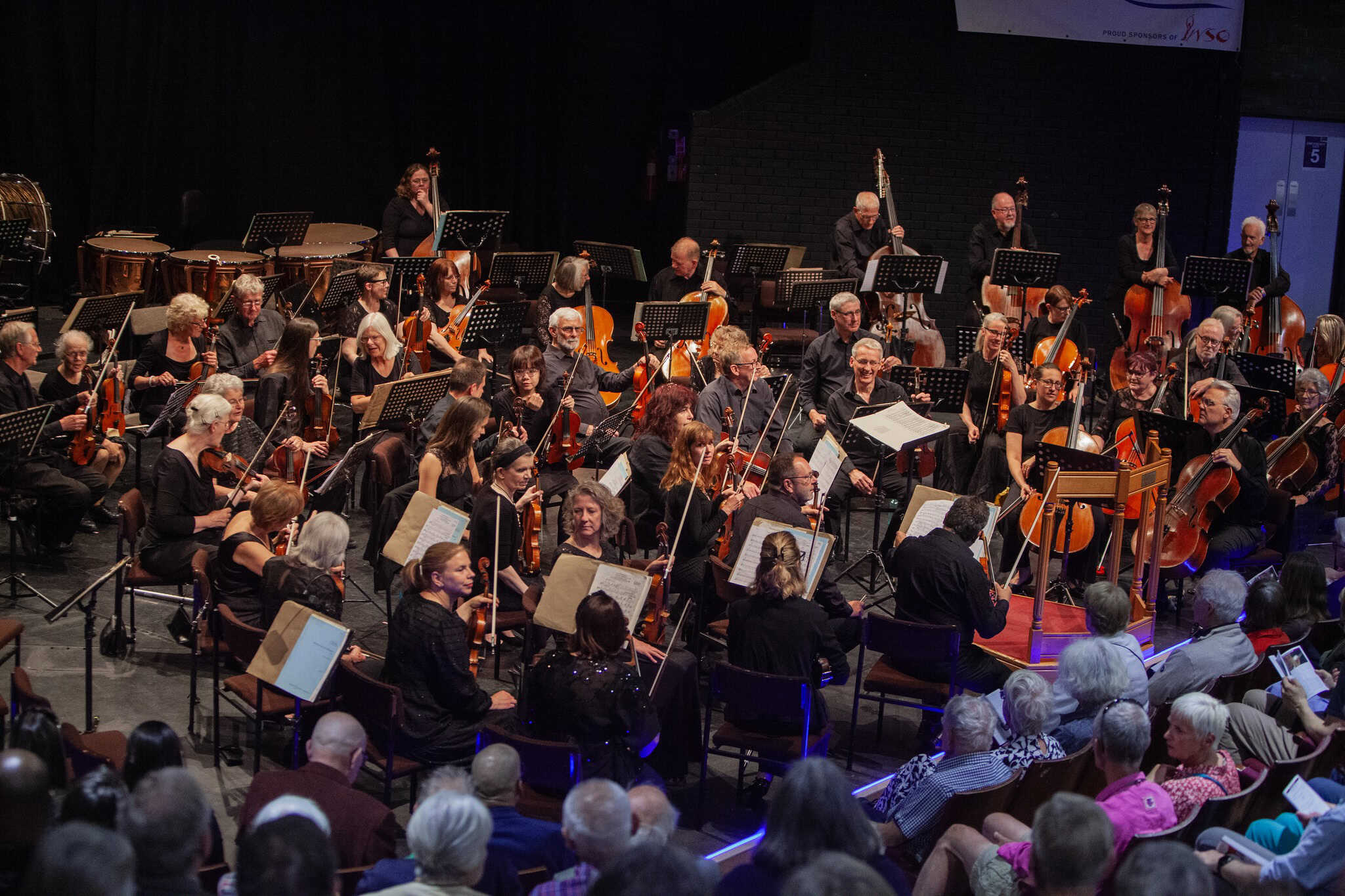
He set about writing a symphony that reflected his feelings and thoughts about this new land, and he felt himself drawn by the tunes and musical influences of the indigenous and African American music he heard. This was not necessarily what his sponsors wanted, and he also felt very homesick, so spent his holidays in a Czech community in Iowa. He returned to his homeland in three years, but left behind a hymn of beauty and conflicting emotions to his stay in the New World.
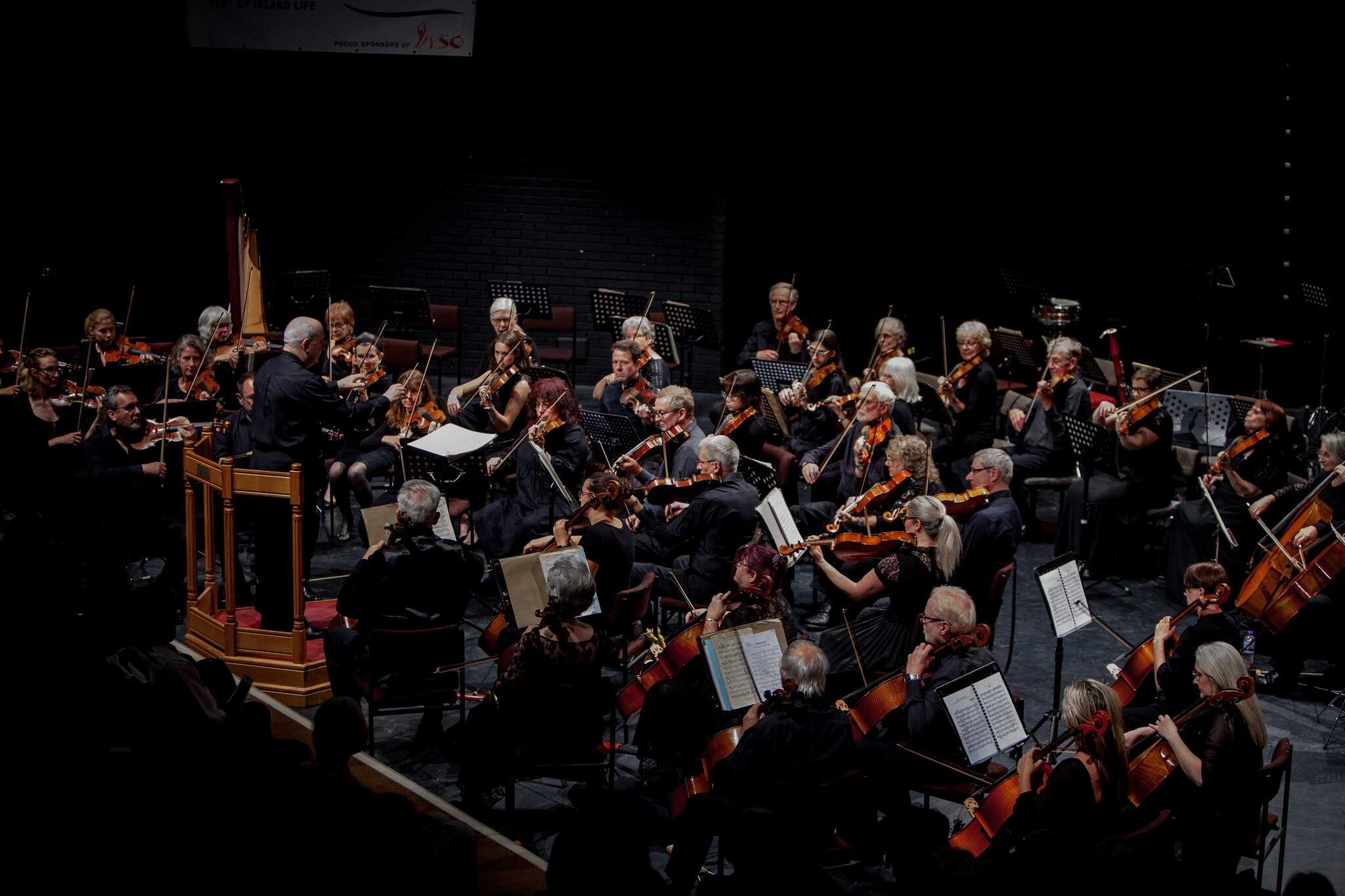
The thing I love about this work is its colour. The variety and number of fantastic tunes and the swirling changes of mood and tempo and volume. It is constantly changing, like variable weather, from serene to stormy, with sudden winds and occasional storms, as it sweeps across vast landscapes filled with grandeur. It is full of the sounds of nature, and reflects for me a vision of the land as it was, and being gradually changed and tamed by the advancing immigrants towards an uncertain future.
I sat entranced throughout the whole 50 minutes of the symphony, loving every moment and mood it brought to me as it swept me up and deposited me in the next one. The whole performance was imbued with the skill and enthusiasm of this wonderful group of musicians, attacking the daunting score with energy and verve, and having as wonderful time as I was.
At the end, I just wanted them to play the whole thing again, although I can understand that playing it must be a glorious but also arduous experience. I shall have to content myself with the memory of a wonderful performance that took me back to that first time I heard this most glorious piece of music. Thank you all, every musician, and the conductor, Mr Jonathan Butcher, for guiding us all through an unforgettable musical experience.
Next concert
The last IWSO concert this season will be on Saturday 5th July 2025 at 7:15pm, at the Medina Theatre as always. There will be a wonderful mix of celebratory dance music, starting with Invitation to the Dance by Weber, then Appalachian Spring by Copland, and La Fille Mal Gardee by Herold.
Dvorak will reappear with his Slavonic Dances, followed by the sublime Adagio from Spartacus by Khachaturian, and ending in the Pineapple Poll ballet suite by Sullivan. I can’t wait.
The house will be full, and as always it promises to be another great night, with favourites and relatively unknown pieces of music, all performed masterfully by our very own orchestra. Grab any tickets that are left, and think seriously about applying for Season Tickets for the next season too. It’s good to know where you’ll be sitting for all that wonderful music, and you won’t miss any concerts. I’ll be there. See you then.