A new book celebrates the remarkable life of Innell Jolliffe, an Isle of Wight woman who shattered Victorian social conventions to become a pioneering journalist, musician and community leader.
Authors Michael Freeman and Robert Trowbridge have published the fully illustrated 69-page biography, which readers can purchase from the Ventnor Heritage Centre’s online shop.
The book reveals how Innell Jolliffe defied the expectations placed upon women of her era, stepping far beyond the traditional roles of overseeing households and paying social calls that society assigned to the wives and daughters of her prosperous family.
Musical prodigy and medal-winning photographer
The young Innell displayed exceptional talent early, performing a violin solo to a packed concert audience at Bonchurch when she reached just fourteen years old.
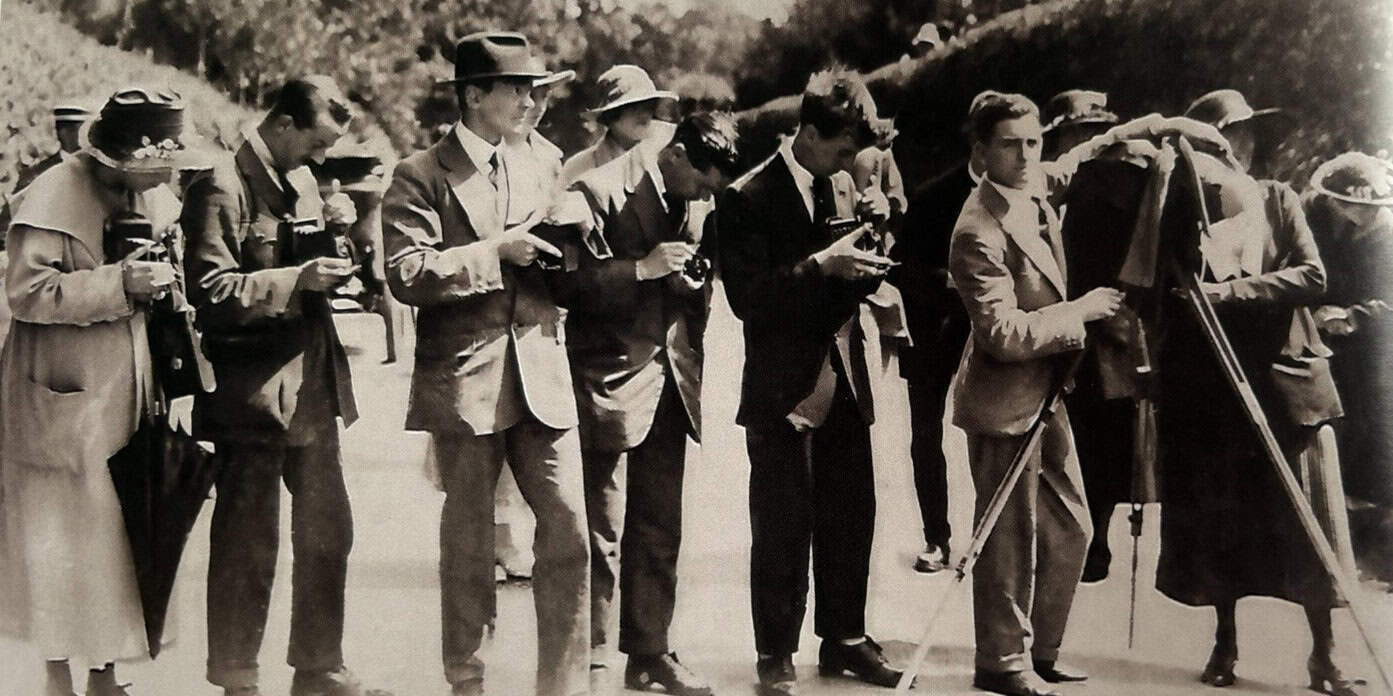
She developed a passion for photography that earned her medals, and later equipped herself to deliver magic lantern shows to eager audiences.
By her mid-twenties, she immersed herself in journalism with the Isle of Wight Advertiser, a newspaper her family part-owned, learning shorthand and typing to support her writing and reporting.
Taking the helm during wartime
The outbreak of the Great War in August 1914 opened new doors, and the sister newspaper, the Isle of Wight Times, invited her to write a regular column.
Then, in June 1915, at just 33 years old, she acquired and became sole proprietor and editor of the Isle of Wight Advertiser – a highly unusual role for a young woman at that time.
Wartime conditions had forced the paper to contract its format and lose most of its mainly male employees as they enlisted one after another. Innell stepped into their places, learning how to type-set and print.
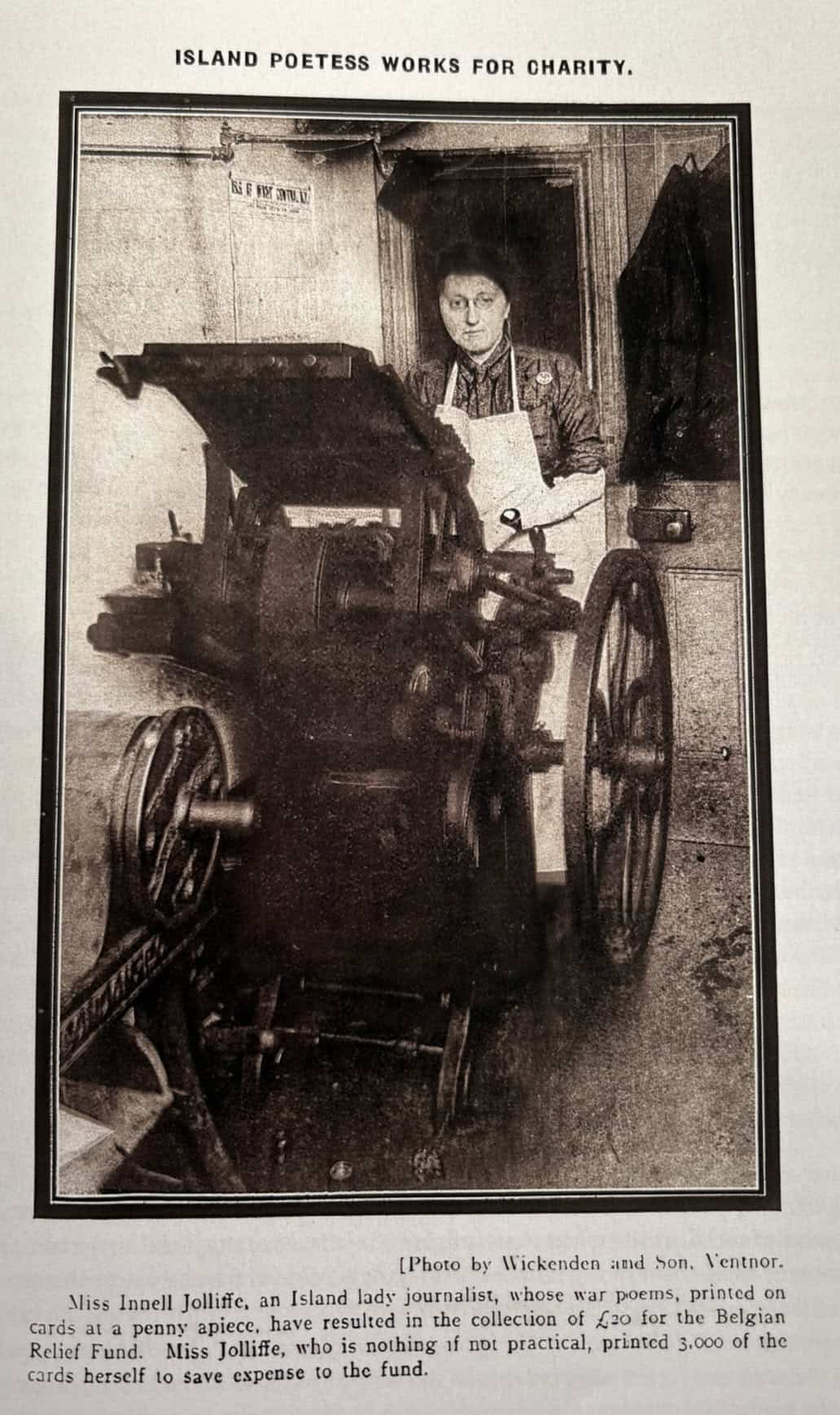
She commissioned photographs of herself operating print machinery, which subsequently appeared in a Southampton newspaper and a national monthly magazine.
A woman of steel and skill
One fellow woman writer and journalist remarked in 1916 how Innell displayed a rather steely ‘hands-on’ mettle unusual for a woman of the time.
Her contemporaries noted her as a fearless cyclist who also knew how to sail, demonstrating full capability in handling a boat in rough seas.

Creative pursuits and community service
Alongside these practical aptitudes, Innell wrote and self-published poems and verses.
This creative streak later saw her penning and producing short plays and sketches in the years straight after the war, especially after she sold her newspaper proprietorship in June 1923.
During the 1914-18 war, she found time to support the cause of Belgian war refugees and visit wounded soldiers convalescing at makeshift hospitals in the Isle of Wight Undercliff.
She also joined local temperance organisations, many of them expressing concern about soldiers’ institutes that allowed alcohol consumption.
Decades of dedicated service
Over the remainder of her life, she refined her skills as a playwright and producer and joined the Woman’s Auxiliary Police Corps at the start of the Second World War.
She served 45 years as local secretary for the RSPCA, from 1918 right up to her death in July 1963.
She developed a special interest in rabbit-breeding, particularly Angoras, and became a pillar of one of the local Fancier Societies.
She also captained the 1st Ventnor Guides for some five years in the 1920s.
Breaking barriers
When the Ventnor Advancement Association held its first meeting after the Armistice of November 1918, Innell Jolliffe stood as the only woman present among fifteen men.
She attended partly by virtue of her role as local newspaper editor and proprietor, but at only 36 years old, she had already recorded a fine contribution to the Island community.
Local obituaries, following her death in July 1963, applauded her fine record of public service and her care and concern for anyone or any group in distress or difficulty.
A life captured in words and images
The book contains superb historic photographs of Ventnor during the decades Innell lived, offering readers a window into the town’s past.
Innell grew up in Bonchurch and spent most of her working life in Ventnor, before moving to the Mill House at Southford, near Whitwell, in retirement.
The authors present her story as that of a woman emancipated before her time, whose pioneering spirit and determination to serve her community left a lasting legacy on the Isle of Wight.
Purchase your copy online from Ventnor Heritage Centre.