The Isle of Wight has welcomed its first two completed sections of the King Charles III England Coast Path, marking a significant milestone in the national project to create the world’s longest managed coastal walking route.
Natural England has opened 12 miles of path stretching from Chilton Chine to Colwell Chine on the Island’s south-west and west coast, alongside nearly three miles from Gurnard Luck to the Cowes Floating Bridge on the north coast.
The new stretches form part of an ambitious national programme that will eventually create a 2,700-mile coastal trail around the entire English coastline – making it the UK’s longest National Trail.
Coastal erosion protection built in
Natural England has incorporated legal provisions allowing the trail to ‘roll back’ in response to coastal erosion across most of the 12-mile stretch between the Chines.
The shorter northern section includes similar roll back provisions on the seawall at Marsh Road and at Gurnard Cliff, where erosion has previously occurred.
These measures protect people’s walking rights for the future whilst safeguarding the current investment in the path infrastructure.
Dramatic scenery from Chilton Chine to Colwell Chine
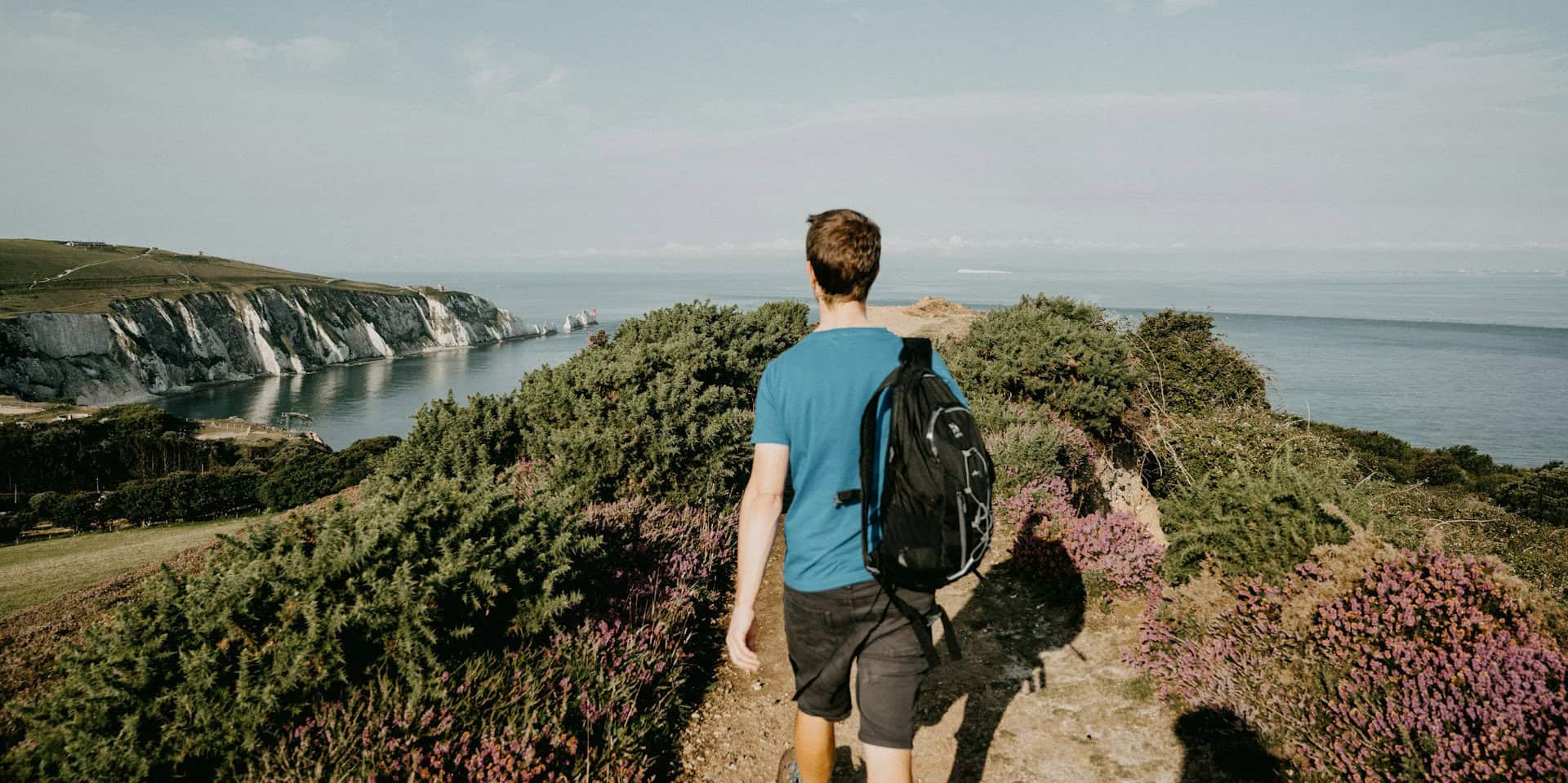
The 12-mile south-western route offers walkers dramatic coastal scenery, peaceful beaches, and iconic landmarks as it passes through extensive areas of National Landscape and Sites of Special Scientific Interest.
Walkers starting at Chilton Chine will follow cliff-top paths through grassland with sweeping sea views and rolling green hills inland.
The route provides access points to beaches including Chilton Chine, Brook Bay and Compton Bay – the latter known for its wide sandy beach, surf-friendly waves, and fossil-rich cliffs.
After heading away from the cliff edge, the path crosses Afton Down, offering spectacular views ahead to Freshwater Bay and Tennyson Down and Monument.
The Needles and military history
As walkers approach Alum Bay, the route reveals glimpses of the iconic Needles rock formation.
The path includes a stop at The Old and New Battery, an historic military and secret rocket testing site that now houses a visitor centre with breathtaking views.
The route then descends to The Needles Landmark Attraction, where a short detour provides access to Alum Bay itself, famous for its multi-coloured sand cliffs and stunning views of The Needles.
Walkers will experience further beauty and peacefulness whilst crossing Headon Warren before descending into Totland Bay.
The section concludes with a promenade walk to Colwell Bay, with both locations offering family facilities, swimming, water sports, and panoramic coastal views.
Northern route offers maritime heritage
The shorter 2.8-mile northern section from Gurnard Luck to Cowes Floating Bridge provides a more relaxed experience rich in seaside views, maritime heritage, and local charm.
The path begins at Gurnard Luck, following a narrow wall that offers a close-up coastal experience before heading inland briefly.
The route then descends through Lynda’s Wood via newly installed steps and boardwalks to reach what locals call the “secret beach“.
Further east lies Gurnard Beach, featuring traditional green-painted beach huts, a children’s play area, and café.
Sailing and sunset views
Gurnard Beach attracts visitors for sailing, watersports, and spectacular sunsets.
The route follows the Esplanade Walk – a flat, accessible promenade offering stunning views across the Solent.
Walkers pass The Green, a spacious grassy area with benches and a pebble beach that provides perfect spots for picnics or sunset watching.
Sailing enthusiasts can spot yachts racing offshore, particularly during major events like the Round-the-Island Race and Cowes Week.
The path continues into Cowes town, where walkers can enjoy a quick dip at Cowes Beach, explore the bustling harbour, and browse cafés, restaurants, and boutique shops along the High Street.
Tribute to Lynda Murphy
Natural England completed new infrastructure in the Gurnard Luck section ahead of schedule at the end of July, installing steps, gravel paths and boardwalks from Worsley Road through Lynda’s Wood down to the beach.
Richard Murphy owns the woods, having purchased the land with his late wife Lynda and planted over 500 trees, with further investment planned.
Mr Murphy hopes the woods will serve as a lasting tribute to his wife, who envisioned the woodland improvements at the site.
Fuller: A heartfelt thank you to Richard Murphy
Councillor Paul Fuller, who represents the Cowes West and Gurnard ward and serves as vice-chair of Gurnard Parish Council, praised the development. Councillor Fuller said,
“This is a fantastic improvement for our community and I’m especially pleased to see the path made safer and more accessible for everyone.
“It’s been especially moving to learn the personal story behind this project. A heartfelt thank you to Richard Murphy, whose dedication has truly gone above and beyond.”
Economic benefits for Island Tourism
Allison Potts, deputy area director for Natural England, highlighted the broader benefits of the improved coastal access. She said,
“These improved stretches of path take in some of the best views on the Isle of Wight and much-loved places that have been attracting visitors for many years.
“With the improvements to the path and the additional access rights, we hope it will continue to give people the chance to get out and enjoy nature, as well as continue to bring visitors to the Island, since tourism is so vital to the local economy.”
Walkers can plan their routes on the King Charles III England Coast Path by visiting the National Trail website.