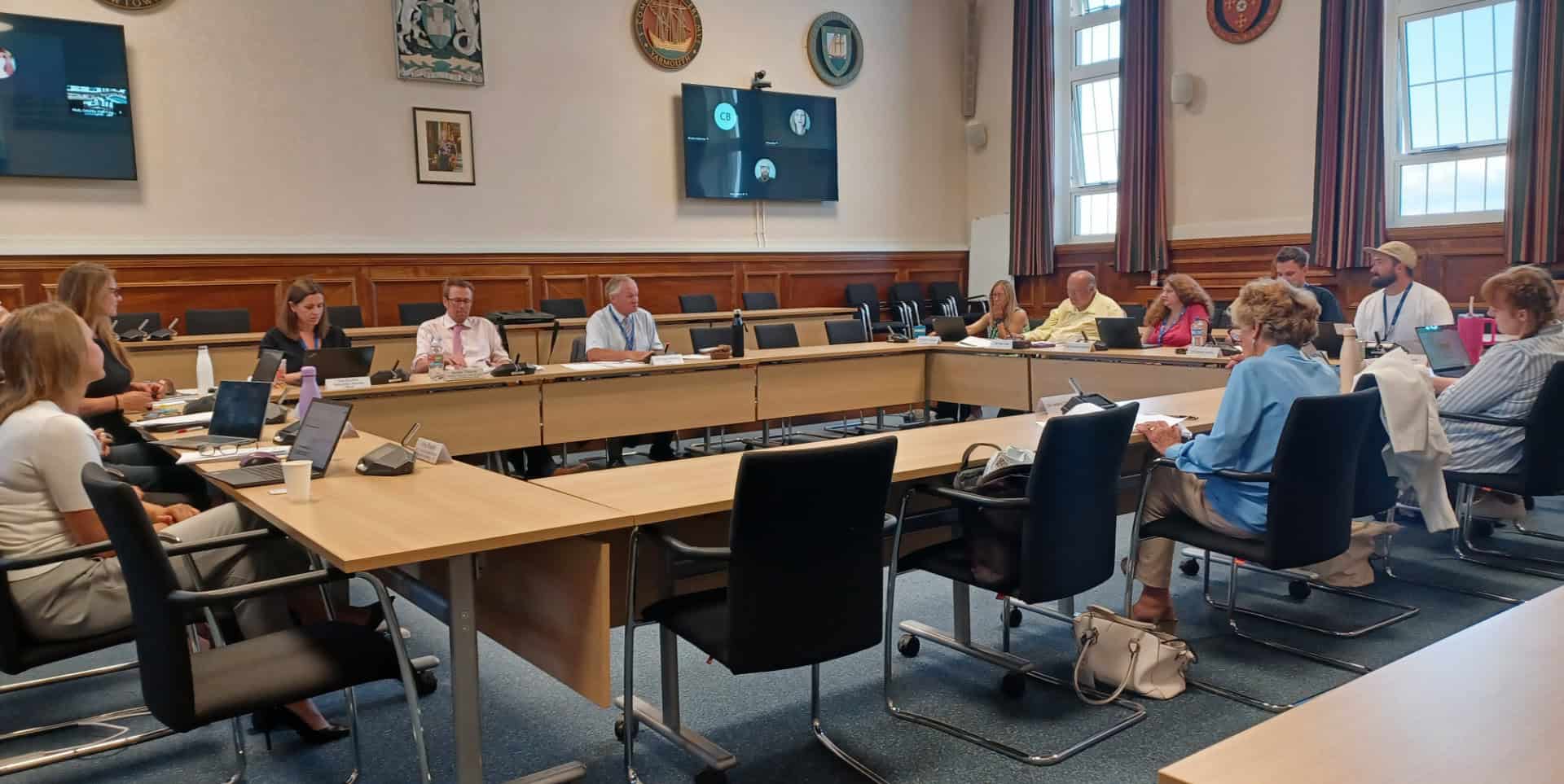
Concern over the Isle of Wight’s “horrendous” mainstream secondary school suspension rate of more than a quarter of pupils was raised at County Hall last Thursday (14th August).
The Island’s 26.9 per cent rate was highlighted at yesterday’s children’s services, education and skills committee (CSESC), with Green Party councillor Joe Lever asking the chamber,
“What’s going on there, what’s not working?”
CSESC’s Conservative chair Councillor Paul Brading said the figure “stands out like a sore thumb”.
Contrast between primary and secondary
A 2024/25 council report published prior to Thursday’s CSESC meeting showed contrasting outcomes for the Isle of Wight’s mainstream primary and secondary schools.
County Hall’s report gave a 3.27 per 100 pupils suspension rate for primaries.
It said the suspension rates are for academic year 2023/24, with 2024/25 figures due to be published in the summer of 2026.
Lever: An increase since we last discussed the matter
Councillor Lever said,
“Previously I was on the scrutiny iteration of this committee – I remember a meeting, we were talking about a focus on trying to bring down suspensions in schools because it was seen as not the ideal outcome to be happening.
“However, across primary, secondary and special, there’s an increase in suspensions, particularly in secondary.”
Brading: Secondary school suspensions are horrendous
Councillor Brading said,
“When I looked at this data, the thing that stood out to me was not so much the primaries…but the secondary school suspensions are horrendous…you’re right, that figure stands out like a sore thumb.”
Kay Jones, council officer, stood in for director of children’s services Ashley Whittaker, currently on annual leave.
She said she would take it back as a question, for a written response.
Fuller: Worried “is that “it can be seen as being an easy option”
Alliance independent councillor for Cowes West and Gurnard Paul Fuller said,
“What is of concern to me is that schools might find it easier to suspend children rather than have to pick up the impact that allowing them to go through exams would have.
“I want some kind of reassurance, Kay, that the suspensions are done as a very, very last resort. Sometimes when you’re a governor, it’s quite easy to suspend a child from school because they are disruptive and they are not achieving at the levels that they are expected to achieve.
“What worries me is that it can be seen as being an easy option.”
Jones: School attendance is our priority.
Ms Jones thanked Councillor Fuller for his question and said,
“The reassurance I will give you is that school attendance is our priority. That includes in all its forms. I know that our education, inclusion and access colleagues are addressing those children who are educated other than at school.
“Also, looking at attendance in its broadest sense and any exclusions whether they be temporary suspensions or wider. What I don’t have is the detail.
“We’ll get a letter of response before we go back to the new school term.”
Most recent figures show 75.68 per cent of primary schools being graded good or better by Ofsted, compared to only 50 per cent of secondary schools.
The inspectorate stopped using overall effectiveness grades as part of its reports in September 2024.
This article is from the BBC’s LDRS (Local Democracy Reporter Service) scheme, which News OnTheWight is taking part in. Some alterations and additions may have been made by OnTheWight. Ed