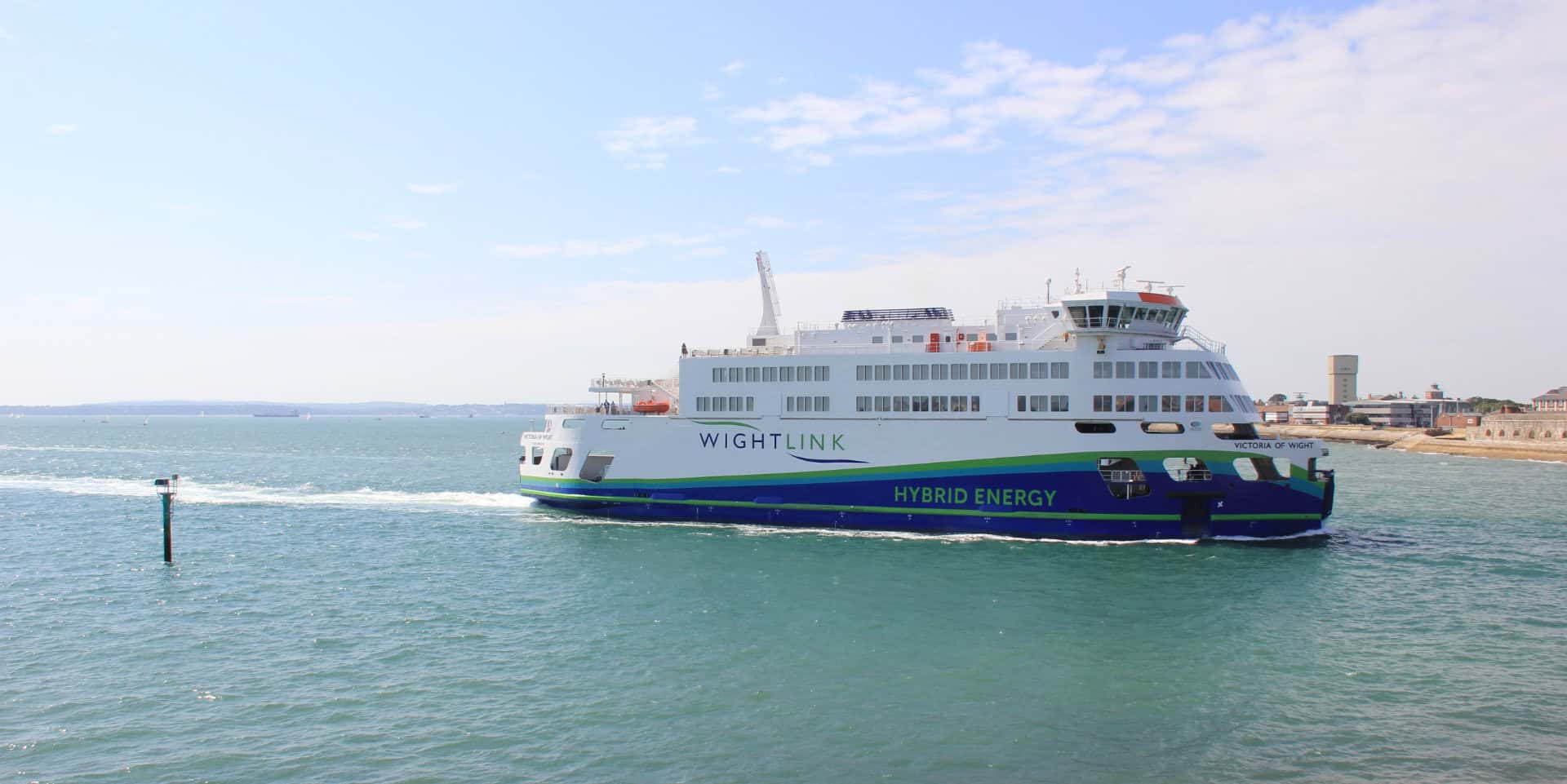
Kelly shares this latest news from Wightlink. This was issued prior to the news that the Government voted through new levy, effective from 1st July 2026. Ed
More than 35 businesses across the Isle of Wight including the Isle of Wight Chamber have come together to raise urgent concerns about the Government’s proposal to include domestic maritime operations in the UK Emissions Trading Scheme (ETS) from July 2026.
In joint letter (see below) sent this week to the Secretary of State for Energy Security and Net Zero, the group warns that the move could have serious and disproportionate consequences for the Island’s economy, connectivity, and communities.
Essential lifeline services
Island ferry operators provide essential lifeline services between the Isle of Wight and the mainland, supporting residents, businesses, healthcare access, and millions of visitors each year.
Organisations fear that the additional costs created by the ETS expansion will inevitably add to the cost of Island life, discourage leisure travel, and undermine the financial stability of sectors already under pressure, especially tourism.
Lack of available grid capacity on both sides of the Solent
Despite supporting national efforts to decarbonise, local ferry operators say they are currently unable to progress major green investment due to the lack of available grid capacity on both sides of the Solent.
According to the letter, operators have been informed by SSE that there is insufficient power capacity to support fully electric vessels, and that no timeframe can yet be given for the necessary upgrades.
Policy risks creating perverse outcomes
The signatory businesses warn that the policy risks creating perverse outcomes, where operators may be forced to use smaller, older, and more polluting vessels because the infrastructure does not exist to support cleaner alternatives.
The joint letter also highlights that Scottish island ferry routes have been considered for exemption under the “Small Island Communities” definition and calls for the Isle of Wight to receive the same fair consideration, given its complete reliance on maritime transport.
The group is urging the Government to:
- Introduce a reviewable exemption or derogation for Solent lifeline ferry services, until grid capacity improvements make true decarbonisation viable.
- Engage directly with affected operators to understand the practical challenges and co‑develop solutions that support both environmental goals and essential connectivity.
“We urge the Government to take our position seriously”
A spokesperson for the coalition of local businesses said:
“Islanders and Island businesses are deeply concerned that this rushed policy will damage our economy, limit essential travel, and leave us worse off, all without any of the infrastructure in place to support the greener future we all want to see.
“We urge the Government to take our position seriously, just as it has for the Scottish islands, and ensure that lifeline ferry services are protected while proper decarbonisation measures are made possible.”
Long-term impact
Tourism remains a cornerstone of the Isle of Wight economy. Business leaders warn that any policy that inhibits visitor access or increases costs for local families risks long-term harm that could be avoided with a more pragmatic, phased approach.
The coalition has requested a formal response from the Department for Energy Security and Net Zero and hopes to engage constructively to ensure national climate objectives do not come at the expense of a resilient and thriving island community.