Controversial law at the centre of a row over plans for holiday accommodation in an ancient Isle of Wight woodland will come under the spotlight tonight.
Councillor Andrew Garratt wants County Hall to challenge the use of the Caravan Sites and Control of Development Act 1960, or similar law, where its application may result in developments proceeding outside the ‘usual’ planning and environmental assessment processes.
The Bouldnor Forest proposal explained
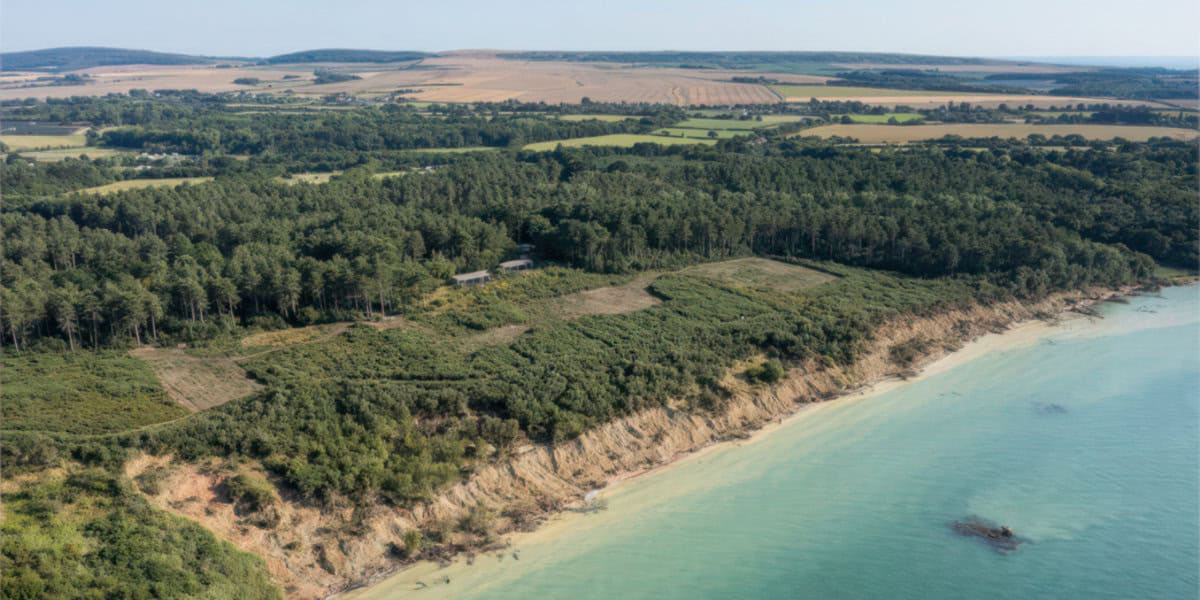
His motion to full council this evening (Wednesday, 16th September 2026) notes plans by Forestry England and its commercial partner, Unyoked, for a holiday accommodation development at Bouldnor Forest.
Environmental and conservation concerns
It describes the area as having recognised biodiversity value, with environmental characteristics similar to areas affected by recent widescale fires.
The Liberal Democrat councillor’s submission comes after locals launched a campaign against the three mobile glamping cabins planned by Unyoked.
Opponents say the cabins could threaten wildlife, increase fire risks and open the door to more forest developments on the Island and elsewhere.
Forestry England previously said the ‘low-impact’ cabins would support conservation and help people connect with nature.
The legal loophole
Councillor Garratt’s motion states,
“Council expresses concern that the application of the Caravan Sites and Control of Development Act 1960 may enable developments of this nature to proceed without being subject to the planning, consultation and environmental assessment processes that would otherwise apply.”
What the council motion proposes
It instructs council officers to take all lawful and appropriate steps to challenge the use of the Caravan Sites and Control of Development Act 1960, or similar legislation, where its application could result in developments proceeding outside the usual planning and environmental assessment processes.
The proposal also says County Hall should seek to ensure such developments are subject to appropriate planning and environmental safeguards.
A failure of the regulatory system
Councillor Jonathan Hill, of Shalfleet Parish Council, said,
“The Bouldnor Forest case raises a simple but uncomfortable question. How can a development so clearly inappropriate progress this far without a single statutory body stopping it?
“The answer lies not just in the merits of the proposal, but in the failure of the system designed to regulate it. Forestry England and its commercial partner, Unyoked, are seeking to install fixed overnight accommodation units inside Bouldnor Forest, one of the Isle of Wight’s most sensitive ecological sites, under a Caravan Exemption Certificate.
“This evening, Isle of Wight Council will debate a motion recognising that the proposal exposes a serious loophole in national environmental governance.”
Forestry England previously said,
“For decades, Forestry England has connected people with nature by offering overnight stays and camping facilities in forests and woodlands across the country.
“Drawing on this considerable experience we have developed proposals for three temporary caravans at Bouldnor.
“We are in discussions with all the relevant bodies as we develop our plans. We have also met with the parish council to share more information about the proposal. Ecological considerations are at the heart of our approach.”
Forestry England has been approached for comment on tonight’s motion.
This article is from the BBC’s LDRS (Local Democracy Reporter Service) scheme, which News OnTheWight is taking part in. Some alterations and additions may have been made by OnTheWight. Ed