John Dekhane, a British citizen based in France, often writes tribute articles dedicated to fallen World War II heroes. He does this work voluntarily, with the sole goal of keeping these often-forgotten stories alive.
Our thanks to John for sharing the story of Squadron Leader Peter Edward Drew, a serviceman from the Isle of Wight. Ed
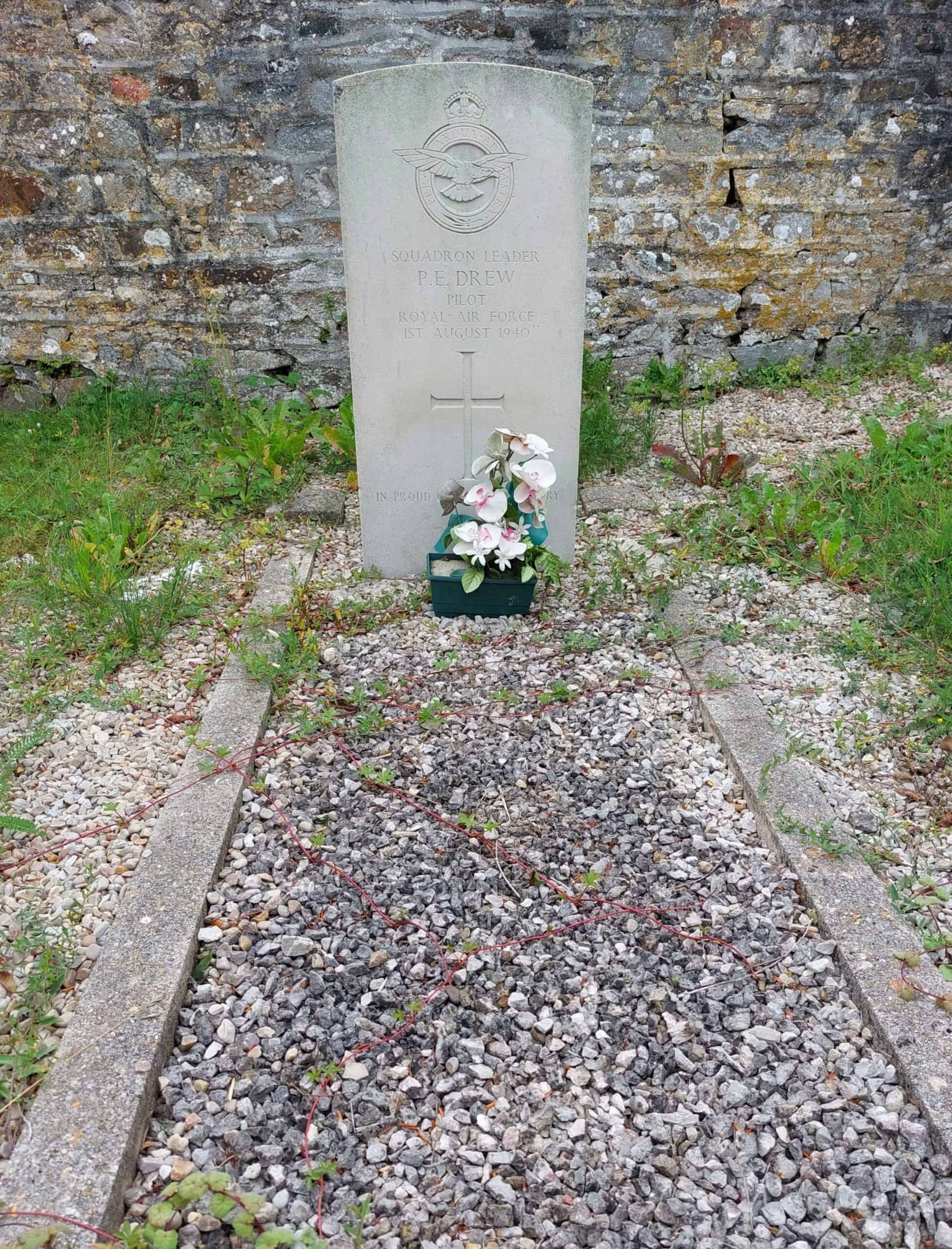
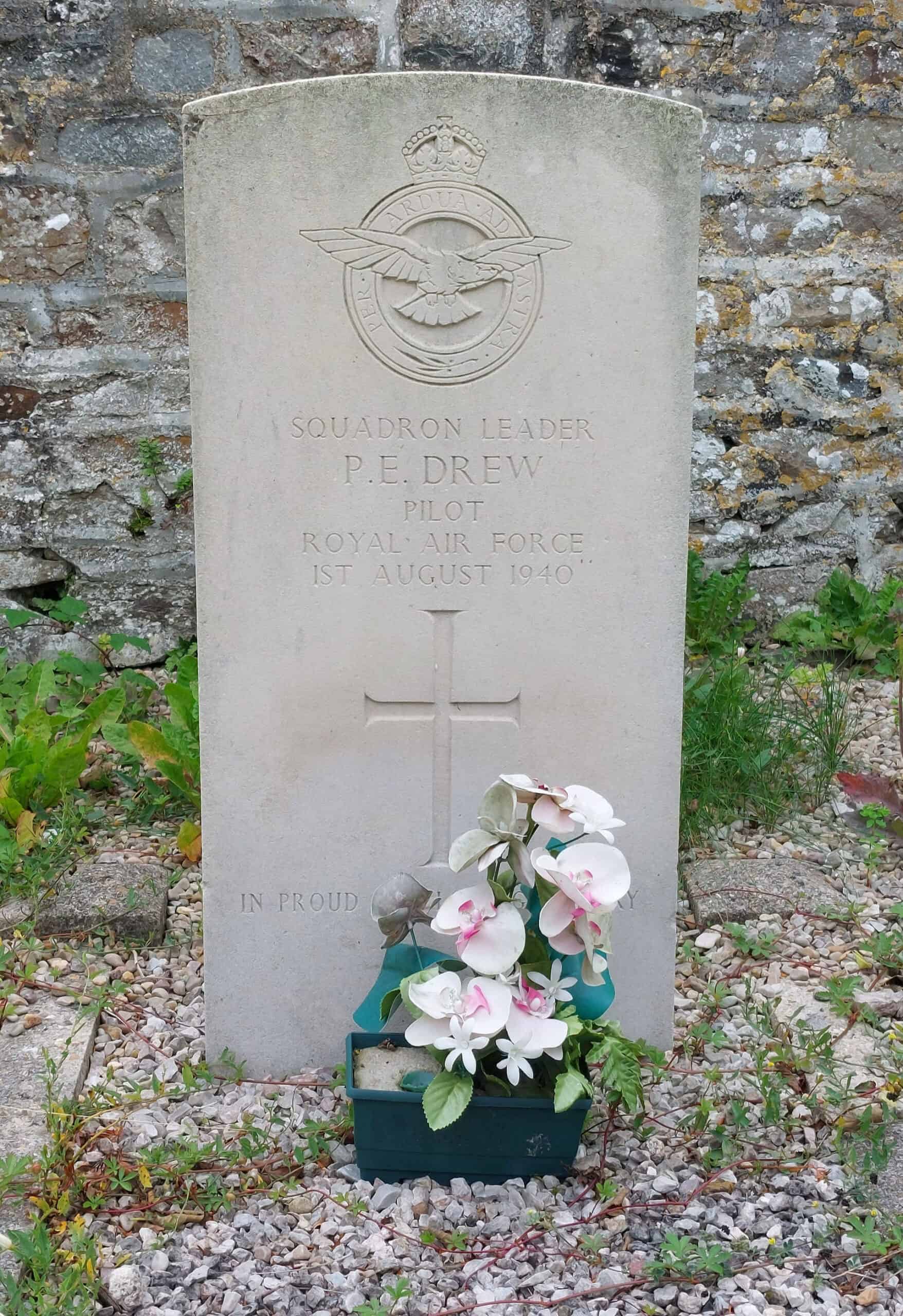
In the peaceful churchyard surrounding the centuries-old Église Saint-Pierre in Biville, on the Cherbourg Peninsula in Normandy, generations of French villagers rest beneath the shadow of the old church.
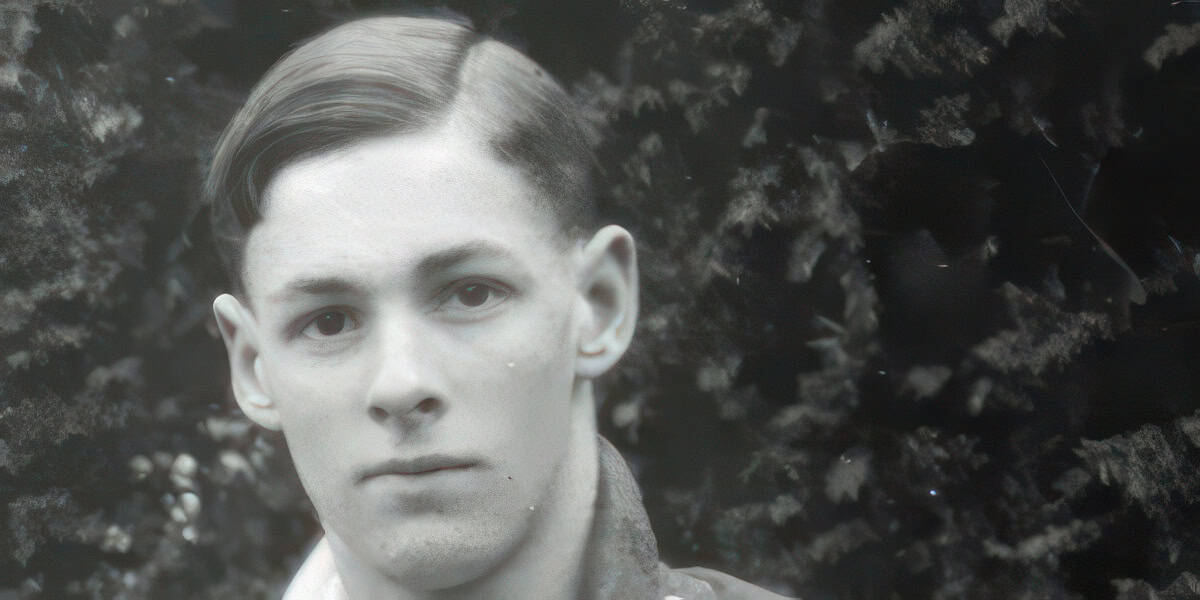
Among these graves lies Squadron Leader Peter Edward Drew, a young British hero from the Isle of Wight who gave his life in the skies over France during the Second World War.
Born in Ryde, raised to serve
Peter Edward Drew was born on 16th July 1910 in Ryde, on the Isle of Wight, the son of Air Commodore Bertie Clephane Hawley Drew and Edith Thomson Drew.
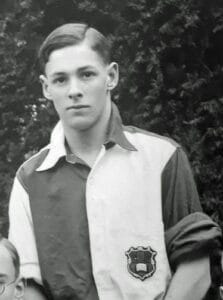
His father had served with distinction in China during the Boxer Rebellion, on the North-West Frontier and in Tibet. Peter grew up in a loving household, raised with strong values of duty, service and devotion to his country.
From Marlborough to Cranwell
He attended Marlborough College in Wiltshire, where he studied from 1924 to 1929 and distinguished himself as a bright and promising student. He then entered the Royal Air Force College in Cranwell, Lincolnshire, as a flight cadet.
It was there that his training as a pilot began, laying the foundations for the remarkable flying career that would eventually see him rise to the rank of Squadron Leader.
A career in the RAF
After graduating from the Royal Air Force College, Peter joined No. 1 Squadron at Tangmere, near Chichester in West Sussex. His Royal Air Force service soon took him abroad, to Heliopolis in Cairo, Egypt, before returning to Britain, where he became an instructor at No. 6 Flying Training School at Netheravon in Wiltshire.
With the outbreak of the Second World War and Britain facing its darkest hour, Peter was entrusted with the command of No. 236 Squadron at Thorney Island, near Chichester.
As the war threatened Britain’s shores, Peter’s exceptional skill as a pilot was matched by an unwavering sense of duty and a deep love for his country. He knew that the freedom of Britain itself hung in the balance, and he was ready to play his part in defending it.
Yet, behind the uniform and the responsibility he carried, Peter was also a young husband with a happiness of his own to protect.
A new marriage and a child on the way
In July 1940, he married Denzil Elizabeth Powell at St Mary’s Church in Bransgore, Hampshire. The young couple were expecting a child, and Peter could not wait to become a father.
He had found love and was looking towards a future filled with promise, but the war would ultimately deny him the life he had dreamed of.
The final mission over Cherbourg
On 1st August 1940, Peter took to the skies once more, heading towards the danger that awaited him across the Channel. His mission was to escort Blenheim bombers attacking Querqueville aerodrome near Cherbourg.
With enemy fire below and the French coast ahead, Peter carried out his duty as he had been trained to do, but the mission would end in tragedy. That afternoon, his aircraft was struck by German fire and crashed. His body was later washed ashore at Biville, on the Cherbourg Peninsula, where he was laid to rest in the village churchyard.
Grief on the Isle of Wight
Back home on the Isle of Wight, the news of Peter’s death brought profound sorrow to those who knew and loved him. For his parents, the loss of their 30-year-old son was a wound that time could never truly heal. They would carry that grief for the rest of their lives.
His mother, Edith, died in 1964, followed by his father, Bertie, in 1969. For Denzil, the husband she had only just married was suddenly gone. Their daughter was born a few months after Peter’s death, and would grow up without ever knowing the father who had been so eager to meet her.
Remembered in Seaview
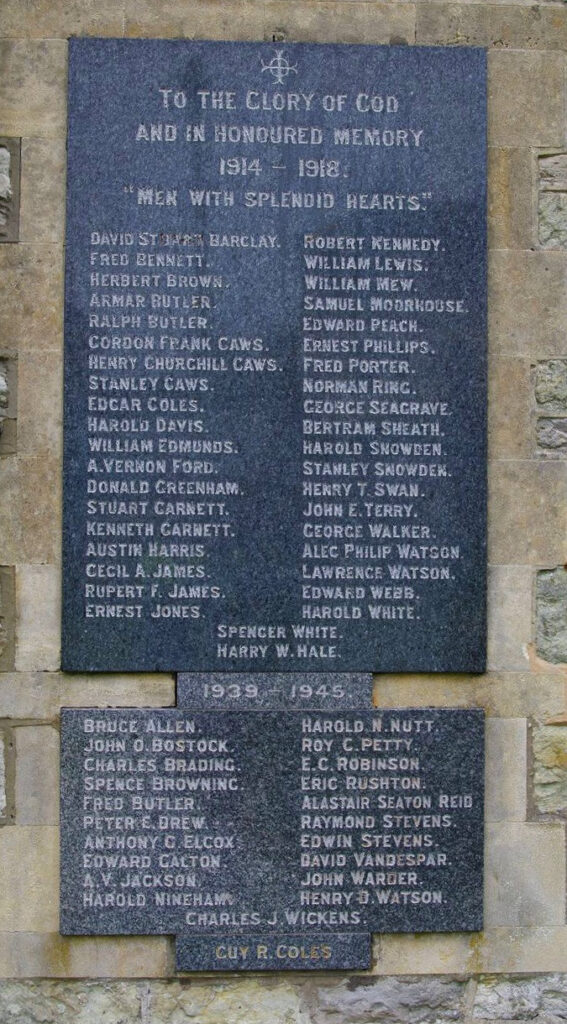
Today, Peter is remembered and commemorated on the Seaview War Memorial at St Peter’s Church in Seaview, Isle of Wight.
Although decades have passed since his final flight and although he now rests far from the Island he called home, we must keep his memory alive and continue to tell his story, ensuring that neither time nor distance can ever erase what his sacrifice meant.
Let us never forget that for the freedom we enjoy today, Squadron Leader Peter Edward Drew gave up the chance to share a lifetime with his wife, to hold his daughter in his arms and to witness all the moments of joy that awaited him.