East Cowes Town Council has written to the Cabinet Office and HM Treasury calling for urgent action to resolve what it describes as eight years of “financial and operational failures” of the Isle of Wight’s floating bridge service between Cowes and East Cowes.
In a covering email to the departments, the Town Clerk said the community had experienced “substantial financial losses” and “a dramatic decline in service reliability” since Floating Bridge 6 entered service in 2017.
The town council says the total cost to the public purse is now projected to exceed £9 million.
FB5 made a profit
As reported previously by OnTheWight, Floating Bridge 5 made a profit of between £140,000-£250,000 per annum, covering the cost of running the service and putting extra cash into the council’s coffers – even before foot passenger charges were introduced.
The vessel ran for more than 40 years before being sold in 2018. It has sat on the waterside at Gosport for many years.
Letter from the Mayor
The letter from East Cowes Mayor, Councillor Tracy Reardon (read below), sets out in detail the council’s concerns about the way the Isle of Wight Council is handling the replacement of Floating Bridge 6.
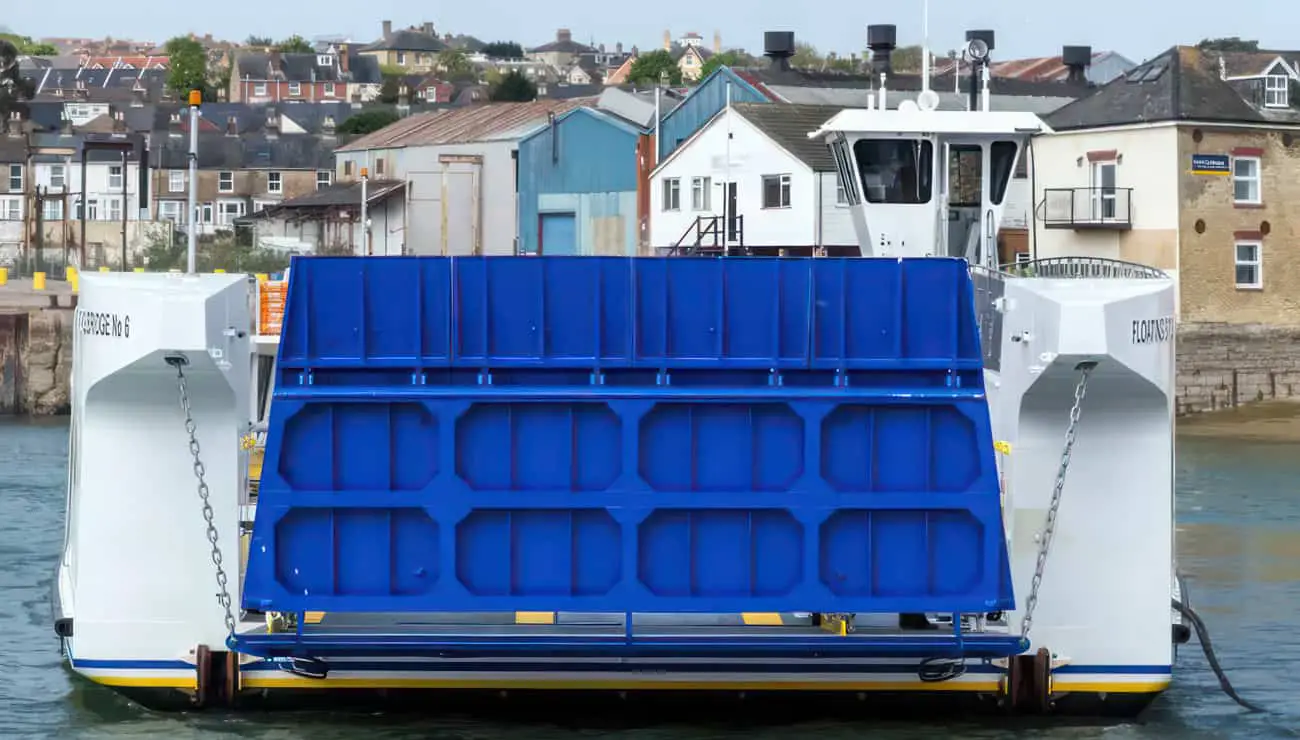
The Mayor says the current vessel, delivered at a cost of £3.2 million – largely funded by the Solent Local Enterprise Partnership – has suffered from “significant engineering and design failures” since its introduction.
Problems listed include excessive dimensions that have affected performance, a central wheelhouse that reduced visibility and increased staffing requirements, structural design causing vehicles to bottom out on boarding, and the frequent need for a push boat to assist with landings for up to 14 days each month.
The vessel has also been beset by engine and hydraulic system failures.
Declining performance and rising costs
Councillor Reardon highlights that the council is spending around £100,000 per year on push boat hire alone, alongside other costs such as hiring pedestrian launch vessels during outages, lost revenue, higher maintenance costs and expensive engineering workarounds.
In contrast to Floating Bridge 5, the current vessel manages only two to four crossings per hour when operational. The letter states,
“This has led to long waiting times, frequent service interruptions, and a significant loss of public trust.”
Procurement concerns
While welcoming the Isle of Wight Council’s March 2024 decision to replace Floating Bridge 6 after a legal settlement with its designers and builders, East Cowes Town Council warns that current pre-procurement and early-stage procurement processes risk being “duplicative, costly, and counterproductive”.
The Mayor calls for a “common-sense, light-touch approach” given that the need, business case and impact have been documented over the past eight years.
She advises against the council attempting to act as the “System Design Authority” by separately procuring designers, builders and integrators, warning that it lacks the specialist maritime engineering expertise to manage such a complex project.
Instead, she argues for a “well-scoped, performance-based, turn-key contract” with an experienced maritime engineering firm.
Call for guidance and urgency
The letter also expresses concern that some design elements previously ruled out are being reconsidered in current consultations, and raises questions about how those consultations are being conducted.
Councillor Reardon stresses that the floating bridge is an essential part of the Island’s strategic transport network, linking East and West Cowes and supporting traffic flow across the Medina.
“Eliminating the floating bridge service is not a viable option,” she writes, adding that further years of disruption and financial loss cannot be tolerated.
The council is asking the Cabinet Office for written clarification on the appropriate scope and scale of procurement in this case, copying in HM Treasury to seek its assistance.
The Mayor concludes,
“The time for temporary fixes has passed.
“We need a permanent solution – delivered with urgency, integrity and accountability.”
The letter sent 29th July to the Government departments.
Article edit
3.30pm 3rd Aug 2025 – Extra zero removed from push boats costs